wpe3.jpg (23305 bytes)


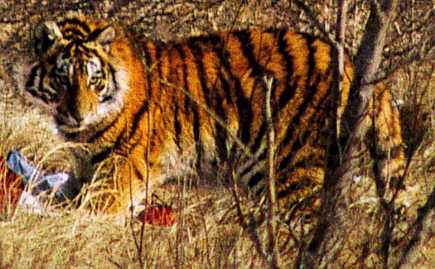
Siberian Tiger (Panthera Tigris Altanica)

wpe2.jpg (27517 bytes)

       The Siberian tiger, also known as the Manchurian or Amur, is the largest tiger and cat. It is also known as the "Tiger of the Snow". Its fur is very thick, but in the summer its fur becomes shorter. The orange colour of its fur is lighter than the orange colour of other tigers. The stripes are brown rather than black and are much wider. It really just depends on the type of weather to determine the length of the fur. It has a white neck and stomach. To distinguish the difference between the Siberian and the other tigers is the lighter and longer fur and the shorter, broader muzzle.

       The Siberian tiger lives in the Northeast part of Asia, primarily the coniferous, scrub oak, and birch woodlands of eastern Russia. There are few tigers found in the northeast China and Northern Korea. It is mainly known to live in Siberia.

       It is estimated that only about 360-406 tigers exsit in the wilid. And about 490 in captivity, this tiger is managed in conservastion programs

       The male Siberians grow up to be about 3.3 metres (10’9") long and weigh up to 300 kilograms (660 pounds). Again, the female is smaller grows up to be about 2.6 metres (8’6") and wieghing between 100 to 167 kilograms (200-370 pounds)

       Its primary prey is elk and wild boar. The Siberian tiger eats about 20-30 pounds per day. But when it is extremely hunger it can eat up to several hundred pounds in one feeding, although this is very rare.


Tigers That Have Survived All That has Happened

Bengal Tiger Chinese Tiger Indochina Tiger Sumatra Tiger

Tigers That We Say Goodbye To

Bali Tiger Caspian Tiger Javan Tiger

A Tiger That Is So Old It Is Usually Forgotten

Saber Tooth Tiger..........EXTREMELY OLD!!!!


Home

Information

Species home

Links

Picture Gallery

Hosted by www.Geocities.ws

1