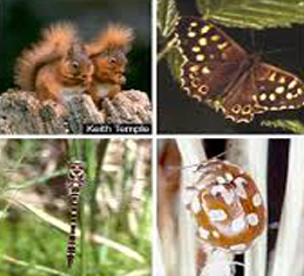
In biology, a species (plural: species) is one of the basic units of biological classification and a taxonomic rank. A species is often defined as a group of organisms capable of interbreeding and producing fertile offspring. While in many cases this definition is adequate, the difficulty of defining species is known as the species problem. Differing measures are often used, such as similarity of DNA, morphology, or ecological niche. Presence of specific locally adapted traits may further subdivide species into "infraspecific taxa" such as subspecies (and in botany other taxa are used, such as varieties, subvarieties, and formae).
Species hypothesized to have the same ancestors are placed in one genus, based on similarities. The similarity of species is judged based on comparison of physical attributes, especially their DNA sequences, where available. All species are given a two-part name, a "binomial name". The first part of a binomial name is the generic name, the genus of the species. The second part is either called the specific name (a term used only in zoology) or the specific epithet (the term used in botany, which can also be used in zoology). For example, Boa constrictor is one of four species of the Boa genus. The first part of the name is capitalized, and the second part has a lower case. The binomial name is written in italics when printed and underlined when handwritten.
HABITAT
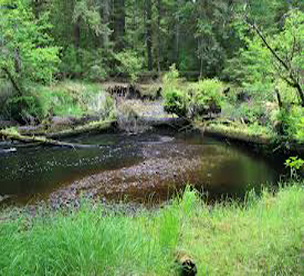
A habitat is an ecological or environmental area that is inhabited by a particular species of animal, plant, or other type of organism. It is the natural environment in which an organism lives, or the physical environment that surrounds a species population. A habitat is made up of physical factors such as soil, moisture, range of temperature, and availability of light as well as biotic factors such as the availability of food and the presence of predators. A habitat is not necessarily a geographic area—for a parasitic organism it is the body of its host or even a cell within the host's body.
The monotypic habitat occurs in botanical and zoological contexts, and is a component of conservation biology. In restoration ecology of native plant communities or habitats, some invasive species create monotypic stands that replace and/or prevent other species, especially indigenous ones, from growing there. A dominant colonization can occur from retardant chemicals exuded, nutrient monopolization, or from lack of natural controls such as herbivores or climate, that keep them in balance with their native habitats. The yellow starthistle, Centaurea solstitialis, is a botanical monotypic-habitat example of this, currently dominating over 15,000,000 acres (61,000 km2) in California alone. The non-native freshwater zebra mussel, Dreissena polymorpha, that colonizes areas of the Great Lakes and the Mississippi River watershed, without its home-range predator control, is a zoological monotypic-habitat example. Even though its name may seem to imply simplicity as compared with polytypic habitats, the monotypic habitat can be complex.
ENDANGERED SPECIES
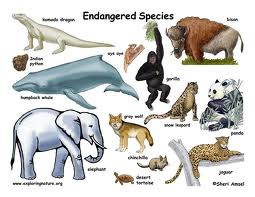
An endangered species is a species of organisms that will likely become extinct. The phrase 'endangered species' colloquially refers to any species that fits this description whereas conservation biologists typically with it refer to species that are designated Endangered in the IUCN Red List, wherein "endangered" is the second most severe conservation status for wild populations, following Critically Endangered. 3079 animals and 2655 plants are Endangered worldwide, compared with 1998 levels of 1102 and 1197, respectively. The amount, population trend, and conservation status of each species can be found in the Lists of organisms by population.
BIODIVERSITY
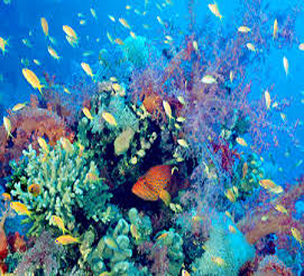
Biodiversity is the degree of variation of life. This can refer to genetic variation, species variation, or ecosystem variation within an area, biome, or planet. Terrestrial biodiversity tends to be highest at low latitudes near the equator, which seems to be the result of the warm climate and high primary productivity. Marine biodiversity tends to be highest along coasts in the Western Pacific, where sea surface temperature is highest and in mid-latitudinal band in all oceans. Biodiversity generally tends to cluster in hotspots, and has been increasing through time but will be likely to slow in the future.
Since life began on Earth, five major mass extinctions and several minor events have led to large and sudden drops in biodiversity. The Phanerozoic eon (the last 540 million years) marked a rapid growth in biodiversity via the Cambrian explosion—a period during which the majority of multicellular phyla first appeared. The next 400 million years included repeated, massive biodiversity losses classified as mass extinction events. In the Carboniferous, rainforest collapse led to a great loss of plant and animal life. The Permian–Triassic extinction event, 251 million years ago, was the worst; vertebrate recovery took 30 million years. The most recent, the Cretaceous–Paleogene extinction event, occurred 65 million years ago and has often attracted more attention than others because it resulted in the extinction of the dinosaurs.