 The United States is a big country. You will probably need transportation sooner or later. Your options will depend on a number of criteria:
A discussion of U.S. transportation must include the automobile first and foremost since it is the prefered means of transportation for most Americans and, in most cases, the most practical way of getting around. Gasoline (petrol) is proportionately much cheaper in the U.S. than in South Africa. Since many cars are produced in the U.S., domestic car prices don't carry the burden of import tariffs and foreign makers must keep their prices reasonable in order to stay competitive. Ready to shop? You may want to try AutoTrader.com or the classified section of a newspaper.
Return to top of pagePublic Transportation

Where you live and to where you will commute will be major factors in whether public transportation will serve your needs. Not every metropolitan area has public transportation, and in those that do, sometimes the service can be spotty--busses and trains may link to some suburbs, but not to others, for example. If you intend to use public transportation in the U.S., be sure to investigate whether your prospective new home has access to it. Most of the larger cities, especially in the Northeast and California have state-of-the-art public transportation, but service tends to be not as good in Midwestern and Southern states. But, there are exceptions.In smaller communities, public transportation is virtually non-existent in many cases.
Return to top of page
Air Travel
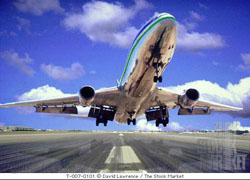
If you need to travel very long distances, say from Los Angeles to New York, you will probably want to consider travelling by air. This is not, however, an inexpensive proposition. Often, it will cost as much or more to fly from one major U.S. city to another than flying to Europe! Be sure to plan your travel as far in advance as possible and hunt for bargains. You may want to consider a website such as Bestfares.com for bargain travel.
Return to top of page
Trains
Train service in the U.S. is among the worst in the developed world. There is little reason to devote too much attention to it here, but if you wish, you can see what the U.S. train service, Amtrak, has to offer.
Return to top of page


