

This site was meant to contain general and advancing information about medicine and medical school. The plans said nothing about including the questions “Are you sure you want to be a doctor” and the like, but now I’ve changed my mind. That’s the first stage of the process... I cannot safely assume that those hits circulating are from visitors who have already questioned themselves and made the ultimate decision. It has been decided that the question will never cease until your career has begun. So, in light of all of you here, this is for you!
Am I
sure I want to be a doctor? To cycle through what is covered in this article, click a link below: TV
Related Questions TV Related Questions: I have a sense of humor. But really, good exposure to some things medical can be through the tv influence. Have
I seen ER? Now for
my outspoken version of this question. Have
I seen Trauma: Life in the ER which comes on TLC? And
what about Resident Life that also comes on TLC?
Exactly as said - Why do you want to become a doctor? Do you pursue a challenge in the health sciences or do you simply enjoy working with it? The decision to pursue such a career should be a careful one. The same rules apply to other health careers such as nursing, physician’s assistant, etc As I said with humor and seriousness above, such careers and lives have been glamorized by television. If your decision is based on a television show alone, please rethink. Let’s think for a moment. . . What do you want to accomplish? What kind of focus do you wish to have - research, clinical? Is your forte in communication and public relations? Some things you can do to broaden your understanding of medicine and to tickle your interests would be to shadow a doctor, volunteer at a hospital, read literature and other materials, connect with people related to the field, etc.
How long is medical school? : 4 - 5 years depending on the school How long is a residency? : This isn’t an easy question to answer. Depending on the program, the hospital, the school, and yourself, it can be as little as 2 years to a length of 8 years. Is Pre-med a major? : No, pre-med is not an official major. Though it can be seen as a major, it is often a student organization/association or a group. Depending on the school you are usually assigned a pre-med advisor upon your selection of interest (said for simplicity) or as often said, major. Do I need a degree to go on to med school? : Yes. Most medical schools require at least a BA or BS in a degree of your choice.
What courses do I have to take? : While in your undergraduate years it is recommend that you plan taking the fundamental science and humanities courses:
Though that is not all, there are also the electives and courses required for your major. Expect to take at least a year (2 semesters) of each fundamental course, excluding biochemistry. During you late undergraduate years you will have to take the MCAT (Medical College Admissions Test) which a huge prerequisite and apparently important in being selected for medical school. Though it weighs heavily, a strong GPA (Grade Point Average), educational background, a well written essay (or essays depending on the application), and commendable letters of recommendation can stand out and above. However, no one factor should be widely depended on. It is recommended to work on all of these factors. For more information, you can review admissions requirements for schools and review the AAMC (Association of American Medical Colleges) website which can also aid you in other question you may have. If you're still considering a career in medicine and have a yearn for more information, do take a look at this page specifically about careers, provided to you by the AAMC: Careers
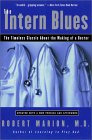
in Medicine: AAMC http://www.aamc.org/students/considering/careers.htm That is all for now. Feel free to look at the books I have chosen that regard to this particular topic. Happy reading!
|

. . . . . . . . . . . . . . . . . . . . . . . . . . . . . . . . . . .
. . . . . . . . . . . . . . . . . . . . . . . . . . . . . . . . . .
© Helena B; Contributors