Comparative Essay

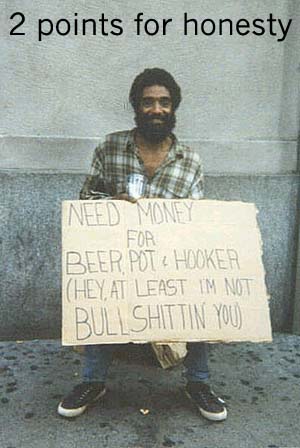
Honesty: Is it more relevant than we think?


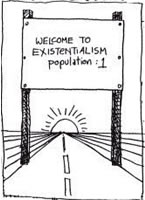
According to the perception of most people, writer Albert Camus is often thought of as an existentialist. This is a person who shares a group of beliefs that include having the ability to recognize present choices, but also not hesitating to suffer their consequences. Another idea associated with the term is that life is “absurd,” or pointless, especially in the search of a universal pattern or meaning that is impossible or very difficult to know. Everything is random and happens by chance. Indifference and isolation, even though not present in the direct definition of existentialism, are just a few of the rational outcomes that closely follow its existence. In his novel and play, The Stranger and The Misunderstanding, Camus clearly displays that honesty is a significant component of the existential beliefs as well.
Throughout The Stranger, Albert Camus uses suitable literary elements that aid him in depicting the connection between honesty and existentialism. Camus uses the sun during the first half of the novel as a symbol for Mersault’s recognition of possible choices. When Mersault receives the gun before Raymond leaves, he considers his options, “The sun glinted off Raymond’s gun … It was then that I realized that you could either shoot or not shoot” (56), and a few moments later, “the heat was so intense that it was just as bad standing still in the blinding stream falling from the sky. To stay or to go, it amounted to the same thing. A minute later I turned back toward the beach and started walking” (57). In this context, the sun is used as a metaphor for Mersault’s ability to distinguish his different choices. The sun also represents that his choices were made by chance, since he really didn’t prefer one over the other. After he has encountered the Arab and just fired his first shot, he describes:

I shook off the sweat and the sun. I knew that I had shattered the harmony of the day, the exceptional silence of a beach where I’d been happy. Then I fired four more times at the motionless body where the bullets lodged without leaving a trace. And it was like knocking four quick times on the door of unhappiness. (59)


Here, Camus illustrates Mersault’s understanding of the foul decision that he just made, and his readiness to suffer its future penalties when awaiting “unhappiness” to greet him.

Mersualt’s willingness to endure his well-deserved consequences is furthermore supported in Part II of the novel. When Mersault is taken in, he meets his lawyer, and then explains:

He asked me if he could say that that day I had held back my natural feelings. I said, “No, because it’s not true.” He gave me a strange look, as if he found me slightly disgusting. He told me in an almost snide way that in any case the director and the staff of the home would be called as witnesses and that “things could get very nasty” for me. (65)


Despite the favorable outcome that lying or even slightly altering the truth may yield, Mersault is mentally prepared to accept the punishment for his decision. Camus has also helped convey this to the reader by making this scene extremely ironic. Because of his constant mental and physical separation from others, Mersault is frequently thought of as an isolationist, which may lead the reader to think of him as a non-conformist. However, in the aspect of morality and honesty, it can be said that Mersualt, the murderer in this case, is much more of a conformist than are the “innocent” members of society, such as his lawyer. It may seem odd that by this point in the novel the reader usually thinks of Mersault as the protagonist, since he possesses many flaws and lacks many of the crucial qualities that most people usually think of when they hear the term. This demonstrates how successfully Camus has portrayed the importance of honesty, and how vital it is to the principles of existentialism.

With the use of similar literary devices, Camus displays the close correlation between living as an existentialist and being truthful in The Misunderstanding. In this play Maria and the Old Man play a role that is somewhat analogous to that of the sun in The Stranger. Maria notifies Jan about his clear and present choices, while the Old Man symbolizes the chance behind such choices, which eventually lead to a chain of drastic events. When Maria is first introduced into the play, a few lines after the Old Man is, Jan complains to her about being followed:

Jan: Do you realize that if anyone comes in then everything is lost?

Maria: But that’s our only chance. If I’m still here, I’ll make you tell them who you are. (7)


At this moment, Maria indirectly informs Jan about his choices; if he lets her stay, then than she may ruin the way he wants everything to turn out, but if she leaves, then he can handle his family business as he wishes. This also demonstrates dramatic irony because the reader knows that Jan is really better off if Maria stays with him. The characters first identify their options with before they can suffer for the ones that they choose.

After the characters have distinguished their choices, The Old Man often occurs in scenes in order to symbolize the vast amount of chance or uncertainty in them. A good example that may clarify any confusion about him is when he appears at the door, causing Martha to look at him instead of the passport. He emerges into the play whenever a decision that leads a significant outcome is going to be made, and represents its chance and unpredictability. This is additionally supported by his presence in scene eight where Martha and Mother are in Jan’s room still disputing the question of whether or not to kill him. The chance that he represents in this scene is not only how the argument will turn out, but also the chance that neither of the two women will see him take Jan’s passport.

In this play, Martha and Mother recognize their choices, as does Mersault in the novel. After they find out who their victim really was, they were eventually both willing to accept the consequences. First, Mother realizes what a horrible choice she has made, and openly decides to suffer in result. Even though Martha is not directly affected by the death of her brother, who she barely knew, she is severely impacted by her mother’s reaction and ultimate decision to end her life. This is the real consequence for her actions, which she truthfully accepts: “I shan’t pray. The prospect of death won’t turn my eyes to heaven… I’ll stand alone, surrounded by my crimes” (44). She is suggesting that she will do nothing to try and conciliate the miserable outcomes of her decision. She reinforces this with being very straightforward and honest when Maria asks about her husband: “He’s dead and we killed him. But at least he didn’t suffer” (46). Whether it is in the form of action or dialogue, both Martha and Mother reveal their preparation for consequences bluntly and honestly.

Both Camus’ novel and play illustrate how existentialism really has an abundance of crucial elements than what appears in its general definition. The themes of isolation, indifference, chance/uncertainty, and honesty all blend in with the main contents of existentialism. His works convey this with the help of literary elements such as symbolism and irony. Camus uses the sun in The Stranger as he does the Old Man in The Misunderstanding to indicate the amount of chance that stimulates every decision. He has filled his play with dramatic irony, and has included a different type of irony in his novel, where Mersault appears to society as the opposite of what he really is, a moral and honest person. Sometimes just the character trait of honesty is enough for the reader to feel sympathetic towards that character. This feeling of compassion towards those who some would call “isolated” or “indifferent” strongly represents the amount of impact a person can do just by being truthful.

My Response

I chose the subject of how important honesty is to existentialism because it was interesting to me. I was trying to convey its significance in how people feel about it as well. I am pleased with the outcome.
The writing process of this paper was pretty good. The most difficult part of writing it was the organization because the topic can get very complicated. I think I accomplished my goal well.
I feel as if this piece is complete. If I was to consider doing something differently it might be to focus more on chance/randomness (even though I included it, there are more importand aspects of it that detract from the main purpose of my paper).


Hosted by www.Geocities.ws

Hosted by www.Geocities.ws


My Portfolio:

  • Pre-Course Reflection
  • Personal Narrative Essay:My Not so "New" Way of Life
  • Biography Essay: A New Life in America
  • Letter to the Author of Always Running
  • Outside Reading Expository Essay (Run, but Don't Trip Into the Trap)
  • Camus Multi-Genre Essay: Honesty:Is it More Relevant than We Think
  • Process Analysis Essay: How to Light Up a Dim Night
  • Argument Essay: Don't blame me...
  • The Great Gatsby Final:
  • Huck Finn Final:
  • Post Course Reflection


    Email me!
    © Slav K. 2006
    1