 Email me!
© Slav K. 2006
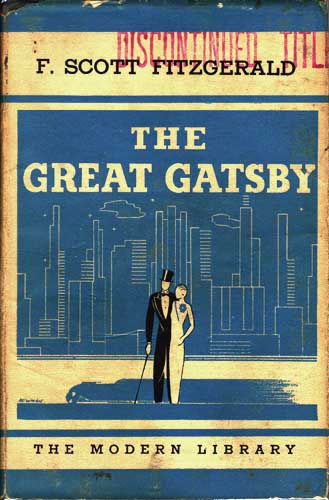
In The Great Gatsby, F. Scott Fitzgerald describes a society of rich people who live their daily lives without giving much attention to the outside world. Their environment is an artificially optimistic place where everyone seems to ignore everything that would cause them any sadness or emotional distress. Only the reader and narrator, Nick, notice the facts of reality and take them into account. Throughout the entire novel Fitzgerald repeatedly describes an atmosphere of the upper class that is perfect and flawless on the surface, while reminding the reader that it really is not.
In the beginning of the novel Fitzgerald conveys this theme by describing Nick’s thoughts when he visits his cousin Daisy. He begins to explain a brief moment of tranquility that is shortly ended by the harsh sounds of reality. As Nick enters the living room of the Buchanan’s house for the first time, he takes a few moments to think about the scene:
“A breeze blew through the room, blew curtains in at one end and out the other like pale flags, twisting them up toward the frosted wedding cake of the ceiling--and then rippled over the wine-colored rug, making a shadow on it as wind does the sea… Then there was a boom as Tom Buchanan shut the rear windows and the caught wind died about the room and the curtains and the rugs and the two young women ballooned slowly to the floor” (12)
When Tom shuts the windows, he shatters the illusion that Nick is having, while causing him to mentally return to his real life. As Nick is having his illusion, Daisy and Jordan are floating closer to the wedding cake ceiling than the wine-colored rug, which they return to after the windows are slammed shut. Closer to the wedding cake ceiling is where natural happiness is always present, while in reality happiness is not so easily obtained, and some people use alcohol to help them reach this temporary condition. Fitzgerald uses these descriptions as symbols to indicate that in reality the two women are closer to the life full of various emotions, than to the happy, plain, and idealistic marriage life.
Another similar situation that reveals to the reader the isolation of the upper class in their own environment is when Fitzgerald describes Nick’s thoughts about one of the parties that Gatsby has. Fitzgerald begins to describe the routine of preparation and how the guests behave as they arrive.
“The bar is in full swing and floating rounds of cocktails permeate the garden outside until the air is alive with chatter and laughter and casual innuendo and introductions forgotten on the spot and enthusiastic meetings between women who never knew each other’s names.” (44)
Fitzgerald describes the guests as being superficial. They don’t start having fun until they are served enough alcohol, causing them to separate from “the real world”. They begin to have exciting conversations with each other, but don’t even know each other’s names. Since most of the people who attend the parties are different every time, they don’t even know the host, Gatsby. Everything seems as if it is an ideal party where there is very authentic dialogue between the guests. However, Fitzgerald reveals the real party to the reader by stating that these genuine conversations are between complete strangers who never learned each other’s names and who require alcohol in order to be entertained.
In a very similar way, Fitzgerald conveys the idea that the upper class tries to separate itself from reality when he describes more of Gatsby’s party. He begins to give details about the setting as time passes on: “The lights grow brighter as the earth lurches away from the sun and now the orchestra is playing yellow cocktail music and the opera of voices pitches a key higher.” (44) Everything may seem as if they are at a wonderful party, but they are just trying to escape reality by drinking and creating their own atmosphere isolated from the rest of the world. As the part of the earth that they are on turns away from sunlight, they begin to receive more artificial light and begin to hear the orchestra and opera overpowering the noises of the outside world, indicating the more they begin separate from actuality. The more they separate from the rest of the world, the more fun they have: “Laughter is easier, minute by minute, spilled prodigality, tipped out at a cheerful word.” (44)
The theme that the members of high social class are focused on their egos, but avoid emotions caused from the outside world is well demonstrated after Myrtle Wilson is killed. After Daisy hits Myrtle, she doesn’t stop and go back. Instead, she continues to drive away. This shows that she tries to conceal what just happened, and hide from reality. After Daisy gets home, Fitzgerald shows that she is not much affected by the events that happened that day. She also doesn’t truly care about Gatsby. She comes together with Tom at dinner as Gatsby waits outside for her signal in case anything happens to her. “There was an unmistakable air of natural intimacy about the picture and anybody would have said that they were conspiring together.” (153) This shows the reader that although it may seem as if Gatsby and Daisy are falling back in love, they really are not. This could also serve as a foreshadowing that Daisy doesn’t attempt to call or at least write to Gatsby after she leaves with Tom.
Fitzgerald also conveys this theme throughout the novel as a whole. Gatsby is described as a person who started out from nothing and somehow reached the top of the social class. Assuming that his dream from the beginning was to get rich and marry Daisy, most of the novel describes his devotion to achieving this dream. Because of this, the reader may get a feeling that he will really fall back in love with Daisy and marry her. At that point in his life, he is rich and socially influential. After Gatsby dies, however, Nick realizes that no one really cared for him. No one cared for him enough to even show up to his funeral, except for Nick, the owl-eyed man, and Mr. Gatz. Although many had attended his parties, only a few people showed concern for him by being present at his funeral. These are also the only people who somewhat understood him. This only reminds the reader that although Gatsby achieved wealth and high status, he remained an outsider to this society of wealthy people who never actually knew him or cared about him.
In The Great Gatsby, F. Scott Fitzgerald frequently separates the upper class from the rest of society. He characterizes the members as having a different mentality by being superficial and careless. Throughout the entire novel Fitzgerald describes Nick’s thoughts about deceiving situations. First, the apparent scene is described, followed by Nick’s perception of the actual situation. Nick is most likely caused to think about situations as the members of high social class do, due to his association with them. However, he does not have excessive amounts of money, and therefore thinks about the situations as a person who is not a member of the upper class does, as they really are, as well. After finally understanding beyond the apparent situation, at the end of the novel, Nick states: “They were careless people, Tom and Daisy- they smashed up things and creatures and then retreated back into their money or their vast carelessness or whatever it was that kept them together, and let other people clean up the mess they had made…” (187-188) Fitzgerald is suggesting that the thinking process of a person depends upon the amount of wealth that person has.
My Portfolio:
Email me!
© Slav K. 2006