HOME PAGE BG001 BG002 BG003 BG004 BG005 BG006 BG007 BG008 BG009 BG010 BG011 BG012 BG013 BG014 BG015 BG016 BG017 BG018
10/20/2003
Govinda/Krishna
Noumenal and phenomenal aspects of Vishnu
Level one: Supreme level: Svadha: its own, inherent native power: Transcendent
Level Two: MahaVishnu or Bhagavan with yoga Maya in Maha Vaikuntha or Goloka: Transcendent
Level Three: Vishnu with Maha Maya in Vaikuntha: Transcendent
Level four: Brahman with Maya: phenomenal world: Immanent (Isvara)
Go to BG Chapter 12 Devotion <<<<Click to learn more about the handsome foursome expansions of Vasudeva. Comment on Verse 12.1
FOUR LEVELS (BRAHMA SAMHITA)
|
Govinda |
|
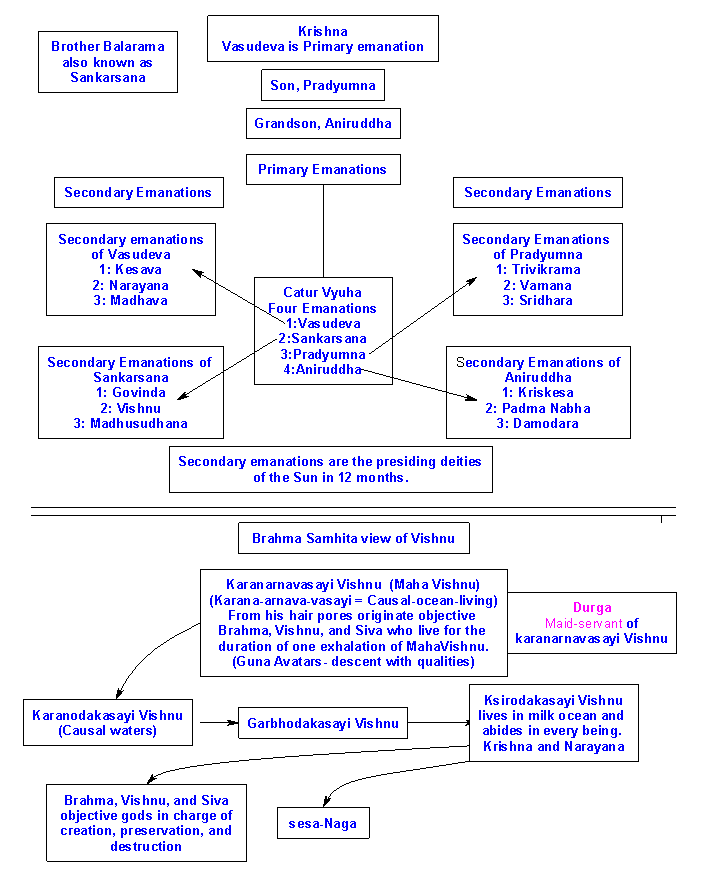
Karanarnavasayi Vishnu (Karana-arnava = Causal ocean) MAHAVISHNU, the First Purusa. MahaVisnu, in the Causal Ocean, is the creator of the aggregate material energy, and is an expansion of Sankarsana. Karanodakasayi Vishnu creates Mahat Tattva. With maya. Karanodakasayi Visnu is the Supersoul of the collective universes. Causal ocean. MahaVishnu is in charge of several universes like this. Tantrics believe that Mother Goddess has Maya as the womb; the causal ocean resides inside the womb. Brahma sitting on lotus of the stalk is the child of Mother Goddess, the stalk is the umbilical cord; Mother's Sakti produced Narayana (Jagaddhatri) as the preserver of the world. |
|
Garbhodakasayi Vishnu (Second Purusa) Supersoul of Total living beings. The creator of Brahma living in the Garbho ocean. Four-handed form. Garbhodakasayi Visnu is an expansion of Pradyumna. |
|
Ksirodakasayi Visnu is the Supersoul of all individual living entities including demigods. Associated with Maya. Kasira (milk) ocean. The third purusa, Ksirodakasayi Visnu, is an expansion from Aniruddha. He is of goodness –Savatanu. Also Paramatma = Supreme Atma or Soul. He is all pervasive, even in inanimate objects. |
|
Creation, maintenance, and destruction |
Some Vaishnava Views as opposed to Saiva View:
It is not uncommon that Krishna is depicted at various levels of hierarchy: Narayana, Ksirodakasayi Vishnu, Garbhodakasayi Vishnu, and Vaikunthanatha. It is explained that Krishna’s Supreme Will makes it possible for him to assume all of the above forms. Krishna is the original, the source of all incarnations.
Ksirodakasayi Vishnu resides in milk (Ksira) ocean; the other oceans are Salt, Curd, Butter, Sugar Cane juice, Liquor, and Sweet water.
Krishna lives in Svetadvipa in the middle of Milk Ocean in these universes. There are many universes like this. Vrndavana is the worldly counterpart of Svetadvipa, where he spends his pastimes.
Lotus born Brahma takes orders from Pradyumna.
Purusa avatars: 1. Karanarnavasayi Vishnu (Karana-arnava = Causal ocean) –MahaVishnu, 2. Garbhodakasayi Vishnu, 3. Ksirodakasayi Vishnu
Arnava = foaming restless ocean
Brahma has fifty attributes of man plus five more dilute higher attributes that man (Jiva) does not have.
Sambhu-Siva: has fifty attributes of man plus five higher attributes of Brahma that man (Jiva) does not have.
Mahavishnu, according to Brahma Samhita, created Vishnu from his left limb, Brahma from his right limb, Sambhu, the manifest divine masculine halo, from glabella between his eyebrows. Sambhu is Siva, the transformed power of Krishna or Mahavishnu delegated to bring destruction. Sambhu, it is said, originated from the diffuse halo of Mahavishnu. Sambhu is compared to curds (yogurt) that originated from milk after contamination (active cultures); Sambhu is svamsa (Vishnu’s own subjective entity, though contaminated) of Mahavishnu. Svamsa = Sva + Amsa = own fragment.
Sambhu is a masculine principle from whom Rudra manifests. Sambhu is delegated by Mahavishnu to do certain tasks: material creation of the world, destruction of Asuras, and sublation. Sambhu is the guna avatara of Govinda: destructive principle. Sambhu collaborates with Durga in the performance of his duties with Kaala (Time element). He also helps Jivas attain liberation as mentioned in Tantra sastras. Brahma Samhita declares that Sambhu functions in accordance to Govinda’s Will to inculcate devotion in devotees according to Agamas. Sambhu is the Lord of Jivas. Brahma Samhita says in effect that the Consciousness of Sambhu is not the same Pure Consciousness (Chit Sakti) of Vishnu, Mahavishnu, Govinda or Krishna; however, Sambhu’s consciousness is superior to Jiva’s consciousness. Vishnu, though his guna avatara is Sambhu, is chock-full of Sattva; he has no contamination with mundane tattvas or categories. The lower forms or derivatives of Govinda or Krishna are analogous to transmittable light from one candle to the next, all abiding in the original spiritual light of Govinda. Siva, as a purveyor of Tamas guna and ignorance, is chock-full of soot and less of light; thus, he is not Pure Consciousness as are the forms of Mahavishnu. Brahma spews more soot in his candle than Sambhu and thus, Siva-Sambhu is superior to Brahma. The differentiating five attributes are purer in Siva-Sambhu than in Brahma, meaning that Siva-Sambhu is more divine than Brahma. Goddess Durga, according to Brahma Samhita, is the maid servant of Karanarnavasayi Vishnu and performs her delegated work in conjunction with Siva Sambhu.
Govinda is the final shelter of all including Brahma, Vishnu and Siva.
Govinda is adhipurusam.
Karanarnavasayi Vishnu (Maha Vishnu) (Karana-arnava-vasayi = Causal-ocean-living). From his hair pores originate objective Brahma, Vishnu, and Siva who live for the duration of one exhalation of MahaVishnu. (Guna Avatars = descent with qualities.) They are called objective because their functions such as creation, maintenance, and destruction are objective and quantified.
Ksirodakasayi Vishnu (Immanent God) lives in Milk Ocean and is the supersoul living in every being.
Ganesa, the creator and destroyer of obstacles, derives his power from Govinda.
Brahma Samhita takes a less complicated view of the constituents of the world as opposed to Sankhya and Tattvas of Saiva Siddhanta. The three worlds, composed of ether, air, fire, water, earth, direction, Time, soul, and mind, take their origin from Govinda, exist on his body and enter him at sublation. The nine elements cover all elements depicted in Sankhya and Tantric systems.
The splendor of the Sun, Moon and Fire come from Govinda.
All powers of objects and beings emanate from Govinda and remain in them in a limited fashion, for those powers can never exceed those of Govinda. All virtues, vices, vicissitudes, Vedas, penances and Jivas from Brahma to an insect exist because of Govinda.
Govinda doles out karmic consequences to all impartially according to the weight of karma; it is not any less for Indragopa insect than for Indra, the king of Devas (gods). He incinerates the fruitive activities of his Bhaktas (devotees) root and branch, so they can attain Mukti (liberation). Bhakti obtains a higher status and currency with Krishna/Govinda than in the Tantric system, where it is number two in the bottom: Kriya, Bhakti, Jnana, Dakshina, Vama, Siddhanta, and Kaula paths. For the four fold paths of Saiva Siddhanta (Chariya, Kriya, Sukha, and Sanmarga Margas), go to Siva-Ashtamurthy. Go to Tantra Three Tirumantiram for details on the sevenfold path of Tantrics.
Krodha (anger), Kama (passion), Sahaja Pranaya (natural love or friendship), Bhiti (fear), Vatsalya (parental affection), Moha (delusion), Guru Gaurava (reverence to Guru), Sevya Bhavaih (proneness to service), Sancintya (meditation) are the feelings entertained towards the Lord; all these feelings liberate the soul but the road to liberation is different for each one of them. They assume the bodily appearance to go with their Bhava (nature and feeling). They wear their feelings on their face and body they are born with. The Vatsalya class of devotees gains body and feelings of nurturing parent. The passionate receives body and feelings of a Gopi (milkmaid); the devoted get body and feelings like those of Narada Muni; he who fears God gets body and feelings like those of Kamsa.
The Gopis attained liberation (moksa) by love, Kamsa by fear, Sisupala by hatred, Pandavas by friendship, Yadhavas by attachment, Narada by devotion. The key is thinking and remembering the Lord in love, fear, hatred, friendship, attachment, devotion or any one of myriad feelings. The Lord seems to say, "Ignore me at your own peril."