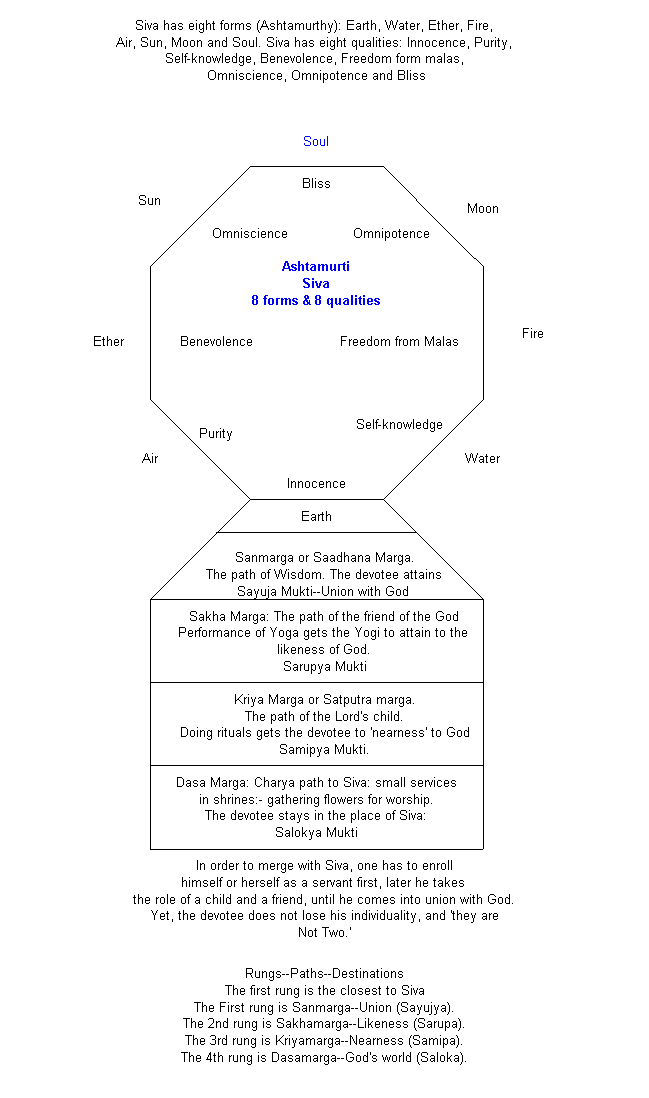
Error: Read Sayuja as Sayujya.
All these paths remove only Karma Mala and Maya Mala, but not Anava Mala, which is removed by God alone by conferment of Grace.
Here is another variation/corollary of paths in attaining to Siva These four Saiva saints are generally called Naalvar, the Foursome.
| Mannickavasagar | Sambandar | Sundaramurthy Swamigal | Appar (rich peasant family) |
| Gnanamargam or path of knowledge | Satputramargam or path of the son | Sakhamargam or path of companion | Dasamargam or path of Servant |
| Sanmarga-Union-Sayujya | Sarupa-Likeness-Sarupa | Samipa-Nearness-Kriyamarga | Saloka-Siva's world-Dasamarga |
Sundarar (Vanthondar = Van +Thondar = hard + devotee as slave of God, (persons who are slaves to worldly pleasures) was bestowed the high privilege of being a friend or companion (Sakha Marga) by Lord Siva Himself. Sakha Marga is described as immersion in contemplation, controlling of five senses, blocking and stilling the Ida and Pingala breaths, taking Kundali Sakti from Muladhara to Sahasrara Chakra, enjoying the nectar from the sphere of Moon within the cranial cavity and saving it in the body. Sakha Marga confers Sarupya Mukti, likeness of Siva. The relationship between Sundarar and Lord Siva was so informal and friendly that they gave each other a sobriquet; Siva called Sundarar Vanthondar, rowdy (hard) devotee and Sundarar called Siva Pitthan (Crazy Man).
Siva called him Vanthondar because Sundarar was a devotee not in the ordinary sense. He married twice; he demanded and received gold from Siva many times; when he became blind in both eyes from some unknown cause, he was bitter and demanded Siva to restore his eyesight, which Siva did; he made Siva to broker reconciliation between him and his first wife, Paravaiyar, when he took Sangiliar as his second wife; Siva had to beg for food to feed blind Vanthondar. Because Siva made Sundarar his slave on a previous occasion, it fell upon Siva to ensure upkeep of his slave and meet his "needs." Siva makes his devotees His slaves first and later becomes the slave of the devotees; there is no way that Siva can sit idly by without catering to the needs of his devotees.
Sundaramurthy Swami was the companion of God.
Thiru-Gnana-Sambandar was the son of God, because as a three year old child-saint-poet he imbibed the milk of Uma in a golden bowl fortified with Siva Gnanam (Siva's Wisdom or gnosis). Sambandar (Real-life Child) single-handedly uprooted Jainism from Pandiya kingdom by performing feats and miracles in competition with established Jain monks. He cured the Jain king of his hyperpyrexic illness by applying sacred ash to his body; his palm-leaf of devotional songs floated while those of the Jain monks were carried away to the sea, and resisted fire while those of monks were rendered into ashes; he brought back a dead girl from the ashes in the urn. Along with the Jain monks, the Buddhist monks were soundly routed in debates by the child-saint. The glory days of Jainism and Buddhism were beginning to fade into oblivion. Tamil people are indebted to Jains for Tamil works like Cilapathikaram, Civakacintamani, and Nanool Grammar.
Appar, the rich landlord, was a devotee of Siva; he, later as an young man, joined Jain Monastery, became Dharmasenar, Abbot, and stayed for about twenty-five years in the monastery in the kingdom of Pallavas. He developed abdominal colic, which the Jain Monks could not cure. He went to his sister secretly, later to Siva's temple and received cure from Siva. The king on the instigation of the Jain Monks put Appar through torture. He was put in a kiln for seven days, which he survived. He was given poison to drink, which he survived. An elephant, sent to trample him, paid him tributes with his trunk and bent knees and went ahead trampling the Monks down under its feet. he was later tied to a stone and cast in the sea.
to be continued.