 BASICS OF MODEL ROCKETRY
BASICS OF MODEL ROCKETRY
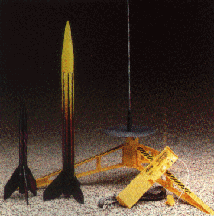
So, you want to know more about model rocketry, huh? (At
least enough to follow this link!) Well, the best way to get started is
with a starter kit. It will contain all the items you need to join the fun
and exciting world of model rocketry.
 |
|
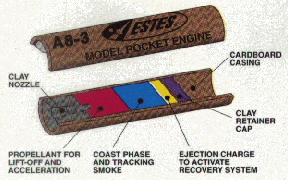
What propells the rocket? A disposable, solid propellant, model rocket engine. (See cut-away below) The engine consists of three phases:
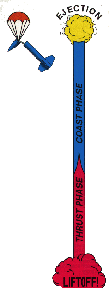 |
The Thrust Phase
- From less than a second to several seconds, this is what actually propells
the rocket skyward. The Coasting or Tracking Phase - Lasting several seconds, depending on the weight of the rocket.
The rocket is coasting toward apogee during this phase. The engine also
emits white smoke during this time for tracking. The Ejection Phase - This is a small charge that actually goes off inside the rocket, which pushes the recovery device (usually a parachute or streamer) out. Special flame-proof wadding protects the recovery system from the engine's hot gases emitted by the ejection charge. |
 |
|
What do those letters and numbers (i.e. A8-3) on model rocket engines mean? They provide the engine's performance information:
A - TOTAL IMPULSE The letter indicates total impulse (total power in Newton-seconds) produced by the engine. Each succeeding letter has twice the total power as the previous letter. (Example: "B" engines have twice the power of "A" engines, which results in approximately twice the altitude the rocket will reach.
8 - AVERAGE THRUST The first number shows the engine's average thrust or average push in Newtons. (4.45 Newtons = 1 lb.)
3 - DELAY The second number gives you the time delay in seconds between the end of thrusting and the ejection charge. Lets you choose the engine with the delay time you want for any flight. Generally speaking, you use an engine with a shorter delay for heavier rockets. (ALWAYS follow the rocket manufacturer's recommendations for engine types and sizes) Engine types ending in "0" have no delay or ejection charge and are for use in booster stages (multi-stage rockets) and some special rockets only.
 |
Model rockets are always ignited electrically from a safe distance, with a launch controller designed for the purpose. |  |
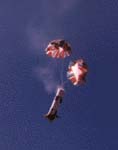 |
The engine's ejection charge deploys the recovery system, usually a parachute, so the rocket returns safely to the ground. Repack the 'chute, put in a new engine, and she's ready to fly again! |
 Visit Vincent Voraze's "Model Rocketry for Educators"
webpages
Visit Vincent Voraze's "Model Rocketry for Educators"
webpages
Done properly, launching model rockets is a safe, fun, and rewarding hobby. ALWAYS be sure to follow the Model Rocketry Safety Code, and local laws and ordinances.
 See our Vendors
Page for sources of model rockets and supplies
See our Vendors
Page for sources of model rockets and supplies
 E-mail for
more information
E-mail for
more information