|
|
Extended
Breastfeeding
(Breastfeeding
Beyond The First Year)
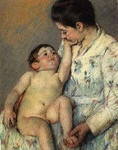
My
Reflections:
"I personally had no idea I would nurse as long as I have, but am so
thankful that I have been able to and am thrilled for every precious
moment between my daughters and myself. Toddler nursing is truly a way of
parenting through gentle guidance and love, as it is a way of life. Please check out the page of Links
for more information and sites devoted to Breastfeeding beyond the first
year."
Why
Mothers Nurse Their Children into Toddlerhood
by Norma Jane Bumgarner
When I ask mothers who have nursed longer than a year why they chose to
do so, they
usually say, "It just seemed natural," or, "He seemed to
need it still." Some mothers,
taking their cues from the child rather than the calendar, say, "I
never even thought
about it."
One mother describes the way she felt about her child's continued
nursing: "I knew and
felt her need for me and her desire to nurse. I love her, and it would
break my own heart
to disappoint her and refuse myself to her." If we look past all
the social rules, and look
at the children these rules are supposed to benefit, as did this mother,
it is not difficult
to see the need our children have for continued nursing - their joy in
nursing and their
distress when it is denied. A simple but compelling reason for
continuing to nurse is to
please the child. More and more mothers are watching their children and
seeing the
need that is there.
Nursing is not only a pleasure, but also quite a convenience. A major
task in mothering
is helping your child several times daily to overcome fears or hurts or
exhaustion. There
are various ways to comfort a crying child - walking, rocking, singing -
but none is
easier or more efficient than nursing. It has been described as a little
bit of magic on
your side: presto, a fussy child is happy again.
It is nothing short of amazing how quickly a bruise or scrape stops
hurting when the
first-aid includes nursing. And if it is more than a bruise or a scrape,
the fact that
nursing does not seem to make the pain go away, tells you quickly that
you are dealing
with a bigger hurt that may need extra attention. Other methods do quiet
children, too,
but the psychological network of the very young seems to be wired with
nursing as the
choice channel for feeling better. Though not all children will
verbalize it, nursing
toddlers no doubt appreciate nursing for comfort as much as did the
two-year-old who,
having fallen and then nursed, amply rewarded her mother by saying,
"Thanks, Mom, for
nursing me. Bye now, I'll be okay."
Teething is the most recurrent physiological cause for discomfort in
little children, and
when new teeth are making their gums sore, little ones often ask for a
great deal of time
at the breast. Many a nursing mother has been pleased to help her child
through the
discomfort of teething with nursing alone, or perhaps with nursing for
soothing and cold
celery for biting. Of course we are glad sometimes for the relief that
aspirin or
anesthetic ointments can bring when gums get really painful. It is
gratifying, however, to
be able to keep our reliance upon chemical comforters to a minimum
through use of a
natural analgesic: nursing.
Comforting a sleepy child at bed time and nap time is so easy for
families when the
little one is nursing. Rarely do nursing families experience the fuss
and tension we have
come to expect in our culture when a little one needs to go to sleep.
Nursing is so
effective a tranquilizer for tired children that fathers tease their
wives about their
"knock-out drops." Few families who have experienced a nursing
child's bedtime or
nap time will ever want to rear a child any other way
Mothers also nurse their children to help them overcome upsets,
emotional as well as
physical. Most mothers, even if they do plan to wean, refrain from doing
so during an
upheaval such as a family crisis or a move. Nursing is too beneficial to
children when
their families are upset or in transition to cut it off at a time when
the child may
especially need it. One mother whose family experienced half a year of
illness and loss
wrote about nursing her daughter during this difficult time:
"Nursing has certainly helped
her; it has been like an anchor in a storm."
Though little ones who are nursing do experience illness, their time at
the breast is an
investment toward their good health. Your bloodstream and - to almost
that same
degree - your milk, carry antibodies to the infectious diseases you have
encountered.
Researchers are discovering new immunological factors in the living
fluid that is
mother's milk at a breathtaking rate these days. One of the antibodies,
IgG, is in a form
that is destroyed by digestion. But others, such as IgA and certain
human milk
leukocytes, have been shown to be quite active in helping little ones
fight off disease.
IgA, by way of illustration, protects by serving as a potent barrier,
preventing your
nursing child from being infected by specific organisms through his
intestinal tract.
Most parents who have had the experience of caring for a nursing toddler
cannot
imagine rearing subsequent children any other way. Only four or five of
the nearly one
thousand mothers who wrote to me about nursing past one year said that
they would not
do so again. And the very few who did not want to repeat the experience
were
overwhelmed, not by nursing, but by the attitudes of other people who
were against the
nursing.
Excerpted from the book Mothering Your Nursing Toddler by Norma Jane
Bumgarner.
Extended
Breastfeeding Links
LLL
Toddler Tips: Uncomfortable latch
LLL
Toddler Tips: Too old to nurse?
LLL
Toddler Tips: Anxiety about weaning
LLL
Toddler Tips: Why I nurse my toddler
LLL
Toddler Tips: Criticism from relatives
LLL
Toddler Tips: Responding to criticism
LLL
Toddler Tips: Living on air
Weaning
& Mother's feelings
Dr.
Jack Newman's guide to breastfeeding
Toddler
nursing and the family bed
About.com
Nursing a toddler
Nursing
a toddler
Extended
Nursing
More
Extended Nursing
Extended
Breastfeeding FAQ
Nursing
beyond a year FAQ
Getting
family to support nursing beyond a year
One
mom's story
More
Links
When to start solids
How to start solids
First Foods
Finger Foods
Vitamins and Iron
Food sensitivities in breastfed babies
Nutrition for nursing toddlers
Wean
Me Gently
by Cathy Cardall
I know I look so big to you,
Maybe I seem too big for the needs I have.
But no matter how big we get,
We still have needs that are important to us.
I know that our relationship is growing and changing,
But I still need you. I need your warmth and closeness,
Especially at the end of the day
When we snuggle up in bed.
Please don't get too busy for us to nurse.
I know you think I can be patient,
Or find something to take the place of a nursing;
A book, a glass of something,
But nothing can take your place when I need you.
Sometimes just cuddling with you,
Having you near me is enough.
I guess I am growing and becoming independent,
But please be there.
This bond we have is so strong and so important to me,
Please don't break it abruptly.
Wean me gently,
Because I am your mother,
And my heart is tender.
|
