 |
|
Wide-Eyed Worldby Kimberly Tin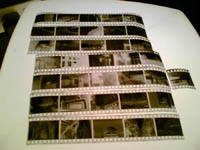 There's a rush of excitement the moment the words "portfolio" and "photography" are combined, especially during our photography classes. Everyone's abuzz, brainstroming and sharing with one another each of their seemingly brilliant plans for their final project. But, after a while, the bright buzzes turn into worry and doubt of either how one plans to accomplish the task or if s/he has the resources to do so. The word "feasible" enters the picture, then with a snap, the dreams of earth-shaking and controversial pictures go down the drain.
Everyone seemed to be in a dilemma coming up with their final proposals for the portfolio. Each of us wanted to do something big, something that would earn us a Pulitzer prize, probably. My first idea was to shoot the houses under bridges. This is highly accesible to me since I live beside a bridge which is jam-packed with families. I knew that with this subject, I would be able to produce really "earth-shaking" pictures. But, after a few evaluations, and taking into consideration the circumstances and the environment of my subjects; I decided not to go through with it for fear of soliciting unwanted attention, being that I would be in a setting where I would easily stand-out. I also thought that the residents would not welcome me into their homes as much as they would television studios, since I am, after all just a student.
The next topic to cross my mind is to follow the Pasig River. I have always been fascinated by this particular river since I know parts of its history and I feel how much we are missing out because of its transformation from a water haven to an overly-dirtied body of water. How I wish I could have been alive during the times when people could freely wash their faces or bathe in the water of the river; now, this is unimaginable for the river has been tagged as "dead". This would be a good subject because of its length and the different areas it touches, from the views of Malacanang Palace to the shipping routes of Chinatown and Mandaluyong. My ideas for pictures of the river focused on its functions as a river today. I know that this is where squatters' areas around the city throw their garbage and expel their waste matter, at the same time this is where kids choose to cool off during the hot season. On the more extreme side, this is where criminals choose to throw cadavers of those they have murdered - from cats to human beings. Capturing images of the river would then be a great feat because one would be able to show the "hidden" beauty that the river exudes even in its present state of nothingness. This, proved to be difficult too since I would have to travel to distant places and wait for someone to bathe in the river or anything eventful to happen to the river. There's a rush of excitement the moment the words "portfolio" and "photography" are combined, especially during our photography classes. Everyone's abuzz, brainstroming and sharing with one another each of their seemingly brilliant plans for their final project. But, after a while, the bright buzzes turn into worry and doubt of either how one plans to accomplish the task or if s/he has the resources to do so. The word "feasible" enters the picture, then with a snap, the dreams of earth-shaking and controversial pictures go down the drain.
Everyone seemed to be in a dilemma coming up with their final proposals for the portfolio. Each of us wanted to do something big, something that would earn us a Pulitzer prize, probably. My first idea was to shoot the houses under bridges. This is highly accesible to me since I live beside a bridge which is jam-packed with families. I knew that with this subject, I would be able to produce really "earth-shaking" pictures. But, after a few evaluations, and taking into consideration the circumstances and the environment of my subjects; I decided not to go through with it for fear of soliciting unwanted attention, being that I would be in a setting where I would easily stand-out. I also thought that the residents would not welcome me into their homes as much as they would television studios, since I am, after all just a student.
The next topic to cross my mind is to follow the Pasig River. I have always been fascinated by this particular river since I know parts of its history and I feel how much we are missing out because of its transformation from a water haven to an overly-dirtied body of water. How I wish I could have been alive during the times when people could freely wash their faces or bathe in the water of the river; now, this is unimaginable for the river has been tagged as "dead". This would be a good subject because of its length and the different areas it touches, from the views of Malacanang Palace to the shipping routes of Chinatown and Mandaluyong. My ideas for pictures of the river focused on its functions as a river today. I know that this is where squatters' areas around the city throw their garbage and expel their waste matter, at the same time this is where kids choose to cool off during the hot season. On the more extreme side, this is where criminals choose to throw cadavers of those they have murdered - from cats to human beings. Capturing images of the river would then be a great feat because one would be able to show the "hidden" beauty that the river exudes even in its present state of nothingness. This, proved to be difficult too since I would have to travel to distant places and wait for someone to bathe in the river or anything eventful to happen to the river.
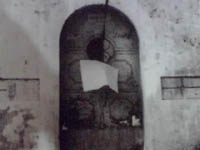 I came up with my final topic on my way to school. Everyday, we pass by an old railway station; one that's been worn out and is no longer being used. It has a beautiful facade, it seems like it used to stand like the Grand Central Station in New York or other Western art-inspired buildings which stand out from the monotony of the buildings around. I felt it necessary to take the structure's picture because it would mean preserving that object forever. That was my starting point. I wanted to take pictures with the theme of deterioration for my project. Deterioration, though a sign of aging and being worn out, can mean that one thing has served its purpose fully. It would mean that the object has reached its peak and is now ready to retire, just as how humans are, in a way. Also, though deterioration may seem like a gloomy theme, it is actually a celebration of that object. It is also a main challenge to see the beauty in the sites of slow destruction. I came up with my final topic on my way to school. Everyday, we pass by an old railway station; one that's been worn out and is no longer being used. It has a beautiful facade, it seems like it used to stand like the Grand Central Station in New York or other Western art-inspired buildings which stand out from the monotony of the buildings around. I felt it necessary to take the structure's picture because it would mean preserving that object forever. That was my starting point. I wanted to take pictures with the theme of deterioration for my project. Deterioration, though a sign of aging and being worn out, can mean that one thing has served its purpose fully. It would mean that the object has reached its peak and is now ready to retire, just as how humans are, in a way. Also, though deterioration may seem like a gloomy theme, it is actually a celebration of that object. It is also a main challenge to see the beauty in the sites of slow destruction.
|
|
