|
|
| |
|
|
|
Adobe
Reader is required to access the file. If you don’t
have this application, you may download it
here.
 |
|
|
|
|
|
|
|
|
|
On its 85th year, the Philippine
Collegian looks back at eight decades of
headlines that saw print on its pages &
sent ripples within and outside the university. |
|
|
| |
| 3 Dec 1982 |
|
| FOR FOURTH TIME THIS YEAR |
| 22 Political detainees go on indefinite protest fast demanding immediate release |
| Twenty-two political detainees at Camp Bagong Diwa (Bicutan) began an indefinite protest fast last Monday to dramatize their demands for their, and roughly 50 others’, immediate release. |
|
|
|
|
|
|
|
|
|
| |
|
| |
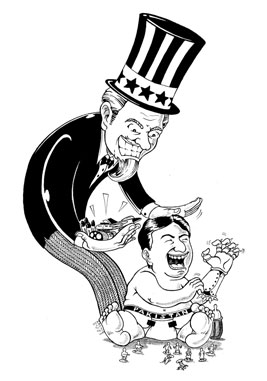
Batas ng Armas: pagsipat sa tunguhin ng ugnayang US-Pakistan |
|
|
|
Kristoffer
C. Reyes
Philippine Collegian
Last updated December 13th, 2007 |
|
|
|
Nang ideklara ni Pangulong Pervez Musharraf ang batas militar noong gabi ng Nobyembre 3, kabi-kabilang kilos protesta ang naganap upang pabagsakin ang kanyang administrasyon. Aniya, layunin ng kautusang ito na bigyang proteksyon ang demokrasya at labanan ang terorismo. Subalit taliwas sa pagpapatibay sa demokrasya ang lahat ng mga naganap matapos ibaba ang batas militar.
Unang tinamaan ang konstitusyon ng Pakistan na napawalang-bisa dulot ng batas militar. Nawala sa ere ang dalawa sa pinakatanyag na istasyon ng telebisyon sa bansa at nakulong ang 140 mamamahayag. Nagkalat ang mga pulis at militar sa kalsada at inaresto ang higit sa 5,000 katao, kabilang ang mga abugado at mga aktibistang tumutuligsa sa gobyerno. Marami ang nasaktan sa marahas na pagbuwag ng militar sa mga demonstrasyon sa kalsada at sinasabing higit na sa 1,000 ang namatay. Sa kasalukuyan, may 2,000 inarestong Pakistani ang hindi pa napalalaya nang walang malinaw na kaso.
Simula ng kapangyarihan
Bukod sa pagiging pangulo, hepe ng pambansang sandatahan si Musharraf. Ibinaba niya ang batas militar sa Pakistan matapos tumutol ang mataas na hukuman sa panibago niyang termino bilang pangulo noong Oktubre 6 nitong taon. Matagal nang hinihiling ng mataas na hukuman na bumaba si Musharraf bilang pinuno ng militar upang malutas ang suliranin sa pagitan ng gobyerno at ng mga militanteng Muslim. Ngunit ayon kay Musharraf, lumikha lamang ng gulo sa pulitika ang mga hukom. Bilang parusa, tinanggal sa pwesto ang punong hukom at 13 pang opisyales. Itinalaga niya bilang kapalit ang kanyang mga kaalyado, na nagpawalang-bisa rin sa isinampang kaso ng dating hukuman.
Una niyang pinamunuan ang Pakistan noong 1999 nang mapatalsik sa isang kudeta ang dating punong ministrong si Nawaz Sharif na sangkot sa maraming kaso ng korupsyon. Dalawang taon ang lumipas, idineklara niyang pangulo ang sarili, binuwag ang parliamento ng Pakistan at nawalan ng kapangyarihan ang punong ministro. Nang magsagawa ng eleksyon noong 2002, nanalo muli si Musharraf bilang pangulo.
Nabahiran ng alegasyon ng pandaraya ang eleksyon at inulit ito noong 2003, kung saan nanalo muli ang partido ni Musharraf. Pinahintulutan siya ng mataas na hukuman na manungkulan bilang pangulo sa kondisyong dapat siyang umalis sa militar.
Matapos niyang ibaba ang batas militar ngayong taon, nagbitiw si Musharraf bilang pinuno ng sandatahan dahil sa pagbatikos ng iba’t ibang bansa at ng Estados Unidos (US), ang pinakamalapit nitong kakampi, sa kanyang panunungkulan. Nanumpa siyang pangulo bilang sibilyan sa ilalim ng bagong mataas na hukuman.
Tunay na pakay
Hindi na bago ang pakikipag-ugnayan ng US sa Pakistan. Noong 1953, kasagsagan ng cold war, nagkaroon ng tag-tuyot sa buong Pakistan. Kasabay nito ang pag-aagawan nila ng India, na kaalyado ng Britanya, sa Kashmir. Sa sitwasyong ito, lumapit ang US at nag-alok ng tulong upang matugunan ang pangangailangan sa pagkain ng mga mamamayan ng Pakistan.
Ngunit malinaw ang pagbanggit ng kasaysayan sa tunay na kalakaran ng US sa kanyang pakikipag-ugnayan sa Pakistan. Kapalit ng pagkain at suportang militar laban sa India, sinimulang gamitin ng US ang teritoryo ng Pakistan upang mapigilan ang pagkalat ng pwersang Sobyet sa Kanlurang Asya.
Noong 1989, nagbanta ang US na babawiin nito ang suporta sa Pakistan dahil sa pagtatayo ng plantang nukleyar na sinimulang itayo ng dating punong ministo na si Zulfikar Ali Bhutto noong 1977. Kasabay nito ang pagkawala ng pwersang Sobyet sa Afghanistan. Tuluyang binawi ng US ang suporta nito sa Pakistan noong 1998 nang subukin nitong magpasabog ng bombang nukleyar upang tapatan ang kalabang India.
Subalit naging biglaan ang pagbabago ng relasyon ng US at Pakistan nang mangyari ang trahedya sa World Trade Center noong Setyembre 11, 2001. Dito nagsimulang makipagtulungan muli ang US sa Pakistan. Nagpanukala si George Bush, pangulo ng US, ng malawakang paglaban sa terorismo at ginamit niya ang Pakistan upang madaling mapasok ang ilang bahagi ng Kanlurang Asya gaya ng Iran, Iraq at Afghanistan – mga bansang mayayaman sa langis. "By 2010 we will need [a further] 50 million barrels a day. The Middle East, with two-thirds of the oil and the lowest cost, is still where the prize lies," ayon sa pangalawang pangulo ng US na si Dick Cheney, isang kaalyado ni Bush. Kasama ng US, nakidigma ang Pakistan sa Afghanistan noong 2001 at sa Iraq sa kasalukuyan.
Umaabot na sa $10 bilyong dolyar ang tulong-militar na ibinibigay ng US simula noong 2001. Kapalit nito ang pagtatayo ng base sa Pakistan na madaling daan tungo sa iba’t ibang bansang nakapalibot dito. Kaugnay nito, upang magamit ang langis ng Iraq, nagsimula nang makipag-ugnayan dito ang US.
Samantala, nagpatuloy ang operasyon ng plantang nukleyar sa Pakistan sa kabila ng mariin na pagtuligsa ng US sa mga plantang nukleyar ng Iran, Iraq at North Korea - mga bansang pinaratangan ni Bush bilang “axis of evil.”
Pananatili sa pwesto
Patuloy pa rin ang suportang militar ng US kay Musharraf na siyang nagkait ng demokrasya at lumabag sa karapatang pantao sa Pakistan.
Sa kabila ng panukala ng Kongreso ng US na bawiin ang suporta sa Pakistan kung hindi ibabalik ang demokrasya sa bansa, positibo pa ang naging tugon ni Bush para kay Musharraf sa pagsasabing, “[Musharraf] truly is somebody who believes in democracy.”
Samantala, hiniling ng United Nations na ibalik ang sistema ng hustisya sa Pakistan. Gayundin, nakiisa ang mga pamantasan sa loob ng Pakistan sa pagkundena sa kasalukuyan nilang gobyerno. Bunga nito, idineklara ni Musharraf noong Nobyembre 29 na aalisin niya ang batas militar sa Disyembre 16 upang manatili sa pwesto.
Hindi paglaban sa terorismo ang tunay na pakay ng US sa pakikipag-ugnayan nito sa Pakistan. Sa halip na itaguyod ang demokrasya, walang ginawang hakbang ang US upang mapigilan ang kaguluhan sa Pakistan na lubos nilang pinakinabangan.
Samakatuwid, layunin ng ugnayang US-Pakistan na panatilihin ang kapangyarihan ng mga namumuno sa bansang ito. Magpapatuloy lamang sa mga darating pang panahon ang paglaganap ng kawalang katarungan sa Pakistan hangga’t hindi magbabago ang mga palisiya ng bansang ito.
Sanggunian:
‘Demand lifting of state of emergency’. Nakuha 14 November 2007 mula sa <www.inquirer.net>
Froomkin, Hasan, K. Sarwar. ‘The Strategic Interests of Pakistan’. Pakistan Institute of International Affairs: Karachi, Pakistan, 1954.
Kemp, Danny. ‘Musharraf appoints caretaker prime minister of Pakistan’. Ageance France Press, 2007.
Pangalangan, Raul. ‘Eerie resemblances in Pakistan'. [2007 November 15]. Philippine Daily Inquirer, pp. A13-A14.
Razvi, Mujtaba. ‘The Frontiers of Pakistan’. National Publishing House Ltd.: Karachi, Pakistan, 1971.
<< back to home
# Philippine Collegian |
|
|
|
|
|
Wasteland: trawling the path of Smokey Mountain ’s “development” |
|
|
|
Larissa Mae Suarez
Philippine Collegian
Last updated December 5th, 2007 |
|
|
|
The worn stereo crackled as Fe de los Santos , president of the activist organization Gabriela-- Smokey Mountain chapter, spoke into a microphone. “Bumaba kayo dito,” she called. “Kailangan nating pag-usapan ang nalalapit na eviction niyo.”
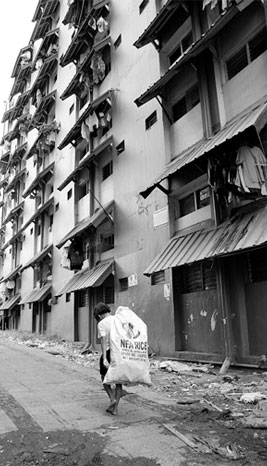
She gazed up at the five floors of the building’s dim interior, which contrasts sharply with its bright orange façade. Other low-cost housing buildings in Smokey Mountain are similarly colored, from blue to pink to green, an incongruous sight in an area of Tondo notorious for its bleak conditions.
As de los Santos spoke, people began trickling down the stairs. Years ago, they had signed a contract with the National Housing Authority (NHA) that made them official beneficiaries of a housing project, but now they could no longer afford their “low-cost” units. Thus, they were keen to learn about the finer points of the contract that most of them were unfamiliar with.
Beneath them, within the foundations of the buildings, are layers of trash, hidden beneath the cement. A stench lingers, along with the signs of extreme poverty that the government, in spite of its efforts and promises, has not eradicated.
Trash talk
Smokey Mountain, where Metro Manila had disposed its waste for decades, consists of two million tons of garbage, rising in some areas to a height of 12 stories. Originally known as Barrio Magdaragat, the surrounding area and water was soon polluted. Former fishermen lost their livelihood and turned to trash scavenging. Other informal settlers quickly followed until the population ballooned to over 200,000 families.
Government attempts at relocation did more harm than good. During the Marcos administration, the Tondo Urban Development Project moved the informal settlers to Batangas, where they lived in overcrowded quarters with no electric or water utilities. The lack of jobs in the province eventually forced them to return to the city to earn a living in Smokey Mountain .
Later, the Aquino administration conducted feasibility studies. Acknowledging the lack of funds, the government conceived an alternative plan. A private company would shoulder the cost of developing Smokey Mountain by constructing low-cost housing units. In return, the company would receive sole discretion over a reclaimed area in Smokey Mountain .
The Ramos administration inherited the concept and acted upon it. The NHA and R-II Builders, a construction firm, signed an agreement for the Smokey Mountain Development and Reclamation Project (SMDRP). The program aimed to develop the garbage dump into a residential and commercial area.
Under Reghis Romero II, a wealthy businessman with links to then-President Fidel Ramos, R-II Builders spent millions of pesos on the construction of 21 five-story buildings, with around 20 units per floor.
However, R-II Builders built fewer units than the 1993 contract required, and at one point required additional funding from various government agencies, including, controversially, the Overseas Worker Welfare Administration.
Yet, the government continuosly renewed the SMDRP contract with the R-II Builders.
During the Arroyo administration, a Senate committee challenged the legality of the SMDRP contract, noting that the R-II Builders failed to complete the project throughout three administrations. The Supreme Court, however, upheld on August 2007 the SMDRP, and awarded 79 hectares of reclaimed land to R-II Builders.
Business as usual
Despite such legal and political maneuverings, residents began signing contracts with the NHA as early as 2001. These stipulated that signatories were buyers of a unit, to be purchased over a 30-year period. The contract was in Filipino, but lengthy queues during the procedure compelled people to sign without reading, eager to move into the housing dubbed as “ Paradise Heights .”
Ramos declared, to much praise from the international community, that the SMDRP was a victory in the fight against poverty. The succeeding Estrada administration touted the signatories of the contract as “awardees.”
The “award,” however, was not free housing for the Smokey Mountain community, but a contract that only reaffirmed their right to purchase a unit.
Residents complained at the meeting with Gabriela that only a few of the units have running water or electricity. They lambasted the “poor” construction; inadequate ventilation and leaky roofs are common. Diseases like tuberculosis and dengue spread quickly in the cramped conditions.
They traded stories of poverty. A man moved to the fifth floor after suffering a stroke because the upper units are cheaper, though he could barely climb the stairs. A couple divided their unit into three and rented each portion separately, despite the restricted space and the ban on renting out a room.
Furthermore, eviction without notice is the stated punishment for violating the contract rules, which include paying the NHA at the beginning of each month.
The rates are supposedly socialized, yet the cost of taxes and additional expenses often amounts to more than the principal payment itself. There is the standard housing tax, the penalty tax and loan interest for late payments, and the monthly fire insurance. Also, older residents are charged higher rates, since they presumably have less than 30 years to complete their payments.
As a result, a principal payment of P600 can be bloated up to P1,400.
“Ginagawang negosyo ng gobyerno,” said Des Abiao, a Smokey Mountain resident and Gabriela organizer. “Tumutubo sila sa pamumuhay naming mahihirap.”
Problematic politics
The recent purported distribution of cash gifts by Malacañang to congressmen and local politicians has reinforced the Smokey Mountain community’s distrust of the government and contractors.
“May kwento ako sa inyo tungkol kay Romero,” said de los Santos during the meeting. The people listened as she told of Senator Panfilo Lacson’s claim that part of the money used to finance the handouts had come from Romero’s bank account. This, said Lacson, was deposited by the Department of Budget and Management in partial payment of the P3 billion collectible of R-II Builders. Romero denies involvement.
Abiao lamented, “Ang dami sanang ibang pinaggamitan ng perang ‘yon. Puwedeng sa malinis na tubig, dagdag na tirahan, clinic para sa buntis, o kaya palaruan para sa bata.”
When the SMDRP was first launched, the government promised to transform the garbage dump into a paradise, with adequate housing, jobs, and livelihood training. The current condition of Smokey Mountain indicates otherwise. The promised jobs have not materialized, and the housing is substandard and costly.
After the meeting, the members of the community gathered around Gabriela representatives, asking them for help and advice. They have no one else to turn to, for the current and past administrations, along with R-II Builders, failed to fulfill the terms of the SMDRP. Corruption flourishes in the upper echelon of government and businesses. The consequence is unalleviated poverty for the masses, who are promptly forgotten in the muddled state of affairs.
<< back to home
# Philippine Collegian |
|
|
|
| |
Artwork by : Janno Gonzales |
| |
|
| |
|
| |
Artwork : Ivan Reverente |
|
| |
|
|
|
|