|
Malayo ang tingin ng mandirigmang Manobo. Walang pag-aalinlangan niyang hawak ang pana at palaso. Pinalilibutan ng masukal na kagubatan, bakas ang tahimik na katapangan sa kanyang mukha.
Kung titingnan nang mas maigi, hindi nag-iisa ang mandirigma. Sa likod niya, nakadapa sa damuhan ang mga armadong gerilya.
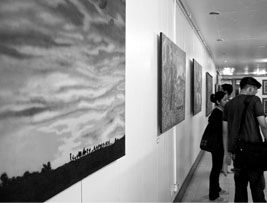
Ito ang makikita sa “Red Warrior/ Pulang Bagani,” isa sa mga obra na itinanghal sa eksibit ni Parts Bagani, isang pulang mandirigma at artista. Unang inilabas sa Faculty Center ang eksibit noong Oktubre. Sa tulong ng mga organisasyong pinangungunahan ng Alay Sining at First Quarter Storm Movement, ipinalabas muli ang exhibit nitong Nobyembre 26 - 29, 2007. Ang kikitain mula sa pagbenta ng mga painting at digital reprint nito ay mapupunta sa pagpapagamot kay Propesor Monico Atienza.
Sangtwaryo
Kasapi si Bagani ng New People’s Army (NPA), kilala bilang pinakamatagal nang communist ‘insurgency” sa buong Asya. Ang NPA ang militar na sangay ng Communist Party of the Philippines. Sa kanayunan ang kalakihang pagkilos ng NPA sa paniniwala nilang dito pinakamahina ang kawing ng estadong namumuno sa isang lipunang mala-pyudal at mala-kolonyal.
Mayaman sa detalye ang mga gawang sining ni Bagani. Buhay ang kalikasan sa mga larawan niya, mula sa matingkad na kulay ng takipsilim hanggang sa berdeng kagubatan. Hango ang mga ito sa kaniyang karanasan sa larangang gerilya. May ilang dibuho ng mga kubong tinitirhan ng mga minero sa Mindanao, o kaya’y simpleng kaldero ng kanin na may katabing mga riple. Minsan nama’y mukha ng mga taong nakasalamuha niya – mag-asawang Manobo na may hawak na riple sa gitna, o matandang babae na kilala bilang ‘Nanay Sora’ na diumano’y laging nag-aalaga sa kahit sinong ihabilin sa kanya.
Mahalagang aspeto ito sa paglikha at pagkilala sa rebolusyonaryong sining. Ayon sa The New Mass Art and Literature ni Kris Montañez, dalawa ang batayang estetika ng rebolusyonaryong sining: klarong rebolusyonaryong politika at masining na porma. Dahil sa pilosopiyang “mula sa masa, para sa masa,” kinakailangang ipakita ng rebolusyonaryong sining ang kalagayan at karanasan ng mga naglulunsad ng armadong pakikibaka. Kailangang pumaloob ng rebolusyonaryong artista sa masa, damhin ang kanilang dinadama, makipamuhay at makibaka sa kanilang piling.
Wala pa sa kalahati ng lahat ng mga gawa ni Bagani ang makikita sa FC lobby. Halong maliliit na dibuho at mga obrang sinlaki ng pader ang nasa exhibit. Simpleng bolpen, lapis at sketchpad ang ginamit sa mga dibuho para may mabilisang lalapatan ng inspirasyon at madaling itago sakaling may engkwentro. Sa kabila ng mga ulat ng administrasyon na malapit na nilang madurog ang puwersa ng mga rebelde, nakakalikha si Bagani ng malalaking mga obra gamit ang acrylic, airbrush, at air compressor— nangangahulugang may espasyo sa kilusan kung saan hindi banta ang militar.
Militarisasyon
Sa lawarang ‘Militarisasyon,’ agaw-pansin ang mga anino sa ilalim ng pulang takipsilim. Sa isang sulok, may umuusok na kalansay ng mga sasakyang pang-militar na tinanggalan ng makina para mapakinabangan pa. Sa kabilang sulok ay may prusisyon ng mga sibilyan, kasama ng mga pulang mandirigma. Ipinakikita dito na dinadala ng taumbayan ang mga pulang mandirigma sa ligtas na lugar habang patuloy na nagtatanod ang dalawang helicopter sa himpapawid.
Malayo sa matiwasay na konsepto ng sining na ipinagdiriwang ng estado ang pinapaksa ng sining ni Bagani. Bihira, kung hindi imposibleng makahanap ng ganitong sining sa mga art gallery ng Megamall o Ayala Museum. Kadalasang tahimik at magaan sa mata ang pinapaksa ng mga painting na mahahanap sa mga lugar na ito, habang ang sining ni Bagani ay humahatak ng kritikal na reaksyon mula sa makakikita nito.
Maituturing na oposisyonal na sining ang mga likha ni Bagani na may mahaba nang kasaysayan. Mula pa sa mga gawang sining ni Juan Luna laban sa mapaniil na pamamahala ng España, nananatiling buhay ang oposisyonal na sining sa porma ng rebolusyonaryong mga larawan, progresibong dibuho o komiks, at kahit mga graffiti na mala-kabuteng sumusulpot sa lansangan.
Ayon kay Propesor Alice Guillermo, ang oposisyonal na sining ay “umbrella terminology” para sa sining ng protesta, rebolusyonaryong sining at iba pang porma na bumabangga sa mga mapaniil na kondisyon ng lipunan. Iba-iba naman ang lebel ng pakikibaka ng mga sangay nito. Habang ang ibang oposisyonal na sining ay humihingi ng reporma, partikular na aspeto ng rebolusyonaryong sining ang paghimok nito ng radikal na pagbabago sa mismong istruktura ng lipunan.
Marami nang pagbabago sa kalidad at estetika ng rebolusyonaryong sining sa Pilipinas. Ayon pa rin kay Montañez, hinahasa ng proseso ng “mass criticism” ang gawa ng mga rebolusyonaryong artista para lalong maging epektibo ang pagpapadala nila ng mensahe. Dahil dito, naitataas ang antas mula simpleng propaganda upang maging sining.
Bawat hakbang, tagumpay
Kapansin-pansin sa eksibit ni Bagani ang kawalan ng kahit na anong bakas ng madugong pakikipaglaban, kahit na mga dibuho ng paghahanda para sa digmaan ang kanyang ipinapakita. Isang tahimik na gabi sa kagubatan ang matutunghayan sa larawan na “Sangtuwaryo.” Sa ilalim ng nagtataasang mga puno, nakasilong ang isang kampo ng mga gerilya. Ang ilan ay naghahanda para sa isang taktikal na operasyon laban sa militar habang ang iba ay may hawak na armas at gitara. Sa “Gawaing Masa,” may isang grupong naglulunsad ng diskusyong pulitikal. Handa na ang mga armas at plano. Kulang na lang, ang engkwentro.
Mapayapa ang rebolusyon na ipinakikita ni Bagani. Pero habang itinatanghal ang matiwasay na buhay sa sining niya, kailangang isaisip ang mga nagaganap sa labas ng kanyang sining: ang madugong giyera sa kanayunan na hindi natin nakikita at ang ideolohikal na tunggalian na nagaganap sa mga makasasaksi sa kanyang gawa.
Maaaring sabihing hindi na kailangang ipakita ang karahasan ng digmaang bayan—tinutugunan na ito ng mga balita sa diyaryo at telebisyon. Binabangga ni Bagani ang kamalayan ng marami na natural lamang ang kaayusan ng lipunan. Dahil sa pagtatampok niya sa larangang nagnanais baguhin ang lipunan gamit ang armas, itinataas niya ang rebolusyon sa ideolohikal na digmaan. Habang inilalarawan ng estado na marahas at walang saysay ang armadong pakikibaka, ipinipinta ni Bagani ang mapayapang disposisyon ng mga pulang mandirigma, at ang pananatili nila sa hanay sa kabila ng pagod, gutom, at panganib.
Mahalaga ang kultural na mandirigma tulad ni Bagani sa larangan ng ideolohikal na digmaan. Habang nagaganap ang pakikipaglaban sa kanayunan sa pagitan ng militar at mga pulang mandirigma, at may mga gumagawa ng sining na pilit nagtatampok ng matiwasay nilang mga mundo, patuloy naman ang pagpinta at paglikha ng sining na repleksyon ng pulso ng mamamayan. Tunggalian ito ng ideolohiya at espasyo. Unahan na lang sa diwa ng karaniwang tao.
<< back to home
# Philippine Collegian |
|
Dogeaters, Atlantis Productions
Director: Bobby Garcia
Based on a novel by Jessica Hagedorn
“You know where the term dogeater came from? The Americans, of course. Oh they were quite crude and creative with us.”
- Perlita Alacran, Dogeaters
Dogeaters, Filipinos were christened. No excuse, therefore, to recoil with disgust at the thought of one’s favorite pet swimming in caldereta soup, tenderized to chewy softness, in between slices of bell pepper and potatoes and garbanzos. Or perhaps its skin burned to a crisp first, then chopped, cooked in vinegar and ginger for a delectable serving of kilawin, with rounds of beer. Or else just put everything together, dog meat, onions, soy sauce and vinegar, a dash of pepper, a bay leaf or two, and you get the ubiquitous, ‘national dish’ adobo.
Similarly, by calling her debut novel Dogeaters, Jessica Hagedorn exposes her intention of representing a people, the term harsh and pejorative but seemingly proud and unapologetic at the same time. And true enough, (Western) critics raved about it being the ‘best novel available about the vibrant, bewildering Philippines,’ an almost encyclopedic reference guide to the former US colony during the chaotic Marcos years.
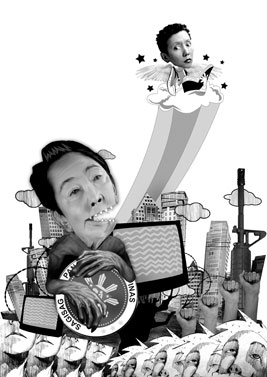
First staged in Broadway, Atlantis Productions brings the play adaptation of this bestselling novel to Philippine soil with a powerhouse cast, with the likes of Michael de Mesa, Joel Torre, and Gina Alajar playing multiple roles. True to its book version, the play is a dazzling spectacle of characters, from a Filipino-American hustler from Tondo to Imelda Marcos herself, and a cacophony of sceneries, from posh Makati golf courses to NPA-infested Kalinga mountains.
Full (dog)house
The play was able to demonstrate the novel’s trademark pastiche type of narrative, making use of a wide variety of forms and style available, in a kaleidoscopic world of disjointed storyline. Just as there are chapters from the novel wholly lifted from radio shows, TV commercials, love letters, and even entries direct from reference books, Dogeaters the play assaults the senses with dance numbers by drag queens, Filipino kundiman songs, and breath-taking lighting.
In one memorable sequence, five scenes were at once taking place on stage: the honeyoon of a working class couple, a bomba queen giving a military general oral sex, a half-American hustler making out with a gay German film director, a recalcitrant daughter in somber confession in church, and the said general’s wife loudly mouting exotic incantations, kneeling and arms outstretched. While highly dramatic, however, this scene alone reveals a major flaw of the production: It tried to too much.
Subscribing to a postmodernist bent, the play ‘lends itself easily to consumer capitalism’s drive to sublimate everything into self-gratifying spectacles’ – feminism, the communist movement, social stratification, these highly complicated concepts reduced to items in exhibit, their ideological and political loads conveniently lifted. In one scene, the NPA, a highly demonized element of Philippine society, are portrayed as a rough, radical group waging a revolution (that speaks perfect English).This postmodernist trait reduces everything to mindless, disparate spectacles devoid of history.
Both the novel and the play were guilty of succumbing to the allure of postmodernist tag, which consequently diminished its bite. Such non-linearity and formlessness of story-telling, moreover, belie the historical project of the works. The play, which features the iconic assassination of a critical opposition senator and his supposed gunman, claims a truthful account of the waning years of Martial Law. While postmodernism rejects structure, history is essentially a continuous and rigid province. Here lies the contradiction. This attempt to adopt a postmodern account of the events leading to the end of Martial Law poses problems because of this dichotomous difference. Martial Law became another spectacle.
Dogs and dogeaters
By calling the novel Dogeaters, moreover, Hagedorn aimed to exoticize Filipinos. A move that proved successful since the novel became an instant bestseller, the first Filipino novel, in fact, to be nominated for the American National Book Award. It had since been identified with Filipino mysticism. This is rooted on postcolonial theorist Edward Said’s theory of orientalism, which banks on a long tradition of false and romanticized image of Asia as outlandish and even bizzare from the West’s point of view. Dogeaters, with its mutli-racial and multi-cultural cast, continues to fascinate the West. At the expense of the spectacles – ourselves.
This exoticism is also grounded on the cosmopolitan temperament of New York, which prides and distinguishes itself as the ultimate smorgasbord, a melting pot of cultures and nationalities. Interestingly, Dogeaters was first staged in Broadway. Similarly, Hagedorn migrated to New York when she was 13 and has lived there since. Out of this melting pot of cultures and races emerges the issue of representation. While so-called ethnic writers are competing for recognition and even inclusion to the elitist canon, skewed power relations between the colonizer and colonized continue to govern and, in turn, subjugate these seemingly disparate elements.
Sleeping dogs
In between its all-changing sights and sounds, however, lie gaps and silences often ignored.
Since Dogeaters tackles too much material, it is more productive, therefore, to examine the points it chooses to exclude. It is this disjointed and many-sided quality of the pastiche narrative, this attempt to bombard the senses with a barrage of forms and style, which renders it susceptible to loopholes in content.
For instance, its journalistic project selectively ignores some well-known historical givens. It does not say that Marcos was largely US-backed despite declaring Martial Law, until losing mass support up to the 1986 revolution. In the same vein, it pokes fun at the stonewalling logic of Imelda, specifically when asked about widespread poverty. The Iron Butterfly rambles and asks, ‘These people have nothing to begin with. How can I steal from those who have nothing? Nothing can be gained from nothing, di ba?’ It pokes fun at such travesty, as if all blame should be directed to the Marcoses, but does not take into account that the US controls them with an iron hand.
Furthermore, it amusingly depicts and derides Filipino colonial-mindedness yet ignores the fact that it was and is US’s imperial conquest that ‘exacerbates feudal iniquity in the Philippines, bringing about the diffusion of international labor that transformed the US as metropolis of modernity and the Philippines as a source of cheap manual and mental labor. Literary critic Epifanio San Juan describes this common trend in Filipino cultural production in the US as containment via ‘tactical omission.’
All these portrayals acquit the US in its pivotal and deliberate role in the situation of writers in exile, such as Hagedorn. In the play, it is depicted as nothing more than a sanctuary, an option for the disgruntled, and a glorified dream for many, innocent and blameless, while its influence is palpable all throughout.
The play is loud and vibrant, yet tellingly silent on the things that matter more.
<< back to home
# Philippine Collegian |