
PAANI MORCHA
Previous | Home | Contents | Next

The Looming Water Crisis
What Does it Mean to Us?
Topics
Introduction
Virgin Flows
The Meaning *
Macaulayan Mindset
Recharge Ground Water
Alternative Schemes
Irrigation
De-forestation and Revival of Rivers
Population and Water Pollution
Reliving Our Mistakes
Inter-Basin Transfers
Conclusion
Top
Table of Contents
|
Today, however, in view of the looming water crisis, it is obligatory for us to carry out a close examination of the water management policies followed since independence. My grand daughter, Swara Bhaskar, sitting recently for the last Xth. class Board Examination asked me the other day, "Nana", do you know the benefits of the 'multi-purpose' river valley development projects?" And when I replied in the negative, she said, "I'll tell you, they are, firstly increased irrigation, and then power generation, growth of fisheries, improved forestry, protection of animals and improved bio-diversity, improved navigation, better flood control, prevention of soil erosion and better tourism." 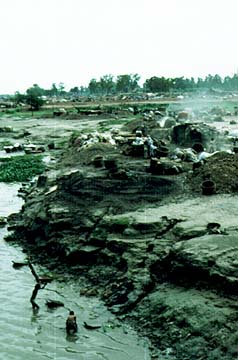 A bleached YamunaI then told her that excessive canal irrigation had depleted the flow of rivers , thereby lowering the water table due to lack of recharge for eight months every year, and this along with some thirty percent losses in the canal system, had reduced the overall irrigation potential. It was a case of robbing the poorer Peter, the well user, to pay Paul, the rich canal using farmer. And the robbed ones were much greater in numbers. As regards power generation, many small hydro-electric projects could have been set up instead of one mega one for the same result; forests had actually been destroyed; soil erosion and flood situation had worsened; rivers' fisheries and navigation had been totally destroyed; animals and bio-diversity were worse off and river tourism had been devastated. Swara laughed and said that if she were to write all this, she would surely fail in her examination! |