 KNOWING
ME
IS KNOWING
YOU
KNOWING
ME
IS KNOWING
YOU
|Home| |About Us| |Participants| |Digital Learning and Teaching Modules| |Teachers' Corner| |Feedback| |Recognition| |Contact Us|
|
|Home| |About Us| |Participants| |Digital Learning and Teaching Modules| |Teachers' Corner| |Feedback| |Recognition| |Contact Us| |
|
ACTIVITIES Famous Stories Travel around the World
|
CELEBRATIONS Click here to see more contributions to this activity
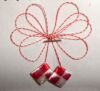
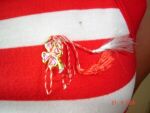
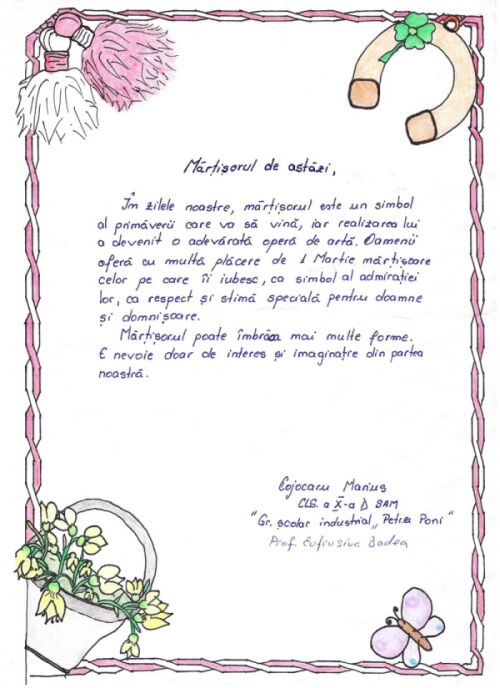
March 1st (The Little March Amulet)
Mărţişorul (The Little March Amulet) celebrates the coming of spring. Every year the Romanians knit two little tassels: a white and a red one. On March 1st boys/men offer this amulet to the girls they love… Every year the primary school teachers from our school teach their pupils how to make „martisoare“ (little March Amulets). Click on the following links to see some video clips: Ana, Luca and Alin. (4th grade A)
Click here to read more. (Ro) Romania's National Day. The union of the Romanians (and of all the territories lived by them) with the "mother country" was proclaimed on the1st of December 1918. The Great Romania was thus achieved.
Every year on this day one can see a military
parade near the Triumphal Arch. Saint Nicholas' Day. The Romanians polish their boots and place
them carefully at the entrance door. The old Saint Nicholas comes and puts a
present (especially sweets) into the people's boots. |
Coming up soon Our Global Calendar
|
|
© Project coordinator: Andreea Silter, Department of English, School No. 191, Bucharest, Romania Last updated: 03/05/2008 |
 School No.191
and Petre Poni High School, Bucharest, Romania
School No.191
and Petre Poni High School, Bucharest, Romania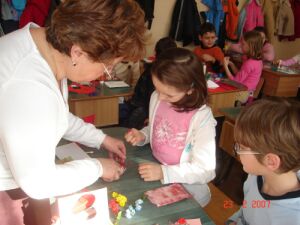
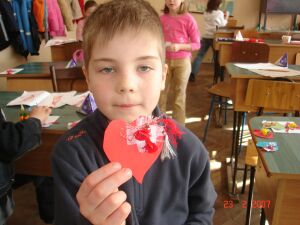
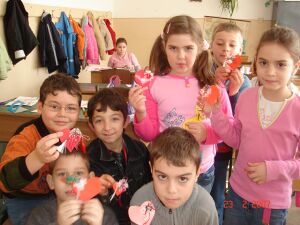
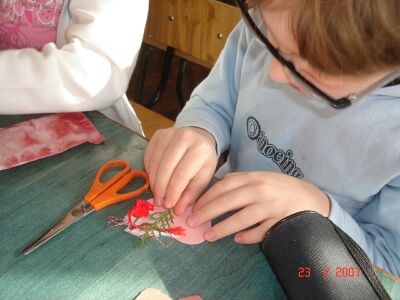
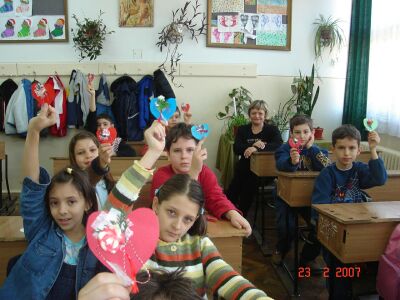
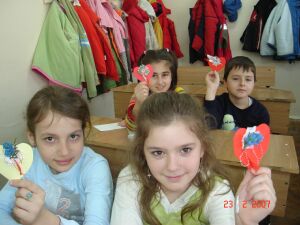
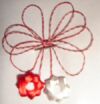 "Mărţişor"
is the traditional celebration of the beginning of the spring in Romania on
1st March. The day's name is the diminutive of March and means something
like "little" or "dear March". Nowadays, men offer women a talisman object also
called Mărţişor, consisting of a jewel or a small decoration like a
flower, an animal etc., tied to a red and white string. However, giving a little
nickel tied to a red and white string is an old custom and was originally
designated for both men and women. It was believed that the one who wears the
red and white string will be powerful and healthy for the year to come. The
decoration is a symbol of spring.
"Mărţişor"
is the traditional celebration of the beginning of the spring in Romania on
1st March. The day's name is the diminutive of March and means something
like "little" or "dear March". Nowadays, men offer women a talisman object also
called Mărţişor, consisting of a jewel or a small decoration like a
flower, an animal etc., tied to a red and white string. However, giving a little
nickel tied to a red and white string is an old custom and was originally
designated for both men and women. It was believed that the one who wears the
red and white string will be powerful and healthy for the year to come. The
decoration is a symbol of spring.