|
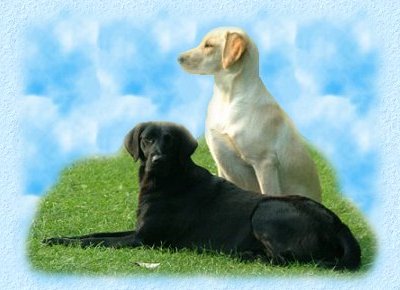


The early members of this breed originated in Newfoundland, Canada, rather than Labrador as the name suggests. They were once known as the black water dog, the Newfoundland, or the St. John's dog. The Labrador was trained to jump overboard and gather the ends of the fish filled nets in its mouth as it's boat neared the harbor. The Labrador would then haul them ashore, where it's human crewmates could empty the nets. It would also retrieve the cork floats of the nets and swim them in to land, so that the fisherman could haul in the catch themselves. The Labrador collected the fish that fell out of the nets and also excelled at retrieving water birds.
The modern Labrador continues the proud tradition of service. They can be trained to detect narcotics and explosives, they are used in police work and in the armed services. They are also used as gun dogs, since they are skilled at trailing wounded animals and do not damage game with their "soft" mouths when retrieving them. However, the Labrador is most famous for its use as a guide dog and assistance dog for people with disabilities.
- AKC GROUP: Sporting
- COUNTRY OF ORIGIN: Canada
- HEIGHT/WEIGHT: Males 22.5 to 24.5 inches, 65 to 80 pounds, Females 22.5 to 23.5 inches, 55 to 70 pounds.
- COLOR: Black, yellow (ranging from fox red to light cream), or chocolate. A small white spot on the chest is allowed.
- COAT TYPE: Short, straight and dense, with a weather resistant undercoat.
- TEMPERAMENT: Friendly, outgoing, tractable and eager to please.
- INTELLIGENCE: High.
- LIFE SPAN: 10 to 15 years
- FUNCTION: Companionship, hunting, retrieving, guide dog, therapy dog, drug and explosive training dog.
- WATCHDOG: No (though I don't truly believe this is the truth for all labs, as my chocolate is a great watchdog).
- GROOMING: Minimal grooming required, i.e., nail clipping, ear cleaning (this is important as labs are prone to ear infections from the water they get in the ears while swimming), teeth cleaning.
- ACTIVITY LEVEL: Outdoors; high, Indoors; moderate.
- TRAINABLE: Excellent, eager to learn.
- GOOD WITH CHILDREN: Yes.
- GOOD WITH OTHER PETS: Yes.
- HOME ENVIRONMENT: Urban, suburban, or rural, with proper exercise.
Please Tell A Friend About My Site :)
TOP OF PAGE
This web site is designed and maintained by, Webmistress63
The main graphic created for this page is a derivative work
from a photo by Ian Britton. Used with permission.
©FreeFoto.com
Contents of this site, unless otherwise indicated,
Copyright © 2000-2007 N2TCHNK9S. All Rights Reserved.
|

 Home Page
 Coming Soon!