What would you do if you were like me a Transylvanian trying to find your place in America when, after a year, you were forced to return home to renew your visa?
Injustice, lack of opportunity, violence, corruption — that's what the Transylvania I grew up in was about. So let's say you're just a little happy you escaped all that. A visit there could only reinforce your decision to get as far away as possible, right?
Also — don't forget — you're a modern woman. The cheap trinkets and folkloric crapola that pass for tradition in your country couldn't possibly victimize you. No mushy nostalgia and sentimentality for you. You'd hedge at your hometown's familiarity, its hominess, it primitiveness.
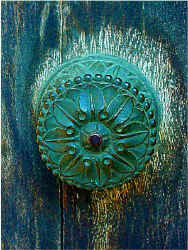
But you surprise yourself by musing about the the charming old copper doorknobs, the antique lamps in front of the town hall, all the little things that seem like jewels compared to America's assembly-line rubbish. You think, "Ah, this is home." Just imagine!
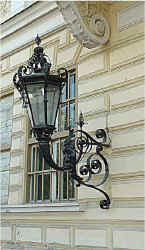
I returned to my hometown of Zalau in May 1999. On a Sunday morning, I took a stroll, looking for postcards to send my friends back in Louisiana. But Zalau isn't Paris, and what passes for a landmark here — I mean, who'd want a postcard of the Zalau Municipal Hospital? Or the Silvania department store?! Or the morgue?! So I resolved to take some shots of my own, hoping they might make decent — or at least interesting — postcards.
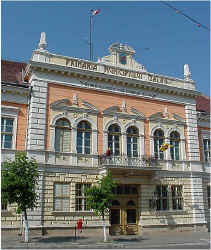
I set out to capture the bustle and vitality of my hometown: the workers pushing their crowded vegetable carts to market, the old men and women carrying bundles and plastic bags loaded with bread loaves, the folks hauling huge flasks of water and chatting animatedly with one another around the artesian fountains. You don't see this kind of life in Louisiana, where the streets seem as deserted as Tombstone after a shootout.
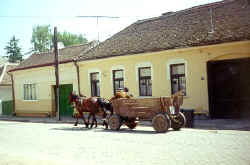
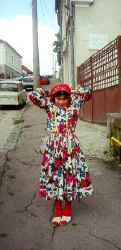
Meandering through the old cobblestone lanes, I passed the ruins of the little warehouse where I used to hang out as a kid and read books. Florea Vlad, a young Gypsy girl, skipped by and I asked her to pose for me. She blushed, but did so eagerly, gracefully arranging her hair and colorful clothes. People smile real smiles here, I thought, not like the dim, cover-girl smiles you see in the States.
In the center of town, the Hungarian Reformed Church, my mother's denomination, overflowed with Sunday worshippers.
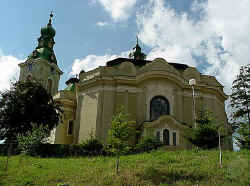
The white walls reverberated with the young priest's plaintive voice, urging his congregation to forget their grudges against the Romanians in this disputed territory. People listened meekly, with a mixture of worry and resignation.
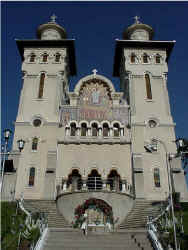
Across the street, the Romanian Orthodox Church, which my father attended, was packed full. The loudspeaker at the door chanted the names of the Romanian dead like some poetic litany: "Florica Sabou, Vlad Marascu, Ion Pop, Vasile Minzatu, Ion Simion, Liviu Sabadus, Ilie Cobirzan...."
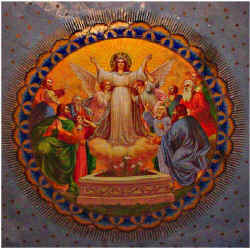
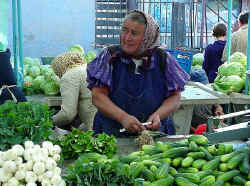
I continued on to the farmers market, where everything from vegetables and paprika to Chinese T-shirts and cheap Turkish shoes filled the rickety stalls. People couldn't afford much. Most simply stared.
I recoiled in shock when I ran into some old high school friends. "They look so weathered and resigned," I thought. "Is that what I look like?" It was clear their lives were going nowhere. They were stagnating, powerless, hopeless. They looked at me sadly. "We can't even afford to go mad out of despair," they lamented. "We have to help our children and our parents survive. We wonder what our life is about." They told me they watched Latin American soap operas on TV, just so they could dream about romance and life's rich delights. "At least we don't move while we watch," they muttered. "So we don't get hungry."
I was gripped by fear. I could end up like them, the walking dead! What if I get stranded here? What if some idiot bureaucrat screws up my American visa? I felt the frantic urge to run to the visa office, to make sure nobody forgot my application. "Say, is there Internet here?" I asked my forlorn friends absurdly. "I need badly to check my e-mail." Right, I thought, the Internet? In this dusty town? What a joke! As it turned out, there were two places I could check my e-mail — Zalau not only had a computer dealer, but an Internet café!
I returned home somewhat calmer. New yellow pipes marked the gas trajectory along our street. People didn't have to drag around those cumbersome carts with heavy metal gas containers anymore. In the past, they stood in line for weeks, day and night. Change was coming to Zalau, slowly. "Perhaps the sewage pipes will be in next," said my mother, hand-washing the laundry. "The Opposition promised to take care of it if they get elected. Also, they'll get us better salaries and pensions. As it is, we can barely eat." I tried to humor her: "Until then, you get to watch soap operas."
She laughed.
I went back to the U.S. musing. Life at home is still hard, but I do miss the copper doorknobs and the world that made them sometimes.
Previously published in:
www.oxygen.com, January, 2,000
