
Floristics and Forest Structure of Monsoon Forests
in Mae Wong National Park, Thailand
Martin M. M. Greijmans* and Martin van de Bult**
*Forest Research office, The Herbarium/Silviculture Research Division &
Natural Resources Conservation Office, National Park Division Royal Forest Department,
Pahonyothin Road, Chatuchak, Bangkok 10900, Thailand
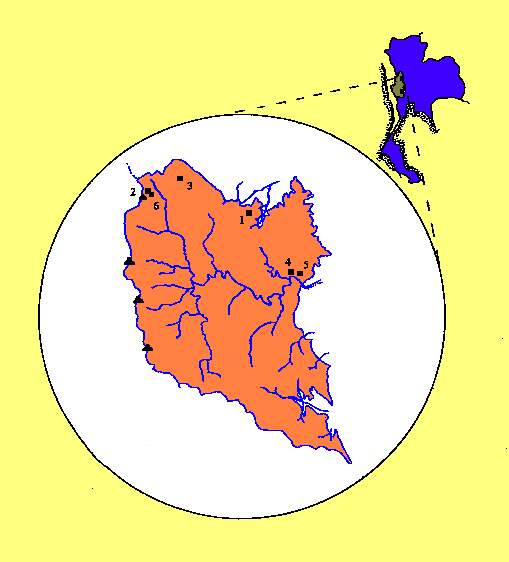
Monsoon forests are much degraded in Thailand due to encroachment, fire and illegal logging of for instance Teak in the lowlands. Thailand's protected forest assets have not been sufficiently studied, thus making it difficult to estimate its biodiversity status and the speed of which species are disappearing. Four monsoon forest types were studied in Mae Wong National Park using six transects at different altitude zones.
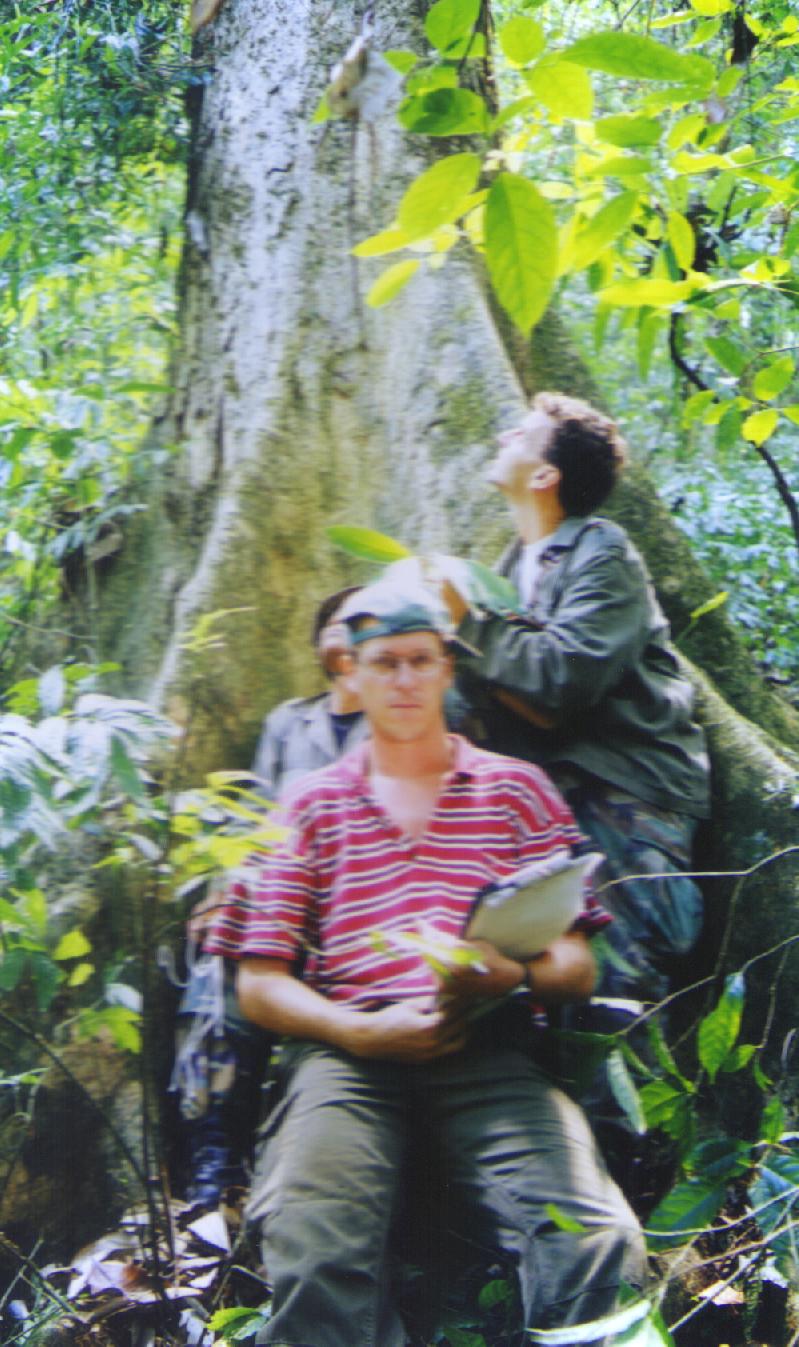
Of all woody species, with a minimum girth of 10 cm, tree dimensions were measured including, girth at 1.3 m, tree height, bole height, crown radii and position, consequently forest profiles and crown maps were drawn. All forest types were studied by means of stand structure analysis and species identification. At lower altitudes deciduous forest mixed with bamboo and deciduous dipterocarp forest were the common forest types, at higher altitude zones mixed evergreen/deciduous and evergreen forest were found predominant. Species diversity and the three dimensional structure of the forests are discussed. In terms of species richness and diversity the evergreen forest is comparable to rain forest types around the world. One area of disturbed deciduous forest had a similar species richness to that of an evergreen forest. The reason for this was a high tree density in the smallest size class containing most species, which explains its high diversity and structural complexity. The vertical organisation of evergreen forest is not uniform and contains a complex species distribution.
Anthropogenic disturbance in the evergreen forest was minimal, unlike in the deciduous lowland forest types, which were subject to anual fires and illegal logging. Estimating the status of a forest type by looking at the diversity of species and forest structure combined provides a range of information. By understanding the forest characteristics and how they have been manipulated, more effective and ecologically sound management regimes can be designed for each forest type in which conservation is vital.

Keywords:
Forest Types, Floristic Composition, Forest Structure, Biodiversity, Thailand.

Contact me for more information:
