 |
| The most effective way to catch crayfish is by setting a trap (more on that later). However, with a trap, the crayfisher can avoid the mud, wet shoes, and other unpleasantries that make the pastime enjoyable. The kind of crayfish catching in which I specialize is much more low-budget and interesting. Here's how: - find a muddy section of the river or stream and look for large, flat rocks.The water should be 1-2 feet deep, unless you have snorkling gear. - slowly lift the rock so that you pull up the side away from you. This way, the crayfish won't scoot away between your feet. - let's say there is a big crayfish under the rock. If he's agitated and decides to jet, don't drop the rock and take chase. Instead, follow the crayfish with your eyes. Usually they simply scoot under another rock. - if the crayfish decides to stay put, slowly let the rock down without disturbing the silt. Now, sneak your hand behind him (remember, they move backwards) and grab him right before he crawls into your hand. |
| Catching Crayfish |
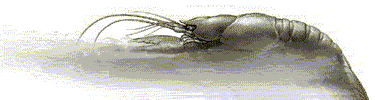
| I can think of no better word as "crafty" to describe these creatures. They have an uncanny ability to elude capture, so let's first examine their evasive advantages: - they can jet backwards using their tail (see below). - they like to live in muddy areas that have low water-visibility. - they are clever and resourceful. |
|
| What? You didn't grab fast enough? He got away? |
| Often, an ideal set of circumstances may deteriorate if the crayfish decides to jet or if silt obscures your sight. This was once a problem for me too... |
| ...Until I invented the "Crayfish Scoop" |
| Back to Matt Hamilton's Tribute to Crayfish |
| And now, a few words on crayfish traps. What follows are three different traps that allow you to be catching crayfish while not actually working. I am no fan of crayfish traps; however, for all you lazy people, I have provided a step-by-step manual for building each. 1. Trap that looks like a pyramid 2. Concentric circles trap 3. Ultimate lazyman's trap |