Haiku is a writing form that began in Japan during the 17th century. Haiku are short, imagistic poems about the things that make people feel connected to nature. In Japanese, haiku traditionally have seventeen short sounds divided into three lines of a 5-7-5 syllable pattern, with the middle line longer than the first and third lines. In Japan, people of all ages and walks of life write haiku and people all over the world are writing haiku in many different languages. Most haiku, though not all, reflect nature or one of the four seasons. The words of haiku should evoke in the reader the emotions felt by the poet in a specific instance or moment, but should not merely describe these emotions. Effective power of poetic device in language comes from simplicity, elegance and concentration of mind. You are suggested not to repeat words or ideas which convey the same meaning or feeling. That is, you should avoid redundancy. Haiku writing is a nice way to make yourself observe your surroundings, which makes for good community members!
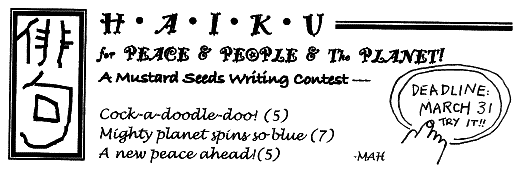
MUSTARD SEEDS HAIKU WRITING CONTEST: Try writing a haiku of your own on the themes Peace, People, and the Planet and send it in to Mustard Seeds by email, post or fax before the end of March 2003. Tell your friends to try writing some haiku too - let's collect a lot of orginal poems! Haiku with two authors are also acceptable. The three best writers will receive some fun eco-friendly prizes. So get out your pencils and find a space in your heart to begin! The haiku received by the end of March will appear in the next Mango Smiles. Do a 'Haiku' search on the internet and you can get a lot more information and inspiration for writing your own.
Go to:
Front cover
Mango Bite: An interview with Ruby Spiegel by Hia Mookherjee
Peace Crane Story
Mustard Seed - Japan Projects and News
Mehandi: Mini Chaterjee's cultural corner
Book Review by Jijo Raychoudhuri
The (Japanese) Public Bath by Ruby Spiegel
PEN-PAL Connections
Letter (from Mayumi)
Virtual Library by Pradeep Parekh
HAIKU for peace and people and the planet
Back cover