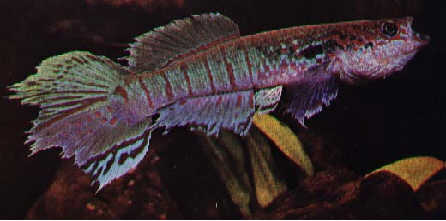
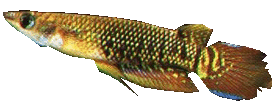
Blue Gularis (Aphyosemion sjoestedti) the blue Gularis might be with 12 cm body length the largest representative of the Aphyosemion. As a bottom spawner it needs a particularly furnished aquarium to breed, the size 60 X 30 X 30 cm is recommendable. For easy removal off eggs one use a container of about 20 x20 cm 6 to 10 cm high, with 3 to 4 cm of peat laid the fish will use this place for breeding . We boil the peat before use and wash it lightly after with tap water, the brown colour of the water disturbs neither us nor the fish. Plants: we need not, however some floating plants will be OK. In such a way prepared aquarium we set the breeder. We not need to be limited by an individual Pair, but can use 2 to 3 pairs and some additional females, to not forget to cover the tank The fish begin soon with the hart work of breeding. We must supply now a variety of food. Particularly worms, including smaller earthworms. After approximately 4 to 6 weeks we take the peat from the aquarium, give it to a net of fine mesh size and let it drip off. Then we press the water out, so it is not dripping any longer and wrap the peat in paper for a few hour so it is only slightly wet, we can put the peat with the eggs in to a plastic bag. The eggs are relatively large, about 1.5 millimetres in the diameter and rather hard shelled. After we changed half of the water of the breeding tank, we can use the tank again, as described before for breeding. we now have to wait 4 to 5 months, after 4 month! the peat in water! about 8 to 10 cm deep. Then wait about 30 minutes and bingo instant baby fish, with a bit of luck! After some hours we catch, the young fish and put them in to a tank filled with water out of the hatching container. Since we must assume that not all eggs hatched, we put the peat again to dry, for approximately 14 days and repeat the whole thing about 3 to 4 times. We feed the young fish fresh hatched brine shrimp. Since the young fish grow with good feeding very fast. After 14 days: The new 14 day younger batch, one rise in a different tank, so their older brothers and sisters will not eat them.
|