 |
| Cities today |
|
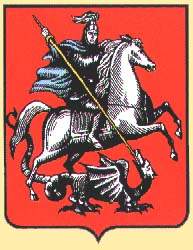
| ��� Now Moscow and St. Petersburg are still two greatest cities in Russia. Moscow is one of the world biggest cities. Its population now is around 12,000,000 people. The territory of Moscow approximately is 878,7 square kilometers. The boundary of Moscow (since 1960) corresponds to the Moscow ring road that is situated at 17-21 kilometers from a city center. Moscow is one of the most famous tourist and culture centers. And now it is a center of Russian Orthodox Church. There are over 130 temples. Most of them are worldwide famous. Also there are around 100 museums and 72 theatres, 109 movie theatres, 31 concert halls, 142 exhibitions and two circuses. The most well known theaters are: the Bolshoy Theater, the Maly Theater, and the Arts theater, the Vakhtangov Theater, the Taganka Theater. The most well-known museums include: The Tretiakov Gallery, the Pushkin Museum of Fine Arts, the State Historical Museum, the State Museum and Folk Park "Kolomenskoye" and others. |
 |
| ��� Moscow is the biggest science center in Russia. There are 31 universities (include� Moscow State University), 19 academies and 35 institutes. ���� Moscow has the good transportation sources. It has one of the biggest underground in the world that has 160 stations and 11 routes. There are some airports as Vnukovo, Domodedovo, Sheremetevo (1 and 2), Bykovo. Every year there are over 1,000,000 foreign tourists. |
 |
| In sixtieth - eightieth St. Petesrburg was developed along the arch of the Finnish Gulf coast, as well as to the Northwest and South. The memorial ensemble of the Victory Square was established that time. The "Oktyabrsky" concert hall, the "Yubileiny" Palace of Sport, the "Moskva" hotel, the "Pulkovskaya" hotel, the "Pulkovo" airport, and the Sport and Concert Hall are the biggest buildings that appeared during this period. In 1979 St. Petersburg began to erect the flood protection dam and associated facilities. Throughout its history St. Petersburg always faced the menace of flood. The dam starts from the Gorskaya station on the northern coast of the Finnish Gulf, crosses the Kotlin Island, and reaches the Bronka station on the southern coast. The dam is 25.4 kilometers long and 8 meters high. After commissioning of the dam and associated facilities, the floods will no more threaten the city. |
| ��� The ninetieth of XX century are marked the drastic changes in the governmental structures and economical policy. In 1991 the name of Saint Peter was returned to the city. The high speed St. Petersburg-Moscow railroad project was started in 1991. In 1994 St. Petersburg became the place of the Good Will Games. The projects for revamping of the City Sea Port and the Airport have been initiated. The growth of business, political and cultural activity is quite obvious. Being one of the major European centers the city has the honor to be referred to as the Northern Capital of Russia. ���� Upon the decision of UNESCO St. Petersburg has been recognizes as a Monument of the Works Culture. ���� Now, in the second half of the 90s, either St. Petersburg or Moscow are still in a transition period, both as� economically as socially. While the city industry is still in recession, services and retail sales are� improving, though economically St. Petersburg is still far behind Moscow. On the social side, the younger generations are coping with the change quite well, but unemployment is high, employment prospects for those over 45 are dim and pensioners struggle desperately to make ends meet. |
| ��� If you would like to see how Moscow and St. Petersburg look like at the present time, let's click here. |
| If you have any questions or comments, please, click here. |
| Two capitals in Russia |
 |
 |
 |
 |