 |
|
|
|
|
|
|
|
|
|
|
|
|
|
|
|
|
|
|
|
|
|
|
|
|
|
|
|
|
|
|
|
|
|
|
|
|
Profiles |
|
|
|
Martin Luther King |
|
Sam Walton |
|
Eleanor Roosevelt |
|
|
|
Home |
|
|
|
Martin Luther King Jr was a transformational leader. He was able to bring about transformation in his followers through his charismatic oratory and his ability to show empathy whilst listening to their troubles. At the time the negro community was apathetic about segregation, not willing to upset the white population.[2] Through his charismatic style, King was able to inspire a vision in such a way that broke them out of their apathy. His most famous �I have a dream� speech typifies this ability. It was a dream that he awoke in the negro people which had them rise up and follow him into non-violent battle. As he had lived through the reality of segregation he had credibility with them and they trusted him. He showed the people that he was willing to self-sacrifice by being directly involved in the protests with them and was arrested and thrown into jail numerous times. He showed great physical courage when faced with danger. �Observers who saw him in action were struck by the feeling of power he projected while physically remaining so calm.�[2] |
|
|
|
|
 |
|
|
|
|
|
What is
Leadership? |
|
|
|
|
|
|
|
Leadership
Theories |
|
|
|
|
|
|
|
Types of
Leadership |
|
|
|
|
|
|
|
Profiles |
|
|
|
|
|
|
|
Interviews |
|
|
|
|
|
|
|
Site Map |
|
|
|
|
|
|
|
|
|
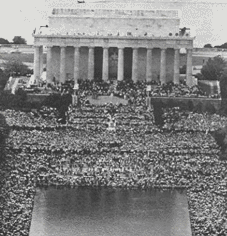
Rally at Jefferson Memorial, Washington |
|
|
|
|
|
|
|
|
King wished to be remembered as a servant leader. He wanted his eulogy to mention that he �tried to give his life serving others�.[1] His servant style was shown by his willingness to put the �cause� before his own health and personal needs. He was willing to help other organisations with campaigns when asked. He was also aware of the numerous threats on his life, having had his home bombed and being stabbed at a rally, but was willing to put it all on the line for others to benefit.[3]
King had a referent power over his staff. They were so in awe of him that they competed for his attention. He was a creative thinker, good at setting goals and strategising. His limitations were in the administrative and organisational areas, however, he was known to have exceptional skills in the area of fundraising. He surrounded himself with a talented and dynamic staff who had been in leadership positions previously. His leadership showed a participative style where he would remain impartial in meetings and raise questions until solutions were found on a collective basis..[2] However, at times he was lead by inspiration and would make decisions against the better judgement of his team. These would notoriously lead to failure. Also, the fact that his campaigns centered on making the adversary show violence against the protestors and therefore gain the condemnation of the nation, if they did not respond through violent actions he did not have strategies to gain success which showed an inability to work outside his predetermined structure.
|
|
|
|
HOME |
|
1 |
|
2 |
|
3 |
|
4 |
|
|
References: |
|
|
|
|
|
|
|
|
|
|
|
|
|
[1] Carson, C., Holloran, P., Luker, R.E. & Russell, P. (1991). Martin Luther King, Jr.,
as scholar: A reexamination of his theological writing. The Journal of
American History, 78(1), Academic Research Library, pg. 93.
[2] Oates, S.B. (1998). Let the trumpet sound: A life of Martin Luther King.
Edinburgh: Canongate Books.
Image
Sourced from http://www.daria.no/skole/doc/html/3052.doc-filer/image009.jpg |
|
