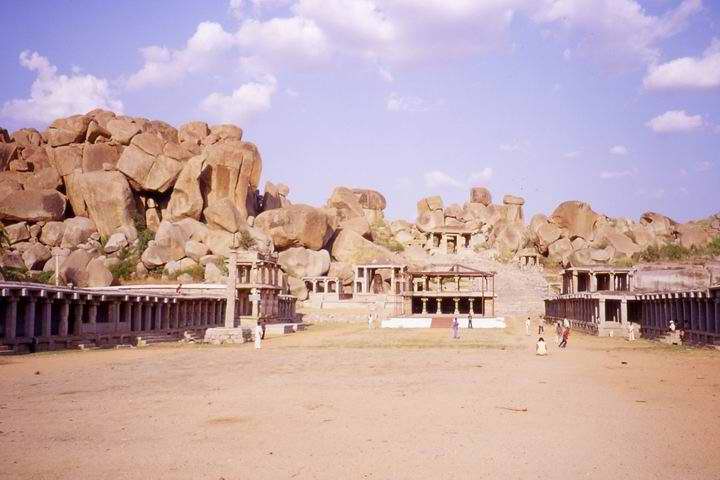
 143.Hampi.jpg The ruined city was a hindu capital in 16. century with 0,5 million inhabitants. It's still possible to feel ancient city's glory and the surrounding landscape is absolutely fantastic.
|
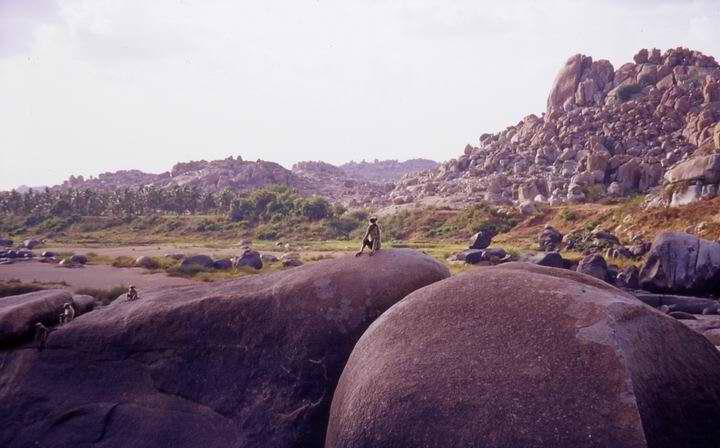 144.Hampi.jpg Apes are common in India. |
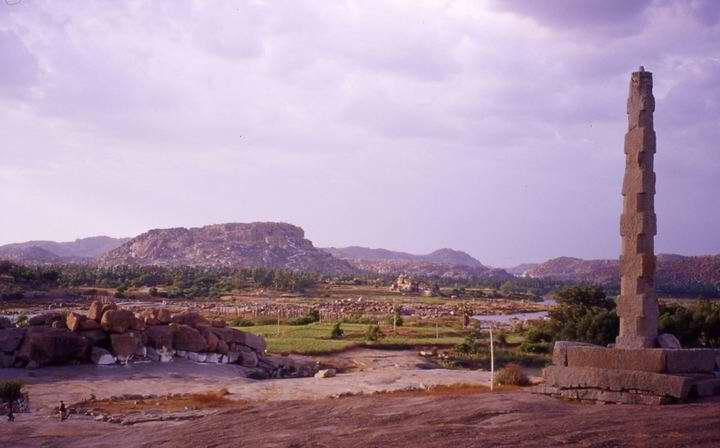 146.Hampi.jpg You can see a white pathway on the hill in the middle if you zoom the photo. It leads to the temple, see photo 155. |
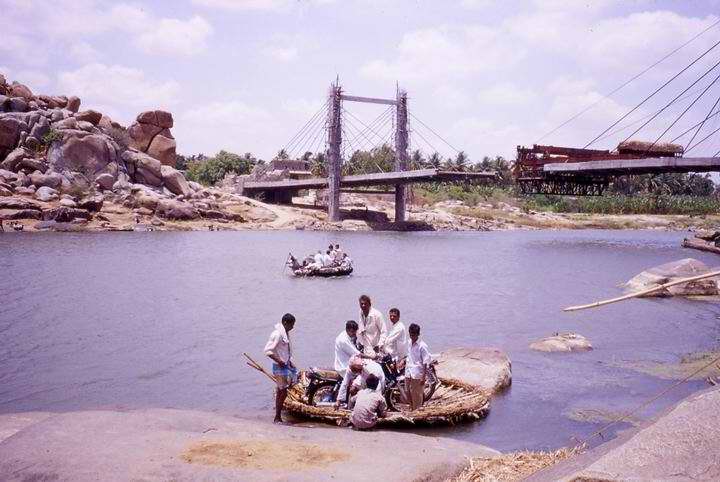 151.Hampi_to_Anegonda.jpg The new bridge has been built for years and there are about 10m missing in the middle of it. People are therefore forced to cross the river in home-made boats. |
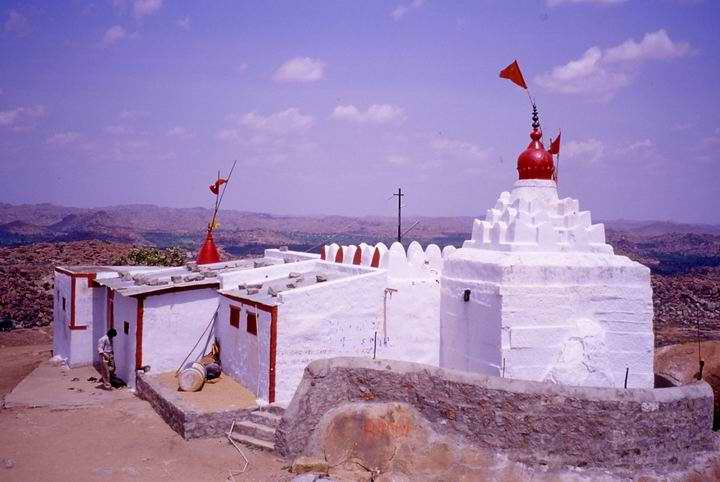 155.Hampi-Hanuman_Temple.jpg Reference to photo 146. Few apes are abnormally agressive and wicked. |
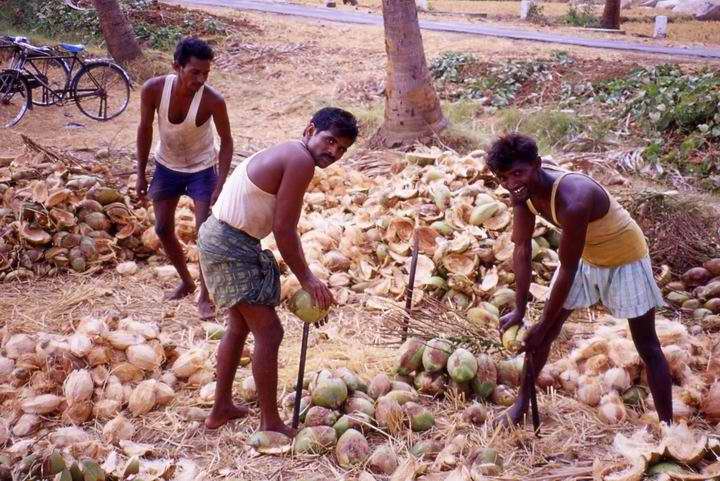 157.Hampi-Coconuts.jpg These guys invited me to sit down in a shadow and offered coconuts. People in India are usually hospitable (especially in non-touristic areas). Coconut milk is supposed to help against feeling hot.
|
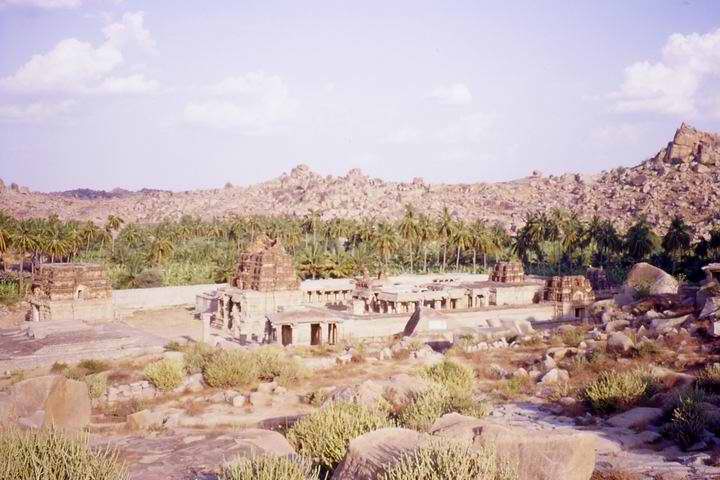 158.Hampi-Achyataraya_Temple.jpg Some temples are exquisitely preserved. Be careful on snakes, a 2-metres long one passed the road just before me!
|
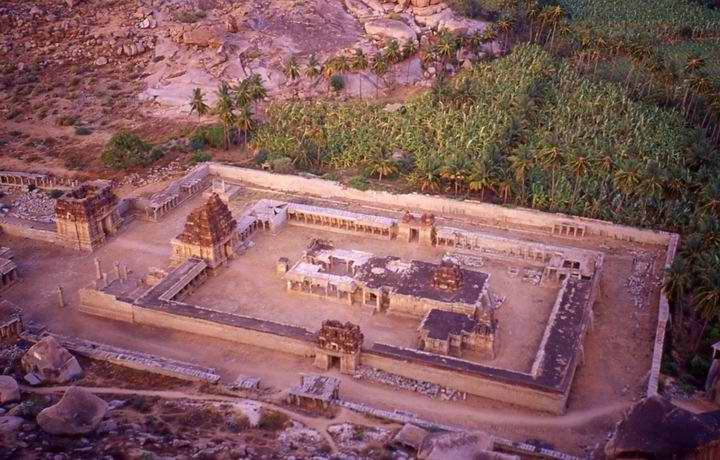 160.Hampi-Achyataraya_Temple-from_Matanga_Hill.jpg |
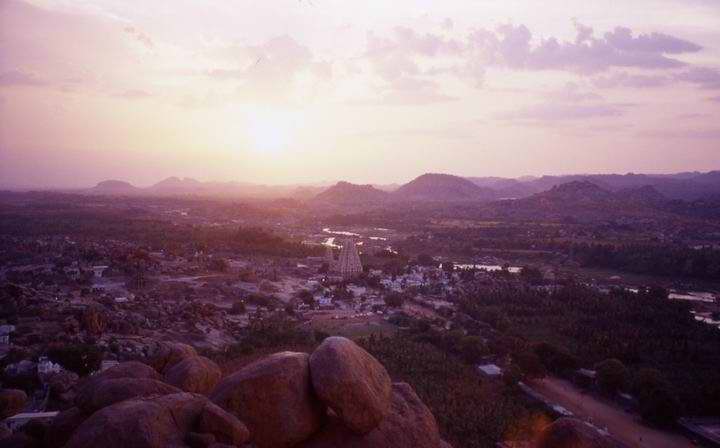 163.Hampi-Sunset_from_Matanga_Hill.jpg Time for romantic on the top of a hill above Hampi. |
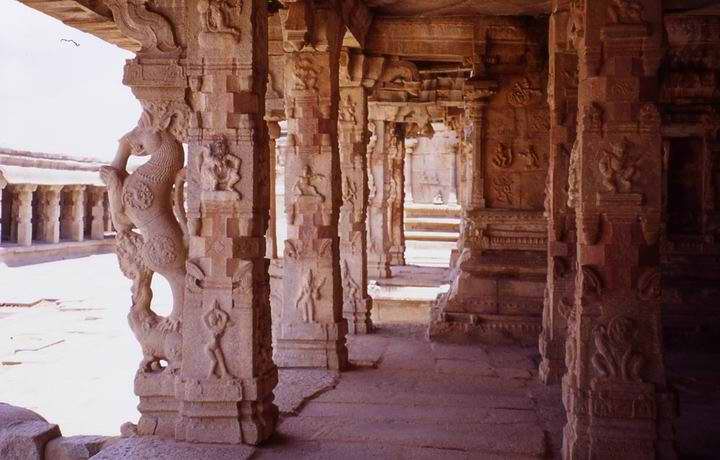 171.Hampi.jpg Architectural perfection made by ancient masters.
|
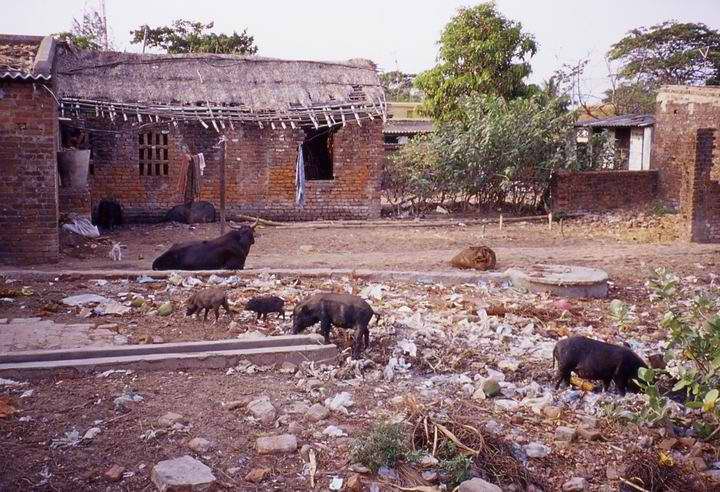 176.Konark.jpg Indians and environmental cleanliness are not much in relation. Garbage is an ideal place for cows, dogs, cats, pigs (warning, they look like they were wild), sometimes even apes to join in a common search for food.
|
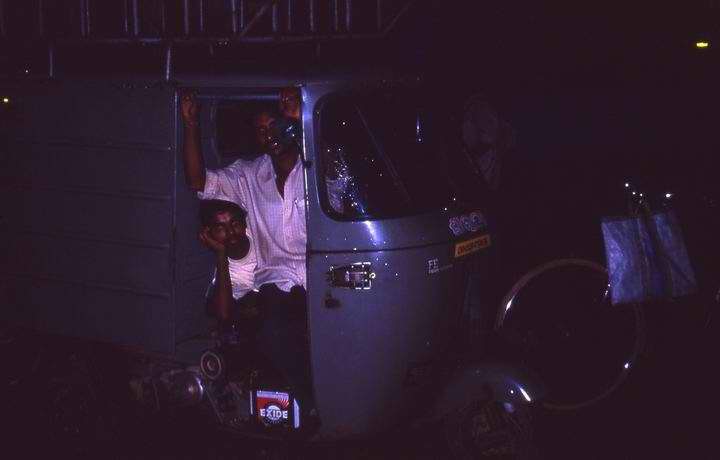 177.Konark.jpg Guys, have you ever thought of being models? |
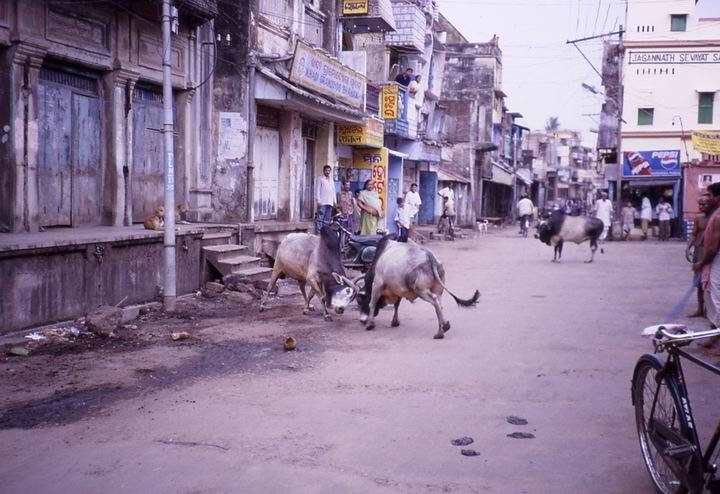 182.Puri-Bull_Fight.jpg Holy cows and bulls walk freely on streets. The latter sometimes fight each other and these fight-shows attract many Indian spectators.
|
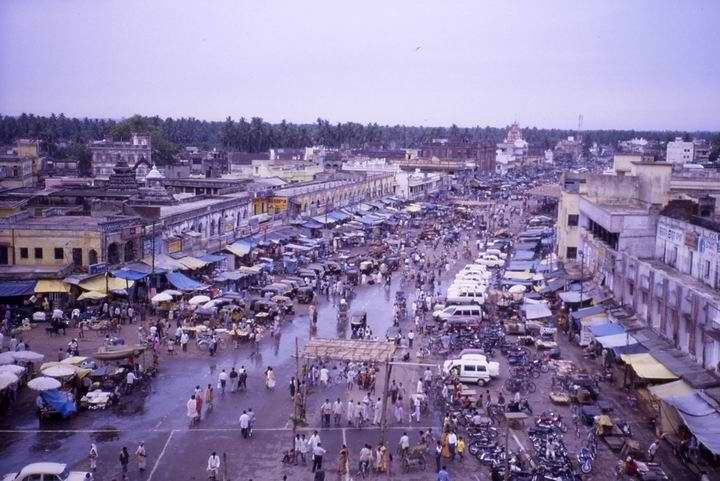 185.Puri.jpg Typical Indian overcrowded streets. |
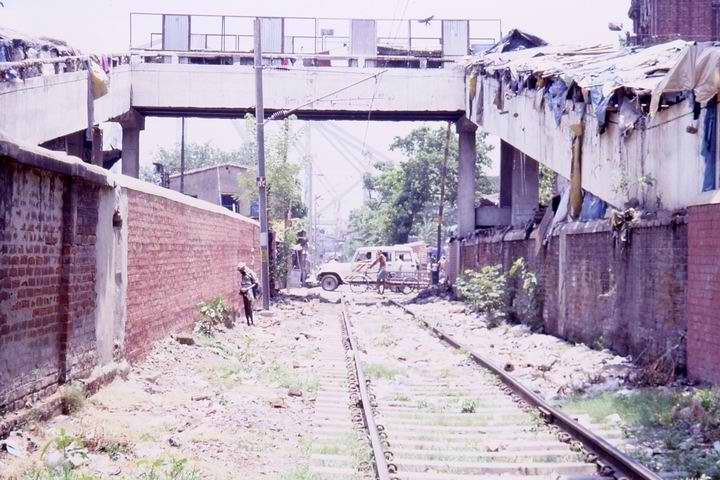 188.Calcutta.jpg Still life. Poor people live on the rail-crossover, the man by the left wall is answering his nature's call. I hope the car in the middle of the railway track has not broken down. |
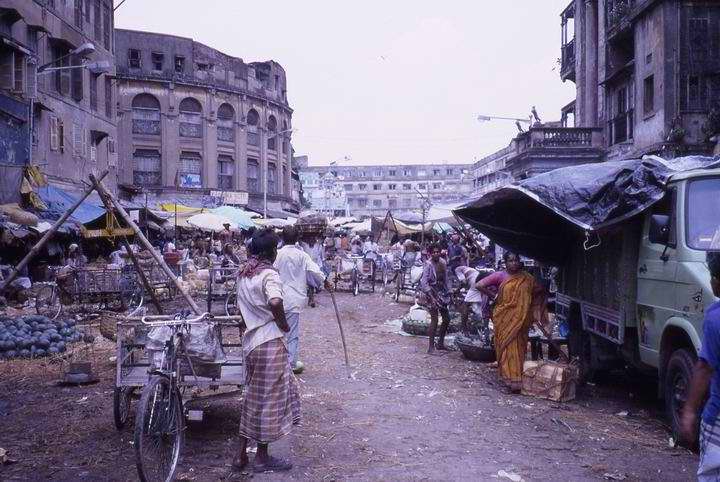 193.Calcutta-Market.jpg Live Indian markets are one of delights. |
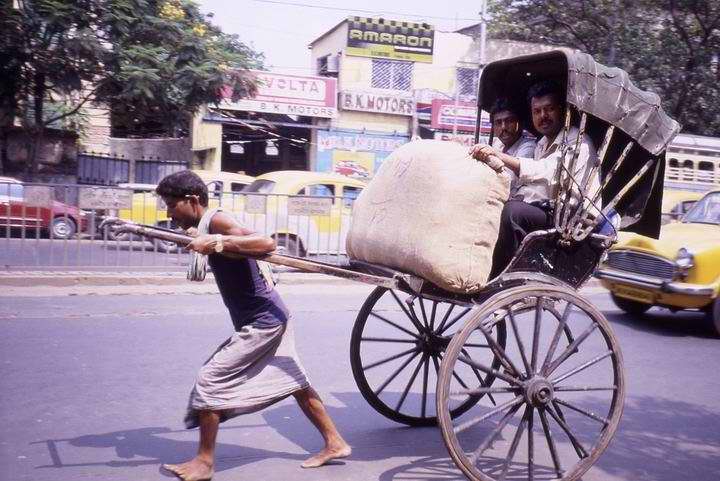 194.Calcutta-Rickshaw.jpg People-drawn rickshaws operate just in parts of Kolkata. |
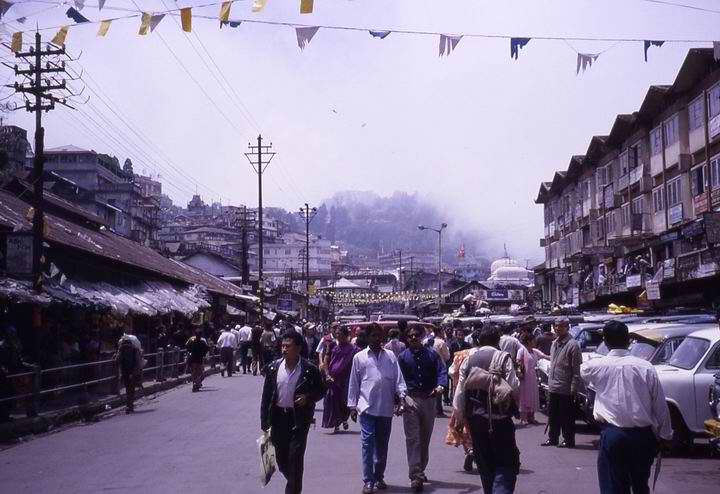 201.Darjeeling.jpg No more heat at an altitude of 2100m. Darjeeling is famous as the best tea's producer in the world.
|
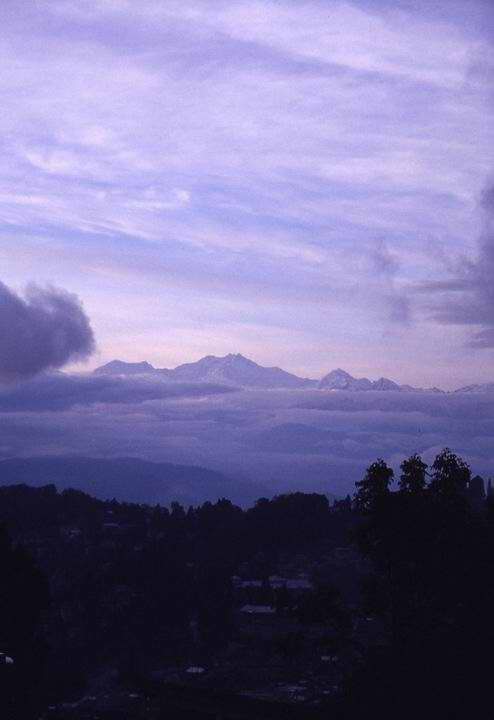 206.Kanchenjunga_from_Darjeeling.jpg If you have luck you can catch a glimpse of the third world' highest mountain, but normally just before sunset or after sunrise. Winter time is for mountain views much better than pre-monsun or monsun period.
|
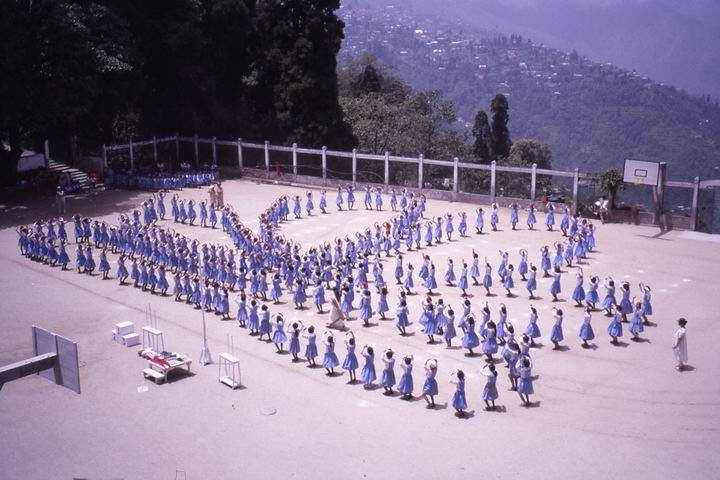 216.Darjeeling-Gym.jpg Scholars at gym lesson. Who says that collective mind and brain washing is a history? |
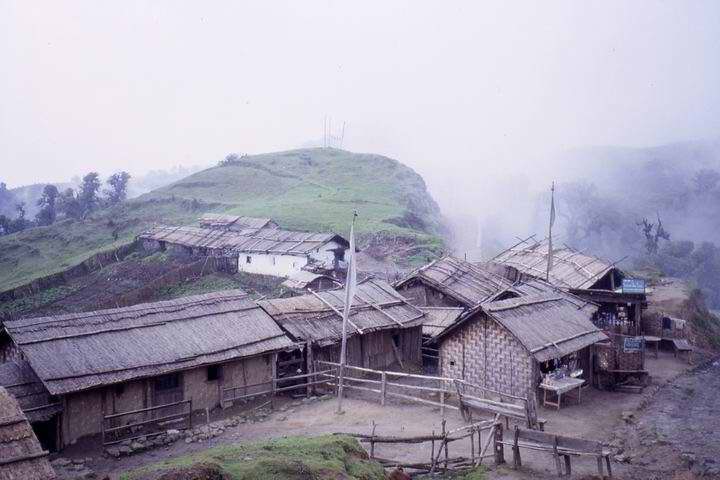 218.Darjeeling-Sandakphu.jpg This village is situated directly on the Indian-Nepalese border. Life on high-altitude (2900m) terrain is not easy at all. |
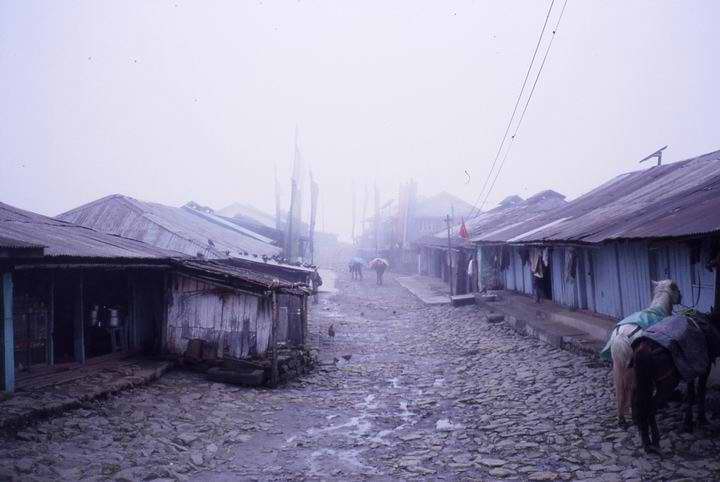 221.Darjeeling-Sandakphu-Nepal.jpg Nepalese high-altitude village. Indian local time is Central European + 3,5 hours, Nepalese time is Central European + 3 hours and 45 minutes.
|
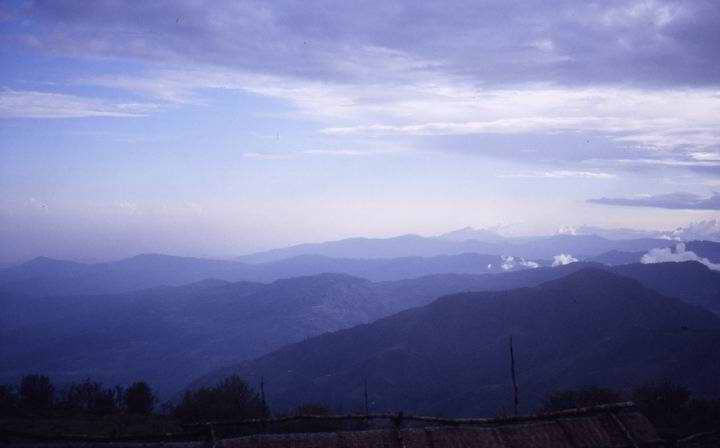 223.Nepal.jpg Views over mountainous Nepal. |
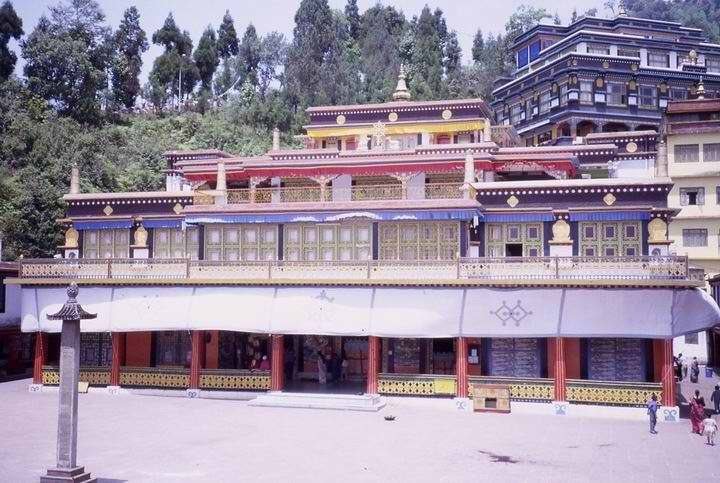 235.Rumtek.jpg Buddhist temple in Sikkim. Entrance and attendance to ceremonies are allowed to public. |
Page: 1 2 3 4 5