








 |
 |
 |
 |
 |
| Foreign
Features
Pakistan
: Cradle of History With neighbouring countries such as India and Nepal more firmly on the tourism map, Pakistan International Airlines (PIA) is leading the way. PIA is no stranger to Thailand, having been in Bangkok since 1967. But up to now, most of the traffic from Thailand has consisted of workers of Muslim pilgrims bound for the Middle East. Only recently did the airline team up with Thai outbound tour operators on a survey trip to introduce Pakistan tourist attractions to Thai travellers. For most members of the group, making their first visit to Pakistan, it was a pleasant surprise to encounter Thai attendants on our PIA plane. The aircraft may have lacked some of the high-tech features found on other carriers, but the seats were extremely comfortable and the spicy curries a warmly welcoming on the five-hour flight to Islamabad.
Islamabad came into existence only in 1962, planned from the ground up with many western influences. It calls to mind other built-from scratch capitals of roughly the same era, such as Brasilia in Brazil, Canberra in Australia, and Chandigarh in the Indian state of Punjab. The influence of British rule prior to independence in 1947 is prevalent, especially in the networks of roads, railways and canals. The new capital is home to the Parliament and court buildings, government offices and universities. If it lacks the bustle of a typical Asian city, it is because the government pointedly barred migrants from other regions from setting there. The population is 600,000, most of them civil servants. The British influence can be seen throughout Pakistan, as we observed along the smooth, picture-postcard drive to Murree. Three hours out of Islamabad, Murree is an old hill station founded by the British in 1851. At 2,247 meters, it is refreshingly cool in summer and piled high with snow in winter. It is said to be Pakistan's most famous summer resort, with fine views of the snow-capped mountains of neighbouring Kashmir. Apart from cool, pleasant walks in the forest, Murree also offers good shopping for furs, nuts and handmade products. Many women in our group were impressed by very inexpensive handmade ornaments such as necklaces and earrings for only 50 baht apiece.
Waves of migrants and armies followed eah other to the fertile Indus Plains. The Aryans was the first invaders, in 1,700 BC, bringing with them the Hindu religion. Next came the Persians, then known as the Gandhara, in the sixth century BC, developing a great cultural center. In the fourth century BC, the Gandhara capital of Taxila was home to the most famous university in the ancient world. Its remains can still be seen today. Just 32 kilometers west of Islamabad, Taxila is home to some of Pakistan's great archaeological treasures. Its three ruined cities and numerous Buddhist monateries and stupas date from 600 BC to 500 AD. The
best preserved of all the ruins at Taxila is the Jaulian Monastery,
built in the second century AD on a hill with sweeping view down
the valley. The main stupas are still covered in their original
plaster with rows of Buddha images on all sides. After the Gandhara period came the Greeks led by Alexander the Great, who conquered the territory in 325 BC. Over the following century, Buddhism also spread through the Indus basin under the great Mauryan emperor, Ashoka.
Islam did not arrive in Pakistan until the eighth century, Many Muslim rulers invaded the Indian subcontinent, but the most famous were Genghis Khan in the 13th century, Tamelane in the 14th century and Babur in the 16th. Significant sites showing Muslim influences can be seen at Lahore, known as the city of gardens and the capital of Punjab province. Lahore attained its glory and flourished during the Mughal period. King Akbar made it his capital from 1584-98. During the British rule from 1849 to 1947, Lahore acquired a different look. The Supreme Court, the High Court and the Government College are fine examples of British colonial architecture-a strangely attractive mixture of Mughal, Gothic and Victorian styles. Lahore is considered the cultural and intellectual capital of Pakistan with its numerous colleges, sporting activities and frequent stage plays. The must-see sites are the Lahore Fort and the Badshahi Mosque. Situated opposite each other, their appeal can be likened to that of the Temple of the Emerald Buddha in Bangkok. The fort was build by Emperor Akbar in 1566. Inside this huge rectangle enclosed by massive walls are spacious lawns and a series of courtyards, each built by different Mughal emperors. Emperors Shan Jahan, the great Mughal architect best known for the Taj Mahal in India, added the most beautiful parts of the fort in the 1630s and 1640s.
Also worth seeing is the Lahore Museum, the biggest in the country. Its many rooms are divided by theme, each showcasing the architecture, arts, and archaeological remains from different influences, such as the Indus civilisation, Buddhism and Islam. Opened by the British in 1894, this typically Victorian building contains one of the finest collections of Buddhist art from the Gandhara period. The most significant is the statue of the Fasting Buddha, said to be the most perfectly preserved of its kind in the world. Another Lahore attraction is the Shalimar Gardens (garden of heaven), built by Emperor Shah Jajan in 1642. The garden is set out in Persian style with marble pavilions, a marble waterfall and more than 400 fountains on a 42-acre site. Once reserved only for the emperor's mistresses, today it is open to all; some children even enjoy swimming in the pool. The street in front of the Shalimar garden was very crowded and brought to mind a temple fair in Thailand. Almost all of the local people paused to stare at their Southeast Asian visitors; they don't see many tourists. With such a variety of influences on its arts and architecture, Pakistan is in many ways an ideal destination for history buffs and admirers of the diffferent beliefs that have shaped Asian life. Local people maintain a strong Muslim traditions, while impressing visitors with warm smiles and frankly curious gazes. In short, Pakistan is one of the most welcoming places I have been, and certainly the best kept secret of the subcontinent. Travel
Tips Packages : NC Travel Center (251-1326, 255-4076-80), specialises in Pakistan attractions. Contacts: Pakistan Tourism Development Corporation: e-mail : [email protected] Website : www.tourism.gov.pk
|
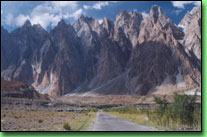 Pakistan
may not be foremost in the minds of most Thai travellers, but
that could change as the country begins to promote its diverse
attractions.
Pakistan
may not be foremost in the minds of most Thai travellers, but
that could change as the country begins to promote its diverse
attractions. 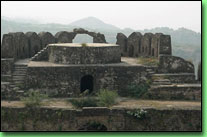 When
we set out to tour the capital the next day, it was a revelation.
Given Pakistan's level of development, I had imagined a city as
chaotic as Bangkok. But Islamabad is modern and well-organized
with shady, tree-lined boulevards. If I hadn't seen so many people
in traditional shilwar-qamis walking the streets, I would have
thought I was somewhere in Europe.
When
we set out to tour the capital the next day, it was a revelation.
Given Pakistan's level of development, I had imagined a city as
chaotic as Bangkok. But Islamabad is modern and well-organized
with shady, tree-lined boulevards. If I hadn't seen so many people
in traditional shilwar-qamis walking the streets, I would have
thought I was somewhere in Europe. 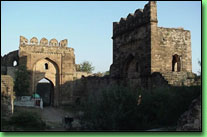 While
Murree has retained some English touches, the British were very
much latecomers to the region. As far back as 3,000 BC, the Indus
Valley civilisation was thriving, at a time when the Egyptian
and Mesopotamian regions were also making their mark.
While
Murree has retained some English touches, the British were very
much latecomers to the region. As far back as 3,000 BC, the Indus
Valley civilisation was thriving, at a time when the Egyptian
and Mesopotamian regions were also making their mark. 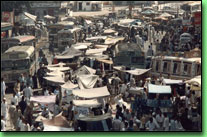 The
kingdom of Gandhara regained power during the era of the Kuchan
kings, Buddhists who ruled from the first through fifth centuries
AD. Gandhara became the center of the Buddhist world.
The
kingdom of Gandhara regained power during the era of the Kuchan
kings, Buddhists who ruled from the first through fifth centuries
AD. Gandhara became the center of the Buddhist world.  The
Badshahi Mosque was the gift of Emperor Aurangzeb to Lahore in
1674. In front of the three onion domes is a giant courtyard that
can accommodate up to 100,000 Muslims for prayers.
The
Badshahi Mosque was the gift of Emperor Aurangzeb to Lahore in
1674. In front of the three onion domes is a giant courtyard that
can accommodate up to 100,000 Muslims for prayers. 


 |
Pakistan: Cradle of History |
|
London&Paris in a new light |
|
Following history's footsteps in the Holy Land |
|
Israel : Desert Adventure in a Promised Land |


