







|
|
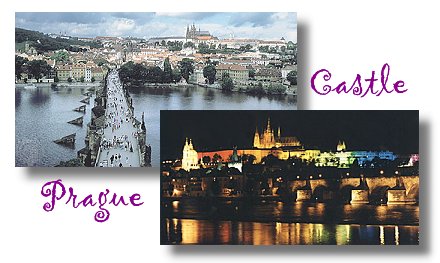
Enjoy a picturesque LIVE Prague Castle view. |
| � |
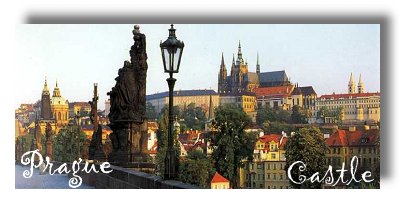
The physical attractions and landmarks of Prague are many. Among the finest is the Charles Bridge, which stands astride the Vltava River for more than 640 years. The winding course of the Vltava, with its succession of bridges and changing vistas, contrasts with the ever-present backdrop of the great Prague Castle, which dominates the left-bank region of the city from behind massive walls set high on a hill. The narrow streets and little taverns and restaurants of the older quarters contrast with the broad sweep of modern parks and housing developments, while the great 18th-century Baroque palaces have their own elegance and splendor. Seen from the surrounding hills, the many church towers make up a unique perspective, giving Prague its description as the "city of a hundred spires". This architectural harmony was enhanced by post-1945 planning, which preserved the ancient core of the city as a major monument and carefully supervised all modern building. In 1992 the historic city center was added to UNESCO's World Heritage List. |
Charles Bridge LIVE picture |
||||
|
Settled in the tenth century, edged by an astonishing
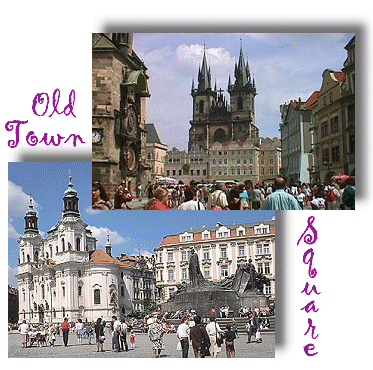
jumble In addition to Old Town Hall, the focal point of the square is the powerful Jan Hus Monument dedicated to the reformist cleric, and with its white stucco and undulating ornate fa�ade also the lovely St. Nicholas Church built in 1735. |
|
Be sure not to miss the spectacular LIVE view of Old Town Square. Day or night, it is a beautiful view. |
 |
 |
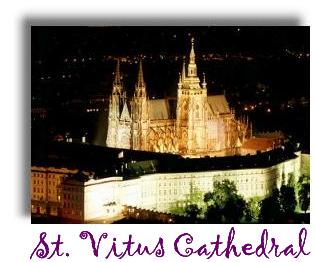
| In the center of Prague Castle you will find a St. Vitus Cathedral, the largest church in the country. It took 585 years (1344-1929) to complete the church as it stands now, although its roots go back to 935 AD. The hybrid Gothic-Baroque tower exemplifies this long process. The west-fa�ade towers are late 19th century. |
| � | ||
Another addition to the UNESCO's World Heritage List is a picturesque small town called Cesky Krumlov. 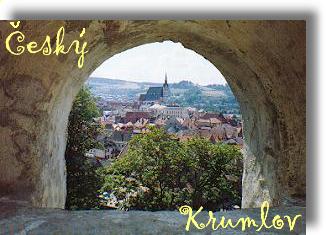 |
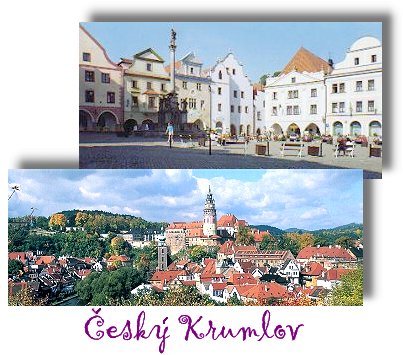 | |
| Situated on the banks of the Vltava River, bearing
Gothic, Renaissance and Baroque imprints, the town was built around a 13th century castle. It is an outstanding example of a small medieval town of central Europe whose architectural heritage has remained intact thanks to its peaceful evolution for more than five centuries. |
|
|

 Virtual view of
