























View My Guestbook
Sign My Guestbook


View or Post to our
Family Tree Message
Board!


|
|

Whether over here or over there, what will the weather be in Edinburgh or Rome.


 The Italians, a versatile lot, made the best use of the produce that was
close at hand. Combine this with creativity and entrepreneurial flair, it wasn't
long before the Italians were serving the delights of dairy ice cream to the
working classes of Garnethill, Paisley and the Grassmarket. In the
beginning this was served direct from the barrows with shouts of "Gelati,
ecco un poco". Consequently they became known as the 'Hokey Pokey'
boys.
The Italians, a versatile lot, made the best use of the produce that was
close at hand. Combine this with creativity and entrepreneurial flair, it wasn't
long before the Italians were serving the delights of dairy ice cream to the
working classes of Garnethill, Paisley and the Grassmarket. In the
beginning this was served direct from the barrows with shouts of "Gelati,
ecco un poco". Consequently they became known as the 'Hokey Pokey'
boys.
 | With an increase in popularity came the need for the business to grow, and it wasn't long before they expanded into cafes, with full meals, confectionary and cigarettes added to the menu. Soon they began to spring up all over Scotland |
| It is reported in Police records that by 1904, the number of cafes in Glasgow alone had doubled from the previous year. This grew to 336 ice cream shops the following year. It was at this time that Italian immigration began to stabilise at a population of around 5000. |
|
|
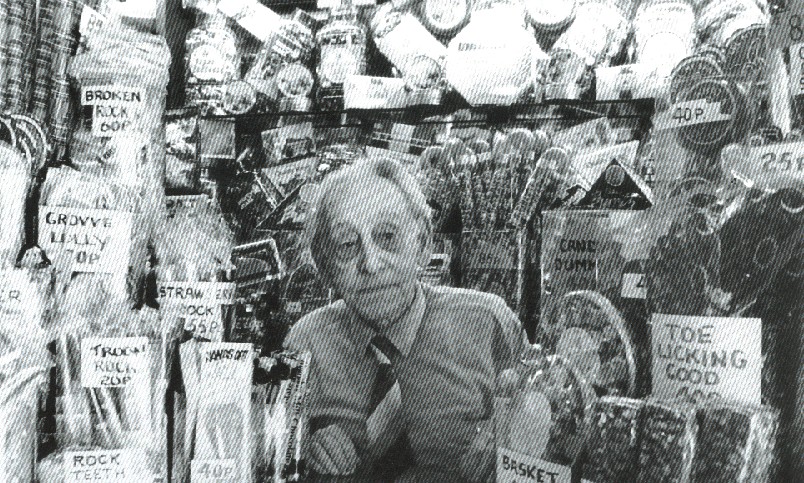
| Despite gaining the sympathy of the Temperance Movement in the early
1900's on account that the cafes did not sell alcohol, many viewed the
establishments as evil and morally unjust. the cafes did not sell alcohol, many viewed the
establishments as evil and morally unjust.
In fact, in a Glasgow Herald article of the time (entitled 'Ice Cream Hells') the comments of a Mr D. Drummond, strengthen this view. He describes these establishments as perfect iniquities of hell itself and ten times worse than any of the evils of the public-house. They were sapping the morals of the youth of Scotland. |
| The cafe though did seem to break down many of the social barriers of the day. It wasn't long before the cafe soon became the focal point, whether as an alternative to the pub (especially for the younger crowd) or the evening's finale - after all, a night out just wouldn't be the same without a bag of chips for the road home. Unlike their English counterparts, the cafes also traded on Sunday's. |
|
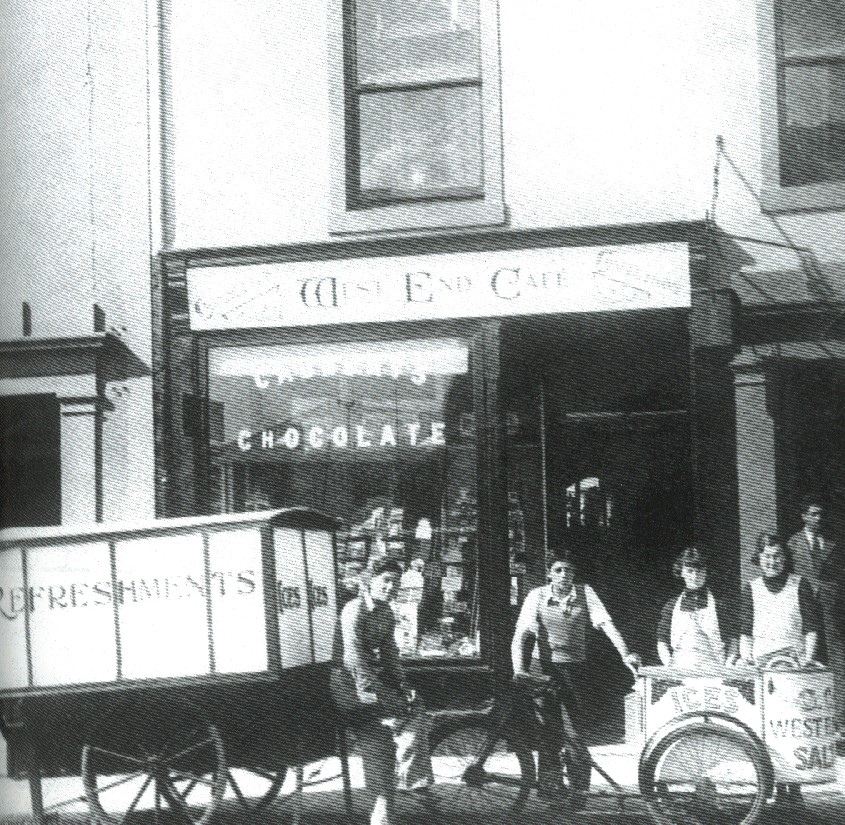
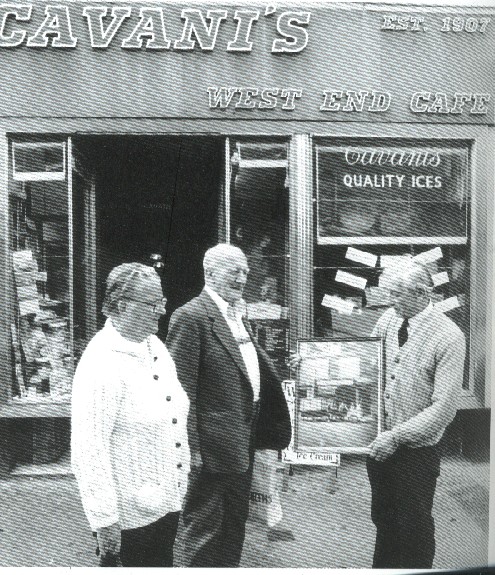
The above photographs reflect the changes through the years. This is the West End Cafe in Ardrossan owned by the Cavani family. The photograph on the left shows the Cafe in 1939 and on the right fifty years later, and as you can see the changes were actually very few. Another popular institution which has survived the ages is the infamous Ritz Cafe in Millport on the Isle of Cumbrae. (Photographs courtesy of The Herald). (Click to enlarge). |
|
During WWII, many of the chip shops were left in the hands of the wives of interned Italian immigrants, indeed many Scots-Italian males who were born here were also imprisoned! Their better half's proved more than capable, especially given the fact that Fish and Chips were not rationed by Churchill and that it formed the staple diet of the armed forces. It could be said that Fish and Chips help win this country two World Wars !!! |
|
Today most of Scotland's Italian restaurants have developed an impeccable reputation for quality and tradition, with many coming under the umbrella of Ciao Italia. Founded in 1982 this was an organisation responsible for maintaining and building on the values of Italian cuisine abroad. Gianni Donfrancesco, who was (before retiring), a well known Edinburgh restauranteur (and father of children's author Linda Strachan) is currently President of Ciao Italia. |
|  As tastes change and cultural boundaries are pushed farther, today's
cafes
offers the discerning diner espresso, cappuccino, filled ciabatte, fresh Pizza and tiramisu.
Rest assured though somewhere on the menu dairy ice cream is bound to feature. As tastes change and cultural boundaries are pushed farther, today's
cafes
offers the discerning diner espresso, cappuccino, filled ciabatte, fresh Pizza and tiramisu.
Rest assured though somewhere on the menu dairy ice cream is bound to feature. |
Chippy Patter
 Picture this, it's Glasgow in the 1950's, you've just been giving it laldy after a night out dancing at the Plaza. It's a cold, wet October evening
and you've got some time to kill before your last tram home, so you go to the
chippie. It's in here that you may well hear some of the choice phrases below...
Picture this, it's Glasgow in the 1950's, you've just been giving it laldy after a night out dancing at the Plaza. It's a cold, wet October evening
and you've got some time to kill before your last tram home, so you go to the
chippie. It's in here that you may well hear some of the choice phrases below...
| Fish Tea - Fish and Chips with bread, butter and tea |
| Single - anything bought without chips |
| Supper - the very opposite, an item of food with chips |
| Links - square or Lorne sausage |
| Slice Roll - as above but in a bread roll. |
| Hot-Pea Special - hot marrowfat peas dressed in vinegar |
| Sannies - sandwiches (or trainers!) |
| Toty Scone - Potato Scone (or term for 'the ladies have left') |
| Well-fired Roll - crispy roll |
| Poke 'a Chips - bag of chips |
| Pokey Hat - ice cream cone |
| Macallum - ice cream with raspberry sauce |
| Bottle 'a ginger - soft drink in a bottle |
| Skoosh - also fizzy drink (or term for 'simple') |
| Slug - to drink (from) |
| Slider - ice cream scoop in wafer |
| Jawbreaker - Often mistaken as a Glasgow welcome, actually large, round long-lasting sweets |
| Soor Plums, Cola Bottles/Cubes, Pear Drops - different forms of children's confectionary |
| Sherbet dab - bag with lollipop and sherbet |
| Lucky Bag - mix of sweets sealed in a bag often with a 'novelty' |
| Sugarollie - Liquorice |
| Flies Cemetary - Not so delightful term for a fruit slice |
| Tea Jennie - One who drinks tea by the barrel |
The Tuscan town of Barga celebrates its strong ties with Scotland with La Sagra Del Pesce e Patate - The Fish 'n Chip Festival which is held every August.
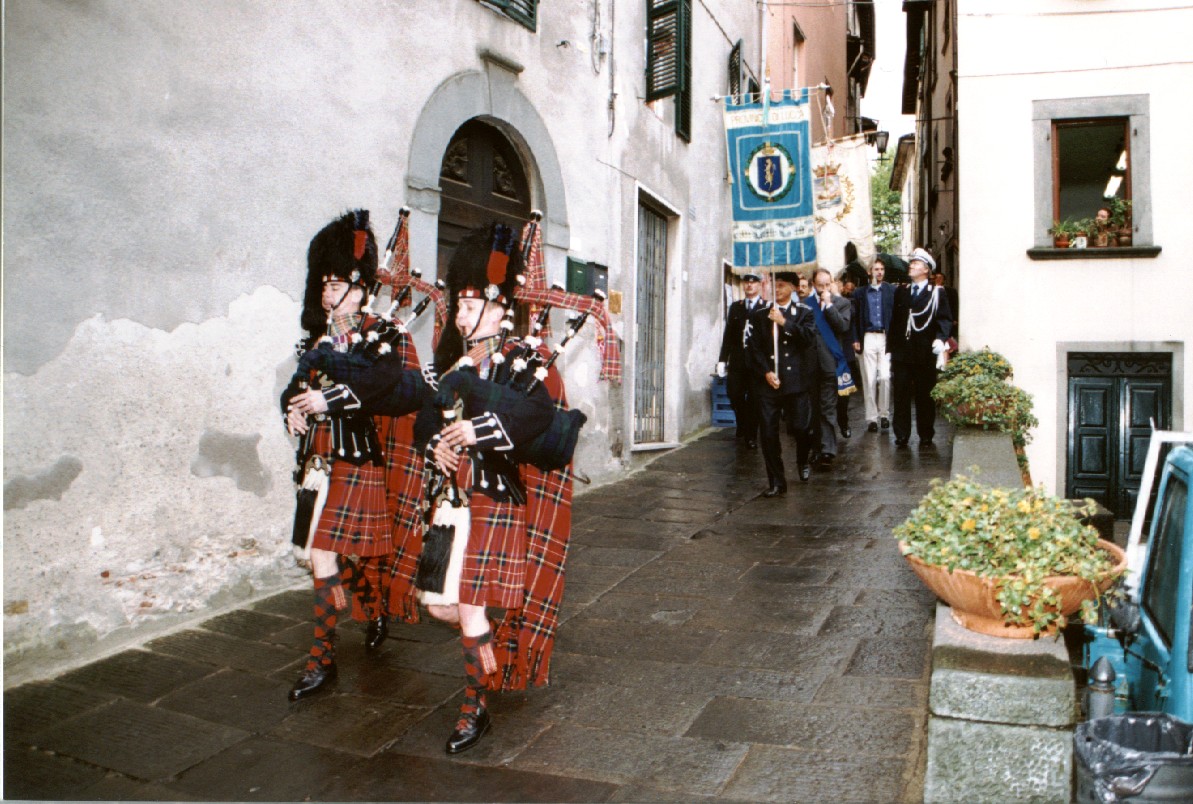
Another festival which occurs late September celebrates the Scottish connection - La Settimana Scozzese - the Scottish Week.
Cafe Corner
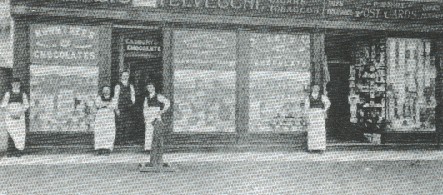
Here are some old photographs of Cafe's, Fish 'n Chip shops and Ice Cream Parlours from the turn of last century, many of which are alas now a distant memory....
(Click to enlarge)
 |
|
|
Castelvecchi Moorings Dance (Largs pre- 1930) |
Corrieri Ideal Cafe (Irvine 1928) |
|
|
|
|
Candellini/Serafini (Inverness 1910) |
Corrieri St. George (Paisley 1920) |
|
|
|
|
Cosimini (Kirkintilloch circa 1918) |
Casci Il Bottegone (Glasgow 1919) |
|
|
|
|
Renucci Bakery (Glasgow circa 1880) |
Marchi Cosy Cafe (Glasgow circa 1930) |
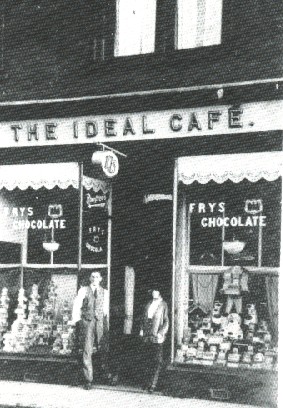
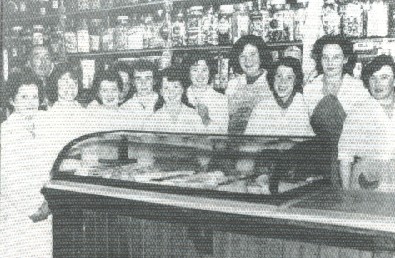
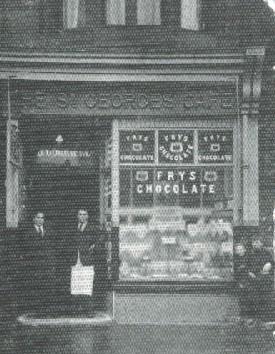
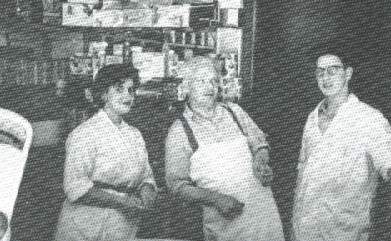
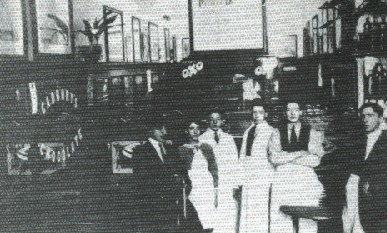
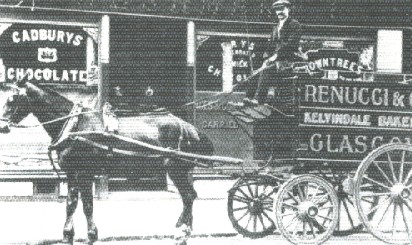
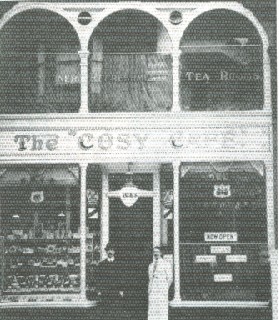
(Photo's - courtesy of: Barga, paese come tanti)
Unfortunately the quality of the reproduction is not great but you'll be able to see more detail when the thumbnail is enlarged.
And on a final note....
'As a barometer of changing social attitudes (in Scotland) cafes, fish and chip shops and take-aways deserve to be explored more fully. The slow acceptance of new foods and the changing approaches to public eating reveal deeper revisions of moral and social codes that, in turn, illuminate the history of any society.'
Francis McKee