























View My Guestbook
Sign My Guestbook


View or Post to our
Family Tree Message
Board!


|
|


Whether over here or over there, what will the weather be in Edinburgh or Rome.


The culture of Italians abroad is well publicised, especially to the America's and Australia.
However, very little is documented on the ambitions and ideals of the early Italians to Scotland and how this shaped today's generations of Scots-Italians.
I'm sure many Scots-Italian's like me can relate to being proud of their Scottish-Italian roots, but somehow I never really felt a 100% Scottish in Scotland or for that matter Italian in Italy.
I suppose you could say that I'm lucky in a way as I enjoy the best of both world's - there's nothing like a drive in the Trossachs looking for 'funghi' and stopping for a picnic of Salame sandwiches and a thermos of Corretto coffee.
So where and how did it all start.....well, around about the 1860's actually.
 |
|
|
The majority of Italians soon diversified, selling ice cream, initially on the streets, later from cafe's. |
 The first settlers of note were mostly Statue Sellers (figurinai),
many who had come up from London and were originally from Picinisco in the
Frosinone region. Their principal aim was to escape the
crippling economy and disastrous agricultural condition of their homeland
and generate enough income to support their families.
The first settlers of note were mostly Statue Sellers (figurinai),
many who had come up from London and were originally from Picinisco in the
Frosinone region. Their principal aim was to escape the
crippling economy and disastrous agricultural condition of their homeland
and generate enough income to support their families.
|
Once the cafe's were fully operational, it was expected that all the family members contribute. This included long, anti-social hours which as a result led to very little contact with people from out-with the Italian community. Though schooling was deemed important, once secondary school had been completed, the children went directly into the family business. |
|
Much of the money was sent back to Italy either for the older generation left behind or to buy property. |
|
As businesses expanded so the need for new employees began to grow. The head of the business would commonly recruit young Italian's, often from his home village. These Italians in turn would eventually own their own businesses in time. |
|
In the households Italian was spoken, Italian food was the staple diet often with all the family dining together. Religious festivals were vehemently observed. |
|
During the early part of the 20th century, Italians were expected to marry only Italians and it wasn't until the 1950's that there was a distinct shift in this thinking. Indeed, many of the older settlers hoped to return to Italy to retire one day and viewed Scotland in a transitory fashion. |
|
As friendships from fellow settlers grew (through card games and religious occasions), a tight Italian business network soon emerged. In 1935, the Casa D'Italia opened in Glasgow, a grand home from home for many Italians (this has since closed down in 1989). |
|
|
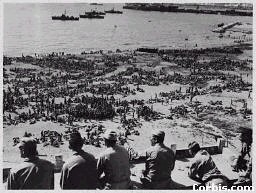
| With anti-Catholic sentiment also evident, the speed and the intensity of the violence that the Italians were subjected to shocked many. After all, for nearly half a decade they had lived side by side in total peace. Some of the family members born in the UK even fought for Britain. It wasn't long after that adult males were interned. |
|
Many of these businesses somehow managed to continue trading, relying on the wives, children and the elderly members of the family. Though many had to be rebuilt from scratch following the end of the war. |
|
For Scots-Italian growing up in the post-war period, this was an extremely trying time as taunts and abuse were commonplace. Perhaps as a direct result from this there has been very little immigration from Italy to Scotland since. |
|
There were of course a large number that remained and feeling a greater to need to assimilate it did not take long for many misconceptions to dissolve. |
|
With this understanding and an increase in further education more Scots-Italians were attending university and breaking into professional jobs and breaking out of their traditional roles in the family business. |
|
|
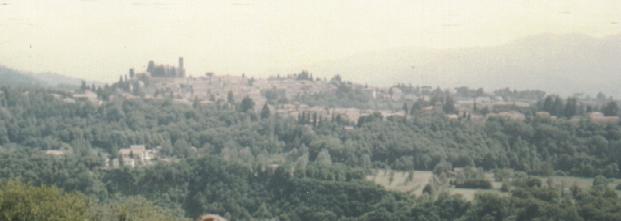
| By all accounts there does exist a Scottish-Italian Tartan (I believe it is awaiting registration in the Scottish Tartans World Register). It is coloured green, white and red representing Italy of course - all on a blue background representing Scotland. This was developed by Paul Davidson, and Italian-born Tony Cirignaco, and is commercially produced by Glencairn Crystal. Mr Cirignaco who manages the Bothwell Bridge Hotel comments "Italians have been in Scotland for so long, and the idea is so simple, that I can’t understand why nobody has thought of it before. It is a way of marrying the two cultures." |
The full article appears in the Scotsman of November 6th 2000.
For more information on the Italian Tartan contact:
Tony Cirignaco, The Manager, Bothwell Brige Hotel, 39 Main
Street, Bothwell, G71 8EU. Scotland (UK).
Telephone No: 01698 852246. Faxs No: 01698
854686. E-mail: [email protected]
(Other tartans registered at the Scottish Tartan World Registry that have an Italian slant are the 'Dr Confessore' tartan and the 'Prince Charles Edward Stewart' (Bonnie Prince Charlie) tartan - the latter through the Rome connection).
| What remains evident however is that the Italian identity does not appear to have been diluted, rather it compliments many of the traits personified by living as a Scot, or perhaps I should say, Scots-Italian. |
| Indeed, Scots-Italian filmmaker Sergio Casci identifies the Scots-Italians as a 'third' being representing the fusion of both backgrounds ultimately leading to the creation of a different being. |
| These characteristics seem to have been embodied by the very same Sergio Casci, striking an interesting chord in the article If this was America for biannual publication Italia and Italy discussing his views growing up as a Scots-Italian. |
What
Happened to Auld Glesga? features the following verse as it recounts
the old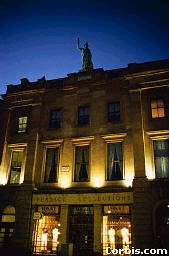 days of the city. I believe this poem was written Adam McNaughton.
Where is the Tally's that I knew so well?
That wee corner shoppie where they used to sell,
Hot peas, a McCallum, ice cream in a poke,
You knew they were Tallys the minute the spoke.
Changed Days - Versace Collection, Italian Centre, Glasgow (above right).
Author's Quote
'The business life in the (Italian) community was based on trust, family loyalty and personal knowledge, which were the essential factors for economic success in a strange land.'
T.M. Devine The Scottish Nation
How sad is it that today that many of these values seem to have been lost.