The Bill of Rights
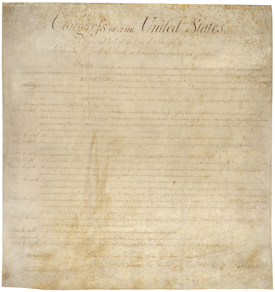
On March 4, 1789 Congress reported out the first twelve proposed Amendments to the recently ratified Constitution. The proposed Amendments had been planned by the framers of the Constitution and Congress based on the debates and discussions from May to September of 1787 at the Federal Convention. It had been necessary for the Convention to table some matters in order to complete the primary document - the Constitution - for transmittal to the states for ratification. The members of the Convention decided the matters covered by these first proposed amendments needed additional discussion, and that Congress, as provided by the last Article of the Constituion, was the appropriate body to complete the discussion and report the necessary Amendments to the states for ratification.
By December 15, 1791, ten of the twelve Amendments had been ratified by the requisite three-quarters of the states. These ten, because of their content, came to be designated the Bill of Rights. The content of these Amemndments are quite possibly better known to Americans than any part of the Constitution itself or any of the remaining seventeen Amendments. Interestingly, later Amendments revisited the two proposed Amendments that were not ratified in 1791. The revisited language came to be incorporated within the remaining seventeen Amendments
Let Freedom Ring is the area of this site where guest writers, and the site curator, will explore particular topics, such as the Electoral College or a given Amendment separately. For now, the sidebar will provide links to documents that are referred to in the articles.