 |
|
|
|
|
|
|
|
|
|
|
|
|
|
|
|
|
|
|
|
|
|
|
|
|
|
|
|
|
|
|
|
|
|
|
|
|
|
|
|
|
|
|
|
|
|
|
|
|
|
|
|
|
|
|
|
 |
|
 |
|
|
|
|
 |
|
 |
|
|
|
|
|
 |
|
|
|
 |
|
|
|
 |
|
|
|
Social Studies: Weapons of the Pirates |
|
|
|
 |
|
|
Back to February '07: |
|
|
|
|
|
 |
|
|
|
|
|
|
|
|
|
|
|
|
 |
|
|
 |
|
|
|
|
Weapons of the Pirates |
|
|
|
|
|
|
|
|
|
After reading Treasure Island by Robert Louis Stevenson, I did some research on weapons that pirates used. |
|
|
|
Pirates sailed the seas waiting for the opportunity to find a ship carrying valuable cargo. Pirates wanted to capture the ship and its cargo with as little harm as possible. Therefore, they preferred to use weapons that would ensure the safety of their prize. Their first choices were close range weapons like swords.
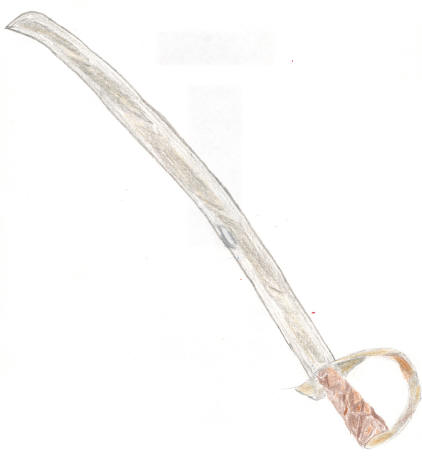
Swords allowed pirates to fight the crew of the ship without damaging any of the cargo they prized. Pirates from China preferred a heavy sword for their hand to hand fighting. Japanese pirates wielded two short swords, one in each hand. Since pirates often had to fight in the cramped spaces below decks, they usually kept daggers, a sort of short sword, hidden in their clothes. Daggers have hilts to protect fighters� hands. One of the most common swords was the cutlass. With a curved tip and a wide double-edged blade, this sword was originally used to butcher cattle! Each sword was different and had its own advantages. |
|
|
 |
|
|
|
|
|
A pirate's cutlass |
|
|
|
|
|
|
When swords were not effective, pirates might choose other weaponry based on keeping their prize and themselves safe. Many pictures portray pirates with at least one pistol tucked away. Pistols had to be used at close range and since the bullets were as big as marbles, a pistol could inflict great bodily harm if a pirate was lucky enough to hit anything. However, pistols weren�t always that great. Slow to reload and very inaccurate, most pirates carried more than one. Once fired, however, a pistol made a very good club.
Even though they are not as accurate, light, or as easy to use as guns of today, pirate firearms still packed a punch! Muskets were a favorite among the buccaneers. They were good for picking off enemies before having to board the enemy ship. They had a long barrel and were pretty accurate. The only downside was that they only had a single shot capacity. Two kinds of muskets were the long-barrelled musket and the musketoon. The long-barrelled musket is a musket with a longer barrel than a regular musket giving it better accuracy and range. A musketoon was designed to fire a spray of lead pellets. It could hit many targets at once. |
|
|
|
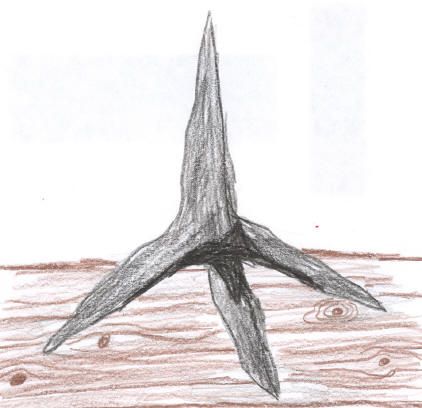
There were other kinds of close and medium range weapons from which to choose. They would be helpful in a big fight. Axes were used for boarding the wooden sides of ships, cutting rigging, and even fighting. Pirates also scattered crows' feet, little spiky metal balls, on the decks. The crew of the ship would step on the spikes and have a difficult time fighting. Pirates threw early forms of grenades made by filling bottles with gunpowder and bits of metal. The bottles exploded when they hit the deck and sent the bits of metal flying everywhere, inflicting wounds. If needed, pirates could use marlinspikes, also known as hand fiddles, for fighting. These were picks made of metal, wood, or bone which were essential in various ship's tasks involving ropes and lines. The resourceful pirates would use them like swords to fight and stab the ships' crew. |
|
|
|
 |
|
|
|
|
|
Crow's feet |
|
|
|
|
|
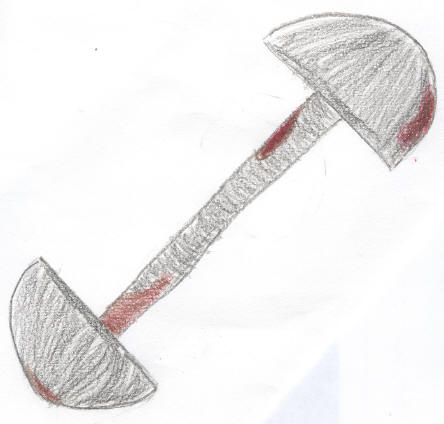
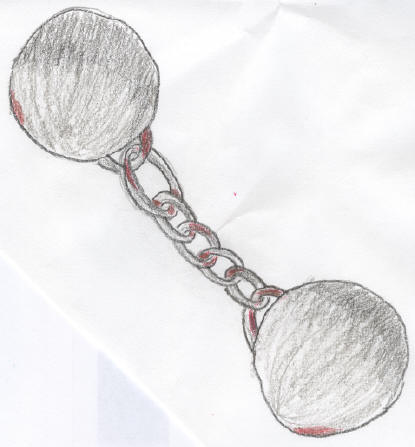
Cannons could be very useful when the pirates were overpowered, man to man. These long range weapons were used for many different tasks such as destroying a ship's sails, shooting down men or ultimately destroying a ship. Cannons fired different kinds of shot. One was the basic round shot which was good for hammering through the sides, deck and masts of a ship. There were also bar shots made by attaching two cannonballs together with a bar. This kind of shot chould take out whole sails by shredding them. It was not very effective against a ship's hull. A chain shot was made by connecting two cannonballs with a chain. This shot worked in about the same manner as a bar shot. The cannon balls wrapped themselves around masts and rigging, completely disintegrating them. Bundle shots and grape shots were used at closer range to scatter damage across the ship. Bundle shots were short metal bars tied together with rope. When they were shot from the cannon, the rope loosened and the bars spread out and began to tumble, injuring anyone or anything in their path. Grape shots were three-quarter inch iron balls put in a bag. The bag burned up when the cannon was fired and the balls flew everywhere, raining damage over a large area. While pirates preferred to save their loot, when they had no choice but to destroy an enemy ship and sink their wanted prize, they turned to cannons.
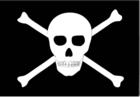
A pirate ensured the safety of his prize by choosing his weapons accordingly. Swords were preferred because the ship's cargo suffered no damage. Pistols, muskets, grenades and other close-medium range weapons were used when the odds did not favor the pirates in hand to hand combat. Cannons were used as a last resort when the pirates were outmanned and outgunned. The cannons could demolish the ship and its crew, but often at the cost of destroying or sinking the cargo. Although pirates were often sailing in smaller ships, the pirate ships had better manueverability so that the pirates could get close enough to board the ship with the prized cargo. Pirates also had one other weapon in their arsenal: fear! Many a crew was so terrified, based on pirate lore and legend, that when they spotted the pirate's flag, they cowered and were unable to fight. Some even surrendered or abandoned their ship! This ultimately made the job easier for the pirates. |
|
|
 |
|
|
|
|
|
Bar shot
Chain shot |
|
|
|
|
|
 |
|
|
|
|
|
 |
|
|
|
|
|
|
Back to Top |
|