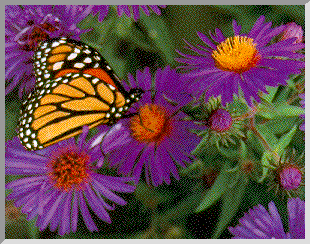
Butterflies

A Butterfly legend
"If you have a secret wish,
capture a butterfly and whisper your wish to
it. Since butterflies cannot speak, your secret is ever safe in their keeping.
Release the butterfly, and it will carry your wish to the Great Spirit, who
alone knows the thoughts of butterflies. By setting the butterfly free, you
are helping to restore the balance of nature, and your wish will surely be granted."

 Butterfly information
Butterflies are extremely dependent upon plants throughout their entire remarkable life cycles. After mating, adult females seek out the correct plants on which to lay their eggs--these are the same plants the hatched caterpillars will eat. In some species this is very specific--Monarch, for example, will only lay eggs on Milkweeds. Other species can choose from a limited "menu" of plants, but all butterflies absolutely require certain plants in order to breed. Caterpillars are equipped to eat only certain foods and will starve to death if they are not at hand. These necessary plants are called butterfly "host" plants. Once caterpillars go through their consecutive growth cycles (called "instars"), they shed their skin one last time and transform into chrysalises. Moth species change into cocoons instead. During the following period of dormancy the chrysalis remains firmly attached to the host plant. Because most butterflies over winter as either chrysalises or eggs attached to these plants, it is imperative not to mow or remove these dead plants in the fall. A tidy butterfly garden is a dead one! Inside the chrysalis an extraordinary transformation takes place, one of Mother nature's finest tricks, and eventually the adult butterfly emerges to begin searching for nectar plants on which to feed, a mate and host plants on which to lay eggs. Most butterflies will feed from many different plants or even at feeders--but the majority of butterflies are extremely specific about their host needs. For this reason a butterfly garden must include as many of these host plants as possible. The closely related Moths have similar life histories, although the majority (but by no means all.) moths fly at night. The most significant differences between moths and butterflies are differently shaped antennae--butterflies' are club-shaped; moths' are variable but mostly brush-like--and their pupa structure. Butterfly pupa transform into adults inside hard-surfaced chrysalis, while moth species spin silken cocoons.

by Mary Baxter St. Clair
Hyperlinks to the following
click on image
Home Next Back
(Flutter Heaven) (Myself) (Original Music)Hope you enjoy your visit with the nature fairies.
Thanks for stopping by.
Fairy Potions Enchanted Forest Mysterious Garden Poetry
six categoriesDolphins & Mermaids Native Americans Mother Earth Flower Child Soul Mates Herb Lore Universal Family New Age Mystics
A look at colorLove Always Art Gallery Angels & Devotion Crystals & Gemstones Goddess Energy Angel Jewelry Gem & Crystal Powers Goddesses Fairy Marketplace Crystal Jewelry Fairy's
Jewelry BoxShangri-La Original Music FairyJewels About Myself Custom Jewelry By Steve Birthstone Information Webrings Home FairyVials Meditation
To sign guestbook click on this book and it will take you to the homepage where you can catch a link to the guestbook at the very bottom of that page
Thanks for visiting!
