|
|
|
What are varicose veins?
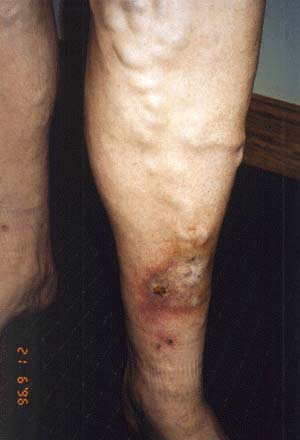
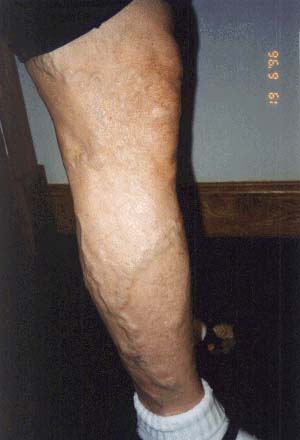
Varicose veins are abnormally widened, and lengthened tortuous segments of the veins below the surface of the skin, commonly found on the inside or back of the legs and occasionally on the thighs, and usually associated with a problem in the free-flow of the blood in those affected veins.
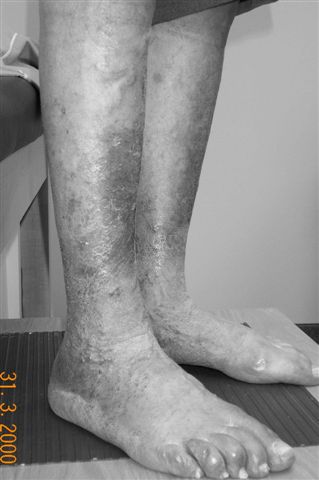
Causes of varicose veins are not entirely understood. Heredity, weakness in the wall of the vein or the valves, congenital absence of the valves, gender, hormonal changes, and our upright position are the most common factors cited in the literature.
A raised pressure inside the vein causes it to dilate. This pressure is typically from the forces of gravity, the bodies weight, and the column of venous blood that has not yet finished its trip back to the heart. This is often due to valves in the skin veins and associated connecting veins not functioning correctly thereby allowing increased volumes of blood to accumulate in the affected veins under increased pressure. This extra volume of blood must be accommodated and the veins therefore, widen.
In simple terms, rather like blowing air into a balloon where the air cannot flow out again, the balloon swells. A vein also has a certain elasticity in the walls and swells in the same way. Varicose veins are often very obvious, appearing swollen and, sometimes, quite discolored. The swollen veins contain blood that is not flowing properly and 'static' blood is not a healthy situation. Additionally, these veins can cause discomfort and can bleed copiously if damaged - even by simply scraping or knocking against the furniture. There seems to be a hereditary tendency to varicose veins, but the condition is exacerbated by prolonged standing, obesity, pregnancy, and activities that induce high abdominal pressure (weight lifting, playing a wind instrument, and very tight clothing). Damage to the valves after a deep vein thrombosis (blood clot) can also lead to varicose veins.
The problem is extremely common in both sexes and increases with age.
Many people have no symptoms other than possibly unsightly veins, causing cosmetic concern when wearing shorts or bathing suits. Symptoms may vary from minimal to severe. Feelings of heavy legs, drawing pains, night cramps, swelling, eczema, tenderness to touch, and itching. Symptoms tend to worsen as the day goes buy. In women, these symptoms are often made worse around the time of menstruation.
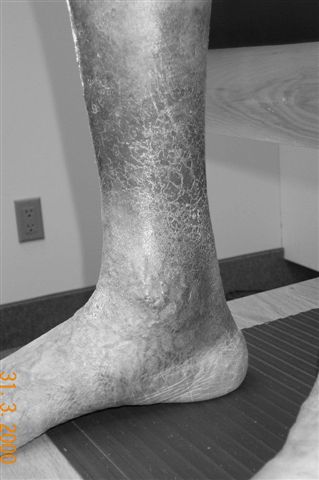
Untreated, varicose veins can lead to the following complications: marked irritation of the skin around the ankle with brownish discoloration (stasis dermatitis), blood clots (phlebitis), leg ulcers (breaks in the skin), bleeding, and infection.
The principle of treating varicose veins is to control or eliminate the "bad" veins. This forces the blood to flow through the remaining healthy veins.
Various methods can be used, basically divided into two groups: non invasive-conservative, and invasive. Most of the time a combination of two or more therapeutic modality is used.
A conservative treatment is
ESES (pronounced SS) for E xercise S tockings E levation S till is an easy way to remember the conservative approach. Weight reduction is another helping factor.
This conservative approach will not make the veins go away ( not helpful for cosmetic) and probably not even prevent them from worsening, but it may provide some symptomatic relief. The invasive approach has two components, sclerotherapy or injections of the vein, and surgery.
Sclerotherapy
has been
a successful method of treating veins since the 1600s.
Injections
of the medication, technique called sclerotherapy, act upon
the
inner layer of the vein wall to gradually seal the vein and
stop
the flow of blood through them. It is the most popular
method
employed by vascular specialists worldwide, to treat
unwanted
veins. It is minimally invasive and very effective if done
by
experienced doctors. It leaves no scar, no anesthesia is
involved
and it is done in the office.
More information
Surgery
involves anesthesia, and leaves
scars. The most common surgical technique employed for many
years
now, involves general anesthesia, cutting and removing the
veins
by 'stripping' them out and then, stitching. This is usually
followed by a period of 5 days of tight bandaging and
walking
exercise. An amount of scarring with this approach is
inevitable,
and it is done as an outpatient.
More Information
Ambulatory phlebectomy
is a "minimal
surgery" procedure where by multiple small incisions
are
made along the varicose vein and it is literally
"fished
out" of the leg using surgical hooks or forceps. It is
done
under local or regional anesthesia, in an operating room or
the
"procedure room" in an office.
More information
Laser has received publicity, generally by the companies that make and sell these machines. If the laser do work, it would be only for the smallest facial spider veins. Many doctors including me, are not yet convinced that the effectiveness of these machines has been proven.
A new generation called PHOTODERM has been recently introduced to the market and used with good results.
Closure
The Closure procedure eliminates reflux by closing the problem vein through a patented method: A thin catheter is inserted into the vein through a small opening. The catheter delivers radiofrequency (RF) energy to the vein wall, causing it to heat, collapse, and seal shut. Once the diseased vein is closed, other healthy veins take over and empty blood from your legs.
The Closure procedure is a less painful and less invasive alternative to surgically removing (stripping) the troublesome vein from your leg, with a shorter recovery period than with vein stripping.
Three randomized trials of Closure versus vein stripping have proven that the Closure procedure has less pain, quicker return to daily activities, quicker return to work, and superior quality of life outcomes. A recent study demonstrated the Closure procedure has significantly less bruising as well.
EVLT is a anew technique (Endovenous Laser Treatment) recently introduced in Canada. It is described as minimally invasive, done under local anesthesia in the private office of the surgeon or physician. Again the cited advantages, are less bruising, earlier recovery, and less pain. I have no personal experience, the concept is very appealing; however in Ontario it is not covered under OHIP, most insurance plans will not pay for it, so the patient will have to apy for the cost out of his/her own pocket.A successful treatment allows the venous side of the circulatory system to be improved. The blood that was pooled in the varicose vein is made available to the general circulation by being forced to enter into other healthy veins. Symptomatic patients should expect relief if their symptoms were related to venous insufficiency ( other causes of leg pain are sciatica, arterial problem, and arthritis). Asymptomatic patients will be satisfied with their new look.
These visible thread-like colored veins( medically referred to as telangiectasia) are actually localized dilations of skin veins which tend to occur most commonly on the face and on the legs. Increased pressure is not as important a factor in causing spider veins as in varicose veins, hormonal influence of the female hormone estrogen is most likely the reason why these spider veins are seen more commonly in females, especially during or after pregnancy, oral contraceptives, or when on estrogen replacement therapy. Heredity is another significant factor. Whilst not harmful, they can cause a great deal of distress to those who have them, particularly in the summer, or on vacation when affected areas are more exposed. This is, however, unnecessary as the condition is quite amenable to treatment. They are not as painful as enlarged varicose veins but they are still liable to bleed and worsen without treatment. See photo
Treatment of Spider Veins
These are best treated by using a fine diathermy probe, or laser. This individually seals the affected blood vessels which then disappear.
Spider veins in the legs do not respond well to electro-coagulation as described above. However, they can be made to disappear extremely successfully using injection sclerotherapy. This method involves the use of a very fine needle. Almost all patients find this method surprisingly painless. Normally, it is preferred to have the treatment spread over more than one session in order to clear a `patch' of veins completely. Once veins are dealt with they will not re-open, but other thread veins might develop later which can also be treated.
Varicose veins tend to recur, a yearly follow-up is recommended to assess and treat any recurrence at its earliest stage.
What you can't change
Whether you had any of the invasive treatment or not, it is highly recommended that you carry on with the conservative approach ( ESES ) to try delaying or preventing recurrences.
ESES E xercise S tockings E levate S till