( Choose other topics from the table on the left )
What is Chronic Venous Insufficiency (CVI)?
Chronic venous insufficiency (CVI) is a condition that
occurs when blood pools in the veins of the lower legs.
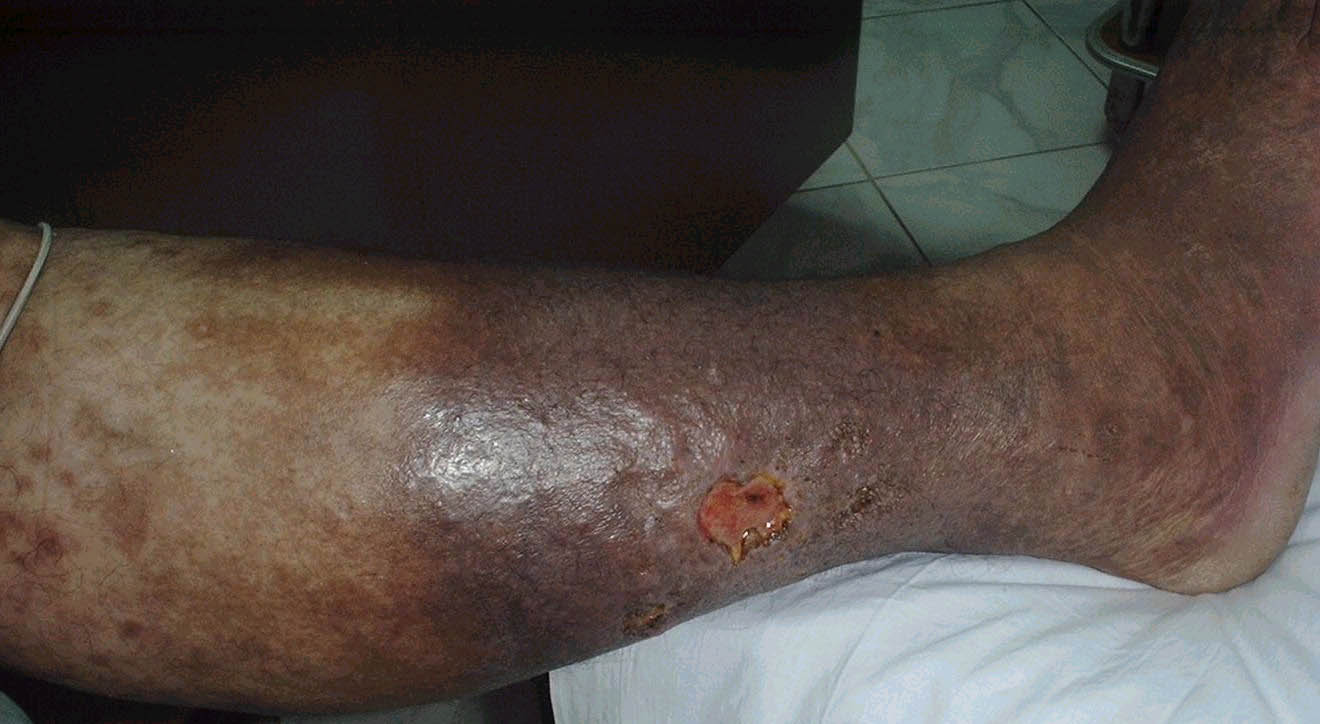
This can cause leg swelling, changes in the skin texture and
color, and skin ulcers.
How does it occur?
Veins are blood vessels that return blood from the body to
the heart and lungs to get more oxygen. Veins require the
muscles in our feet and legs to return the blood, against
gravity, to the heart. To help this process, veins have a
series of one-way valves in them that prevent back flow.
There are 3 main causes of CVI:
- blockage of the flow of blood in a vein, such as by a
blood clot
- a problem with the calf muscle of the leg not working
very well to help push blood "uphill" back to the heart
- damage to the valves in the veins, such as in varicose
veins, which allows some blood to leak backward.
Obesity, inactivity, and aging can contribute to the
weakening of or damage to the valves. Some people inherit
weak valves.
In CVI, problems with the leg veins (such as weak, worn or
damaged valves) or muscles keep the blood from moving as it
should. This can lead to pooling of blood, called stasis,
in the veins.
This blood stasis causes abnormally high pressure in the
veins and swelling in the legs, which gradually gets worse.
Sometimes there is so much swelling that tiny drops of
plasma, the pale yellow fluid part of blood, leak out of the
skin. The tiniest blood vessels, called capillaries, can
burst under high pressure. When this happens, red blood
cells are released directly into the nearby tissue. When
these red cells break down, they leave a deposit that colors
the skin a reddish-brown.
The skin itself can be damaged by these changes. If the
outer layer of skin is damaged, leg ulcers can develop. The
ulcers, called venous stasis ulcers, can get infected. This
can lead to infection in the surrounding tissue, a condition
called cellulitis. Cellulitis must be treated with
antibiotics.
Back To Top
What are the symptoms?
Symptoms of CVI may include:
- ankle swelling (the earliest sign)
- leg swelling
- a dull ache or heaviness in the legs, especially after
standing for a long time
- a feeling of tiredness in the legs
- new varicose veins
- drops of plasma (yellow fluid) oozing from the skin
- venous stasis dermatitis, a condition that produces
changes in the skin of the lower legs, which may include
sores called venous stasis ulcers.
Changes to the skin may include:
- firm swelling
- change of skin color in the affected area to brown,
reddish, or reddish-brown
- leathery skin texture
- flaking and itching of the affected area
- a venous stasis ulcer, a sore in which the top layer of
skin is gone. These ulcers are usually located above the
ankle on the inside of the leg.
How is it diagnosed?
Your health care provider will ask about your medical
history and examine your legs. Sometimes a painless test
called duplex scanning is used. This test uses sound waves
to provide information about leg veins and how well they are
working.
How is it treated?
Treatment, which aims to reduce the pooling of blood and
prevent ulcers, may include the following:
- Compression stockings are often used. These are
different from the elastic stockings that may be used to
treat a blood clot. Compression stockings are specially
measured to fit each person. They are made to put the
most pressure near the ankles and the least pressure near
the knees. The purpose of these stockings is to decrease
the vein pressure and prevent ulcers.
- If there are no ulcers and no fluid is oozing out of the
tissue:
- An anti-itch cream (hydrocortisone) can be used as
needed.
- Creams such as zinc oxide may help protect the skin
from cracking and inviting infection.
- Sometimes an antifungus cream is used because people
with CVI are prone to fungal infections.
- If the skin is oozing (weeping) drops of fluid, special
wet compresses are used until the weeping stops.
- If ulcers are present, layered compression bandages are
used. Your health care provider can teach you how to
apply layered compression bandages, which have 3 or 4
layers of different types of bandages. Elastic bandages
are not used because they do not provide enough pressure.
If the ulcers get infected, your health care provider may
prescribe antibiotics.
To allow pooled blood to drain, raise your legs above the
level of your heart at set times throughout the day (at
least 30 minutes every 2 hours). At night, sleep with your
feet elevated about 6 inches by propping them on pillows.
Back To Top
How long do the effects last?
CVI is a lifelong condition. Acute flare-ups of stasis
dermatitis and stasis ulcers may come and go.
What can I do to take care of myself?
The following measures may be helpful:
- Avoid long periods of sitting or standing. When you are
sitting, avoid crossing your legs or dangling your legs
over the edge of a chair or bed.
- Exercise your calf muscles, such as by walking.
- Elevate your legs as much as possible.
- Maintain a normal weight. If you are overweight, try to
lose some weight.
- Keep the skin moisturized.
- If you have compression stockings, wear them during the
day.
- Avoid wearing girdles, leg garters, and other
tight-fitting garments.
- Check the skin of your legs every day for signs of
infection. These signs include:
- increased heat in an area
- new redness or a bigger area of redness
- a change in the way the skin feels.
|