Countries
Home ResourcesAmazon BooksBartleby Quotes Genre Fluent Google Maps Lonely Planet MSN Encarta Virtual Tourist Wiki Travel Wikipedia |
Poland history and picturesPoland began to form into a recognizable unitary and territorial entity around the middle of the 10th century under the Piast dynasty. Poland's first historically documented ruler, Mieszko I, was baptized in 966, adopting Catholic Christianity as the country's new official religion, to which the bulk of the population converted in the course of the next century. In the 12th century Poland fragmented into several smaller states, which were later ravaged by the Mongol armies of the Golden Horde in 1241. In 1320 Wladyslaw I became the King of the reunified Poland. His son Casimir III repaired the Polish economy, built new castles and won the war against the Ruthenian dukedom. 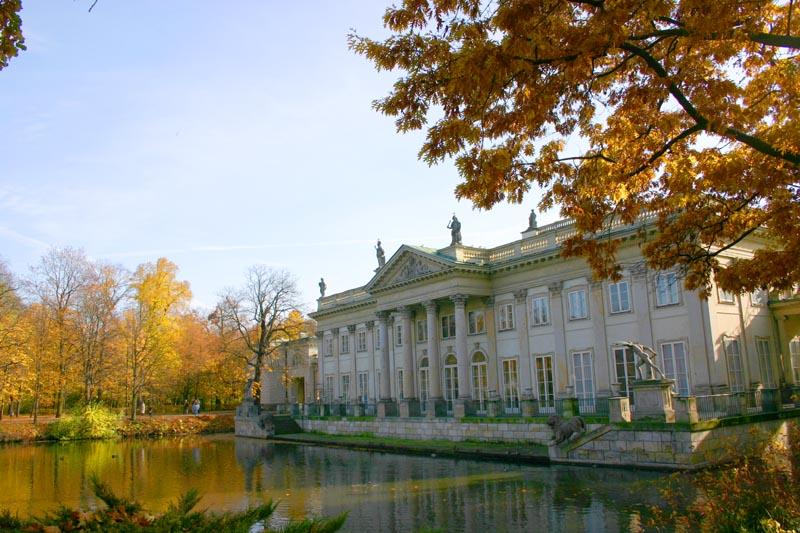
In the mid-17th century a Swedish invasion rolled through the country in the turbulent time known as "The Deluge" (potop). Numerous wars against the Ottoman Empire, Russia, Cossacks, Transylvania and Brandenburg-Prussia ultimately came to an end in 1699. During the following 80 years, the waning of the central government and deadlock of the institutions weakened the nation, leading to anarchistic tendencies and a growing dependency on Russia. This eventually led to the 'Liberum Veto', which allowed for any member of parliament to break off the Sejm's proceedings during the session, effectively paralysing any attempt at reform. Russian tsars took advantage of this unique political vulnerability by offering money to Parliamentary traitors, who in turn would consistently and subversively block necessary reforms and new solutions. The Enlightenment in Poland fostered a growing national movement to repair the state, resulting in the first modern written constitution in Europe, the Constitution of May 3 in 1791. The process of reforms ceased with the three partitions of Poland between Russia, Prussia, and Austria in 1792, 1793 and 1795 which ultimately dissolved the country. Poles resented their shrinking freedoms and several times rebelled against their oppressors (see List of Polish Uprisings). Napoleon recreated a Polish state, the Duchy of Warsaw, but after the Napoleonic wars, Poland was split anew by the Allies at the Congress of Vienna. The eastern part was ruled by the Russian tsar as a Congress Kingdom, and possessed a liberal constitution. However, the tsars soon reduced Polish freedoms and Russia eventually de facto annexed the country. Later in the 19th century, Austrian-ruled Galicia became the oasis of Polish freedom. Modern history of Poland
The 1926 May Coup of J�zef Pi�sudski turned the reins of the Second Polish Republic over to the Sanacja movement. It lasted until the start of World War II on September 1, 1939, when Nazi Germany and the Soviet Union invaded Poland(September 17). Warsaw capitulated on September 28, 1939 and was split up into two zones, one occupied by Nazi Germany the other by the Soviet Union as foreseen in the Ribbentrop-Molotov pact. The eastern part of the German occupied zone was transformed into the General Government area, and the western part (the areas that belonged to Germany before World War I) was simply incorporated to the German Reich.
Of all the countries involved in the war, Poland lost the highest percentage of its citizens: over 6 million perished, half of them Polish Jews. Poland also made the 4th largest allied troop contribution, after the Americans, the British and the Soviets, to ultimately defeat Nazi Germany. At the war's conclusion, Poland's borders were shifted westwards, pushing the eastern border to the Curzon line. Meanwhile, the western border was moved to the Oder-Neisse line. The new Poland emerged 20% smaller by 77,500 square kilometres (29,900 sq mi). The shift forced the migration of millions of people � Poles, Germans, Ukrainians, and Jews.
Colyton NSW 2760, Australia Phone: (02) 9862 0717 mailto:[email protected] |
Links to PlacesA B NewsBali Villa Rental Boat Share Books to Read Blog Wave Chemical Periodic Table City Cars Commodities Computer Technology Email Cash Google Earth Jupiter the Planet Lego Land Project LCSH Subject Mercury The Planet News that Matter Online Games Runescape Blog Scirus Science Search Search Engine News Sydney Event Calendar Tax Tips Virtual Library Venus the Planet |