Countries
Home ResourcesAmazon BooksBartleby Quotes Genre Fluent Google Maps Lonely Planet MSN Encarta Virtual Tourist Wiki Travel Wikipedia |
Malaysia history and picturesThe Malay Peninsula has benefited from its central position in the maritime trade routes between China and the Middle East. The earliest recorded Malay kingdoms grew from coastal cities established in the 10th century AD. These include Langkasuka and Lembah Bujang in Kedah, as well as Beruas and Gangga Negara in Perak and Pan Pan in Kelantan. It is thought that originally these were Hindu or Buddhist nations. The first evidence of Islam in the Malay peninsula dates from the 14th century in Terengganu, but according to the Kedah Annals, the 9th Maharaja Derbar Raja (1136-1179 AD) of Sultanate of Kedah converted to Islam and changed his name to Sultan Muzaffar Shah. Since then there have been 27 Sultans who ruled Kedah. There were numerous Malay kingdoms in the 2nd and 3rd century A.D., as many as 30 according to Chinese sources. Kedah �C known as Kedaram or Kataha, in ancient Pallava or Sanskrit �C was in the direct route of invasions of Indian traders and kings. Rajendra Chola, who is now thought to have laid Kota Gelanggi to waste, put Kedah to heel in 1025 but his successor, Vir Rajendra Chola, had to put down a Kedah rebellion to overthrow the invaders. The Buddhist kingdom of Ligor took control of Kedah shortly after, and its King Chandrabhanu used it as a base to attack Sri Lanka in the 11the century, an event noted in a stone inscription in Nagapattinum in Tamil Nadu and in the Sri Lankan epic, Mahavamsa. During the first millennium, the people of the Malay peninsula adopted Hinduism and Buddhism and the use of the Sanskrit language until they were eventually converted to Islam. But not before Hinduism, Buddhism and Sanskrit became embedded into the Malay worldview. 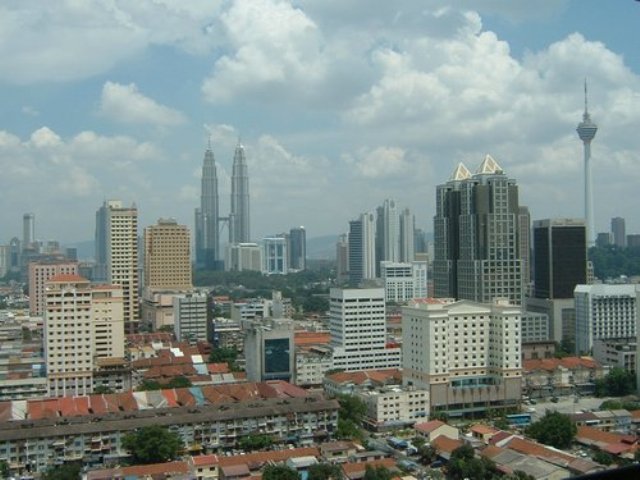
We can still see traces of this in political ideas, social structure, rituals, language, arts and cultural practices. To this day, when a Malay considers anything important, he looks for a Sanskrit word to describe it: It is the Sanskrit pradana mantri (the Malay perdana mentri) here while in another Malay land, it is Penghulu ng Pilipina for its president. The Proton car model names are from Sanskrit whilst the Perodua resorts to Malay names. There are reports of other areas older than Kedah �C the ancient kingdom of Ganganegara, around Bruas in Perak, for instance �C that pushes Malaysian history even further into antiquity. If that is not enough, a Tamil poem, Pattinapillai, of the second century A.D., describes goods from Kadaram heaped in the broad streets of the Chola capital; a seventh century Sanskrit drama, Kaumudhimahotsva, refers to Kedah as Kataha-nagari. The Agnipurana also mentions a territory known Anda-Kataha with one of its boundaries delineated by a peak, which scholars believe is Gunong Jerai. Stories from the Katasaritasagaram describe the life of elegance of life in Kataha. Modern Malaysia history
Following the Japanese occupation of Malaya (1942-1945) during World War II, popular support for independence grew. Post-war British plans to unite the administration of Malaya under a single crown colony called the Malayan Union foundered on strong opposition from the Malays, who opposed the emasculation of the Malay rulers and the granting of citizenship to the ethnic Chinese. The Malayan Union, established in 1946 and consisting of all the British possessions in Malaya with the exception of Singapore, was dissolved in 1948 and replaced by the Federation of Malaya, which restored the autonomy of the rulers of the Malay states under British protection.
During this time, rebels under the leadership of the Communist Party of Malaya, who were mostly Chinese, launched guerrilla operations designed to force the British out of Malaya. The Malayan Emergency, as it was known, lasted from 1948 to 1960, and involved a long anti-insurgency campaign by Commonwealth troops in Malaya. Against this backdrop, independence for the Federation within the Commonwealth was granted on 31 August 1957 (see Hari Merdeka).
In 1963 the Federation was expanded with the admission of the then-British crown colonies of Singapore, Sabah (British North Borneo) and Sarawak, and renamed Malaysia. The Sultanate of Brunei, though initially expressing interest in joining the Federation, withdrew from the planned merger due to opposition from certain segments of the population as well as arguments over the payment of oil royalties.
The early years of independence were marred by conflict with Indonesia (Konfrontasi) over the formation of Malaysia, Singapore's eventual exit in 1965, and racial strife in the form of racial riots in 1969 (popularly known as the "May 13" riots). The Philippines also made an active claim on Sabah in that period based upon the Sultanate of Brunei's cession of its north-east territories to the Sultanate of Sulu in 1704. The claim is still ongoing.
After the May 13 racial riots of 1969, the controversial New Economic Policy - intended to increase the share of the economic pie owned by the bumiputeras as opposed to other ethnic groups - was launched by Prime Minister Tun Abdul Razak. Malaysia has since maintained a delicate ethno-political balance, with a system of government that has attempted to combine overall economic development with political and economic policies that favour Bumiputras, which includes the majority Malays, but not always the indigenous population.
Colyton NSW 2760, Australia Phone: (02) 9862 0717 mailto:[email protected] |
Links to PlacesA B NewsBali Villa Rental Boat Share Books to Read Blog Wave Chemical Periodic Table City Cars Commodities Computer Technology Email Cash Google Earth Jupiter the Planet Lego Land Project LCSH Subject Mercury The Planet News that Matter Online Games Runescape Blog Scirus Science Search Search Engine News Sydney Event Calendar Tax Tips Virtual Library Venus the Planet |