Book
Reviews
As time permits, I will review other books from the School
Street Book Room. Also, I would
love to include teacher comments and reviews.
Please email your reviews to [email protected].
Most of the
content of these reviews has been taken directly from the books. The
following books are NOT organized in any particular order yet, except
being a chess fanatic I had to include Bobbi Fisher�s book first.
J
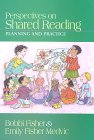
Here in one practical resource, busy teachers will find
an array of useful strategies for implementing shared reading techniques in pre-K through
Grade 2 classrooms. Starting with an overview of shared reading theory, the
authors draw largely from the models of Don Holdaway and illustrate the
correlation between classroom reading and the bedtime story. While traditional
aspects of shared reading are discussed-from big books to chanting to
contextualized word study-the book goes beyond those parameters to explore
shared reading applications in other areas of literacy instruction. Topics
discussed include organizing for shared reading, developing teaching skills
with varied texts, applying techniques in group and individual practice, and
inspiring student and parent participation.
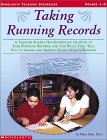
Taking Running
Records (Grades 1-3) A running record is an excellent tool for evaluating
primary students' growth in reading and with this book, you've got the
practical guidance you need for using this assessment with ease and depth of
understanding. Includes great warm-up ideas for observing children while you
become familiar with the markings, sample running record sessions, what you
learn from retellings, analyzing the miscues, and how to turn what you learn
into mini-lessons that move students' reading forward by leaps and bounds.
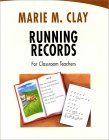
This book
introduces key ideas about using Running Records and shows how to take, score,
and interpret reliable records. For
quick appraisal, a teacher can rely on counting errors and self-corrections
and then recording the accuracy of the reading.
A more in-depth analysis of how the reader is working on text allows
teachers to monitor changes in the ways children problem-solve on text. Click
to see the Table
of contents.
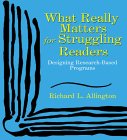
What Really Matters for Struggling Readers offers
a clear blend of research and practice that teachers can use to develop better
methods for helping children with reading difficulties. * Includes clear, non-technical summaries of
research on the subject of children as proficient readers.
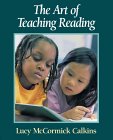
The Art of Teaching Reading serves as an articulate and
desperately needed reminder of what matters most in teaching. * Valuable resource for current and future educators.
This is the first book I read from the Book Room, and I
found it very helpful for designing several of the forms on this Website.
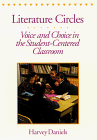
Overall this is a very readable book, one which is a blend of theory
and practice and which shows anyone interested in knowing about literature
circles what they are and how to use them.
This book has 7
sample pages. See
all pages. Table of
contents
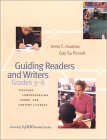
The product of many years of work with classroom
teachers, Guiding Readers and Writers (Grades 3-6) is one of the most
comprehensive, authoritative guides available today. It explores all the
essential components of a quality literacy program in six separate sections: *Breakthrough to Literacy: Fountas and Pinnell present
the basic structure of the language/literacy program within a breakthrough
framework that encompasses the building of community through language, word
study, reading, writing, and the visual arts. The framework plays out as three
"blocks," which can be interpreted as conceptual units as well as
segments of time within the school day. Specific information on how to
structure a reading and writing workshop is provided. A practical chapter on
organizing and managing the classroom will help you implement the principles
in your own classroom. *Independent Reading: It is essential for students to
develop interests and tastes as readers, selecting books for themselves every
day. Fountas and Pinnell devote four chapters to independent reading,
exploring how to structure teaching, minilessons, conferences, groupshare, and
ways to use response journals as part of a reading workshop. *Guided Reading: The chapters in this section provide
detailed information on planning for guided reading, dynamic grouping for
effective teaching, and selecting, introducing, and using leveled texts.
Fountas and Pinnell describe characteristics of texts related to difficulty
and ways to organize texts in your classroom and school. *Literature Study: This section of the book discusses
how to make students� experiences with literature as rich as possible. The
authors offer specific suggestions for forming groups, guiding student
choices, and establishing and teaching routines for literature discussion. A
full chapter explores reader response and ways to help readers dig deep to
uncover the meaning of texts. *Teaching for Comprehension and Word Analysis: This
detailed look at the reading process explores both oral and silent reading,
processes and behaviors related to comprehension, and ways to help students
construct meaning. Included are twelve systems for sustaining the reading
process and expanding meaning, plus discussions of the important areas of
phonics, spelling, and vocabulary.
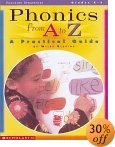
Everything
you wanted to know about phonics but were afraid to ask! This practical
handbook, written by an early reading specialist, will show you how to build
engaging, effective phonics practice into your reading-writing program. Lots
of ready-to-use lessons, word lists, games and learning center ideas. Assessments
are included as well reading problems and possible solutions to these
problems.
When early
literacy interventions work with young, low-achieving children, just why they
work is often poorly understood. With Change Over Time, you can join
Marie Clay as she takes a step back from the concepts of reading failure,
disability, and dyslexia, and considers a new way to view literacy learning
difficulties. You begin by asking questions about the changes that occur in the cognitive processes of proficient children as they learn to read. You call what they do "constructive" and discover how you can interact daily with low-achieving children so that they too conduct literacy tasks constructively and independently. Then you consider some provocative alternatives: How do you describe children's progress? Do you check book levels off a list? Do you count the letters, the sounds, the correct spellings? Or is there another option? What if you give prime attention to processing-how the brain works with the text to get the message? Are the children shifting from simple processing to more complex ways of working? Are they initiating more independent problem solving on harder texts and getting better at it day after day? Literacy Centers
Grades 3-5: What Your Other Kids Do During Guided-Reading Groups How do you work one-on-one with a student while the rest of the class learns independently? How do you make guided reading possible while keeping the rest of the class �on-task�? How do you provide your students with continuing practice in basic skills to reach each student? How do you integrate the content areas in a way that is fund for your students? This book suggests that you create Literacy Centers.
Look Inside This Book!
This book provides hundreds of fun, hands-on activities for teaching children phonics and spelling. It is an excellent method for teaching learning disabled students at the elementary level. Children really learn phoneme segmentation, an essential reading skill, through this process. Kids would especially love the culminating activity, finding the "Big Word."
Weekly units presented follow this format: * Monday-Thursday (five items) -- two sentences to edit, including corrections in punctuation, capitalization, spelling, grammar, vocabulary, plus three items that practice a variety of language and reading skills. * Friday -- practice cycles through four formats - language usage, identifying and correcting mistakes, combining sentences, choosing reference materials All 112 pages are reproducible and perforated for easy removal.
--------------------------------------------------------- | ||||||||