Background Information:
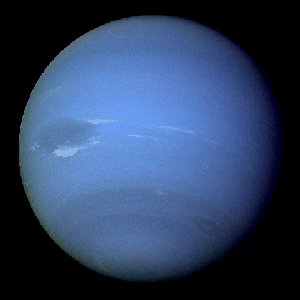
Neptune is the eighth planet from the Sun.
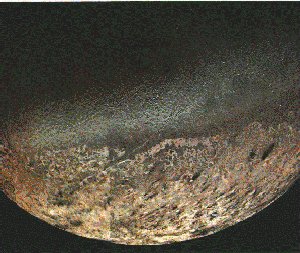
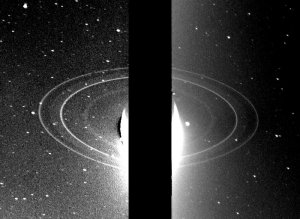
It has eight known moons and four known rings. The largest moon of Neptune is Triton, and it has the
most varied terrain of any object in the solar system. Triton was also found to have active geysers
on its surface; several large plumes were captured by Voyager 2. Triton orbits Neptune in the opposite
direction of most moons, and it is believed that it is slowing down and getting closer to Neptune, and that it
might one day be torn apart by Neptune's gravity and create a ring system rivaling Saturn's.
Neptune Images:
There has been one fly-by mission to Neptune by the
Voyager spacecraft in 1989. These are a few of the images returned:


Orbital & Mass Data:
- Average Distance from Sun : 4.4966 billion kilometers
- Length of Year : 164.79 Earth years
- Length of Day : 18 Earth hours
- Diameter : 49,500 kilometers
- Mass (Earth=1) : 17.23
- Surface Gravity (Earth=1) : 1.12
- Escape velocity : 23.6 kilometers/second
- Average surface temperature : 57 K. at the cloud tops
|