| The relationship between Science and Theology is one that has entered the popular spheres of our awarness over the past years. Especially since the late 19th century, the major perception of the relationship between these two fields of study has been that they are in conflict, going so far as to give rise to the common impression that they are at war. But scholars are more and more coming to assert that this is not necessarily the case. Our readings of history have been tinged by this misperception, or at leat distortion, for years, and this has also changed the way we look at these issues today. There isn't a fundamental conflict between science and theology, and much can and should be gained by the exploration of these two important fields, and how they relate. It is also important in our developing picture to remember that "science" is not limited to the physical sciences, but includes other endeavors such as the historical and social sciences. Our developing understanding will seek to begin investigations into these areas as well. Christianity is not simply a religion of human feelings, or of philosophical speculation. It is intimately concerned with the world as God's creation. Further, Christianity makes the assertion that creation reflects the wisdom and glory of God. This means that when either science or theology is improperly conceived, there is definitely room for confrontation, due to these close relationships. But it also means that there is space for fruitful dialogue between these two endeavors of study. What exactly are the paramaters for this dialogue? How are disputes arbitrated? These are some of the questions we encounter. But even amids some outstanding questions, there is much which can and should be learned, and the first of these things is that this dialogue is a genuine and proper activity of theology, and in fact, is mandated by it. |
| In the modern discussion of the relationship between science and theology, one of the paradigms that has gained increasing attention is the kenotic paradigm. Investigating and deepening our understanding of God, Jesus Christ, and the world in and through the use and modification of this paradigm allows a fruitful encounter between science and theology, and also serves as a point of dialogue between us and other who are involved in the dialogue between science and theology. |
 |
 |
 |
 |
|
|
|
|
|
|
|
|
|
|
|
| Science & Theology |
|
|
|
|
|
|
|
|
 |
|
| Here we take a constructive look at the issues in the field of science and theology through reviewing publications in the field. Of special interest are the reviews of Alister McGrath's Scientific Theology. |
| Much fascinating interaction has gone on between quantum theory and theology. Here we look at two major figures in the field of Science and Religion, John Polkinghorne and Arthur Peacocke, both scientist-theologians, who have differing views of how quantum theory relates to theology, and specifically, how quantum theory can contribute to our understanding of divine action. This involves a discussion of the "causal joint" between God and the world, and a look at "information" and its role in scientific process. |
|
|
|
|
|
|
|
| Studies in the Science & Theology |
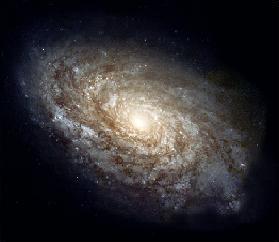 |
| A Photo of a spiral galaxay taken by the Hubbel Telescope. Photo courtesy of NASA. |
| Science & Theology |
| Alister McGrath, a leading historical and systematic theologian who has extensive scientific training, has recently completed a three volume "Scientific Theology" which deals with the methodology of science and of theology. His first volume lays out an extremely helpful program for understanding the relation between these two disciplines, and helps us chart a way forward for theology in an age dominated by science. His views resonate very strongly with my own, as is clear from my review of his book. McGrath's Scientific Theology provides a strong example of how these disciplines should be related. Read more... His second volume deals with the concept of "reality" and defends a critical realist perspective for both science and theology. This means acknowledging the situatedness of the scientist or theologian without absolutizing their situation, and leads to understanding theology as an encounter with reality. Here McGrath lays much of the philosophical groundwork for the relationship between science and theology. Read more... McGrath concludes his three volume Scientific Theology with a discussion of the role of theory in the sciences and in theology. In this final volume in his work on theological method, McGrath explores the development of theory in science and in theology, and looks at the legitimacy of this development. This important discussion, including a look at revelation and theory development in theology. Read more... Another Important formulation of the relationship between science and theology has been written by Alan Padgett. Padgett, much like McGrath, writes about the constructive potential of a fruitful relationship between these two disciplines. For Padgett, philosophy provides an important foundation for this relationship, which he sees as being a "collegial" one, based on what he describes as the mutuality model of the relationship between science and theology. His very astute assessment of this field makes this a work worth reading, as does the fact that he shows what this relationship would look like by looking at two different cases, the relationship of thremodynamics and theology when thinking about time, and the relationship of the historical sciences and theology in studies of Jesus. Read more... Gordon Kaufman is a distinguished professor from Harvard Divinity School who has, over the last thirty years, leveled one of the most consistent critiques of classical theism. Here in this latest book, Kaufman crowns his theological career with an in-depth discussion about the nature of belief in God in an evolutionary and ecological world. He reviews his own development, as he points to the culmination of his work, an understanding of God as serendipitous creativity. While this is a creative synthesis, it is also thoroughly problematic. Read more... |
| As we seek to acknowledge that the study of science and theology goes beyond just the physical sciences, we here take a look at N.T. Wright, and his study of Jesus found in Jesus and the Victory of God. We shall seek to analyze his method of integrating the disciplines, and critique his seeming conflation of the two disciplines with regard to Christ. This will also mean looking, at liest briefly, at how history and theology should relate to one another. |
|
| Modern physics is a major player in the discussions surrounding science and theology in the second half of the 20th century and on into the 21st. One of the major components of physics which has fed this discussion has been the development of quantum theory. Here, we take an introductory look at what Quantum Theory is, and lay the ground work for further discussion of quantum theory and its role in the science and theology dialogue. |
|
|
|
|
|
|
|
|