Moriones Festival:
The
island-province is famous for a stirring depiction of the death and passion
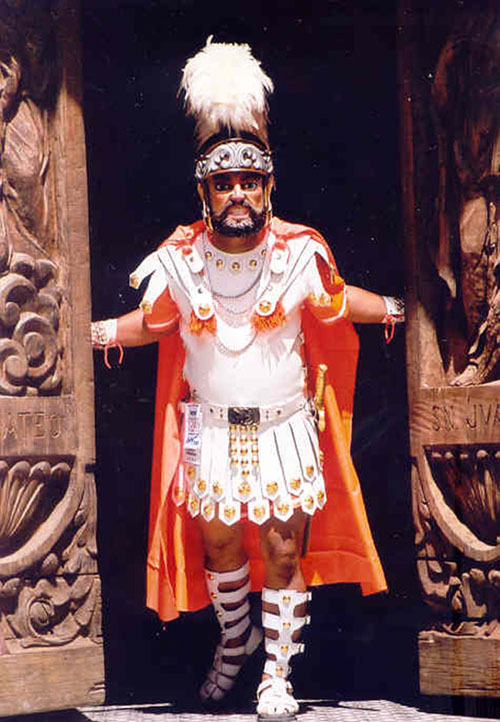
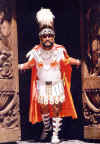
of Jesus Christ, dubbed the Moriones Festival (from the word "morion"
which means mask or visor). The festival began around 1870 when a Jesuit
Mexican priest, Pedro Santiago, introduced it in Mogpog, Marinduque to
demonstrate the power of the Christian faith to the rural population of the
island's interior. The religious practice has attracted tourists
through the years.
The festival starts on Holy Monday when
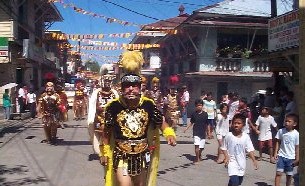
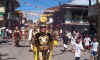
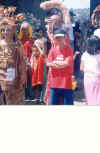
the morions roam the streets of Boac, Mogpog and Gasan. Participants play
pranks on the townspeople, serenade ladies, frighten children and sometimes
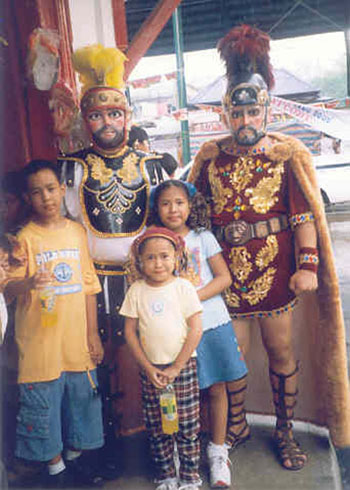
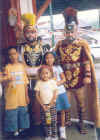
engage in mock sword fights. In recent years, the morions have
become "children-friendly".
In the week before Easter, the story of the centurion Longinus
is relived. Longinus is believed to be a Roman soldier who was blind in one
eye. After the death of Christ, he thrust his spear into the lifeless body
and blood dropped onto his eye. His sight was restored. He became a
witness to Christ's resurrection and became a believer. He was forced
to recant but he refused and was beheaded.
The highlight of the festival takes place
with the pantomime dramatization of the story in Tagalog verse. A merry
chase ensues between Longinus and the other morions, and ends with the eventual
capture and beheading of Longinus.
The local folks also hold the unique
tradition of the pabasa, or the recitation of Christ's passion in verse.
The Via Crucis is also reenacted and flagellants, known as antipos, inflict
suffering upon themselves as a form of atonement. At three 'clock in the
afternoon of Good Friday, the Santo Sepulcro is observed, whereby old women
exchange verses based on the Bible as they stand in wake of the dead Christ.
Gasang-Gasang:
In 2002, the multi-sectoral Gasan Culture and Arts
Foundation (Gascuaf) launched the "Gasang-Gasang Festival", a colorful
street-dancing parade that takes place on Easter Sunday in Gasan town. Gasan was
derived from the word "gasang", a term for corals or broken
pieces of corals and seashells that were abundant along the seashore of the
town. Now on its second year, the festival organizers hope to lure a part of
the annual Lenten visitors through their distinct cultural history and still
unexplored eco-tourism potentials.