The Souq:
No Visit to Bahrain would be completed without a trip to the soukh ,
with its profusion of colors, sounds, and aromas. All wares are sold, from cloth
of colors and textures to gold and jewelry as well as the traditional array of
spices and local produce. Bartering is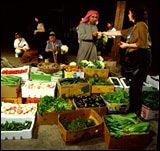 expected, and indeed turns the whole
experience of shopping into a challenge to see who can obtain the best price.
The central market, completed in 1978, provides modern facilities for trades,
which were unavailable, when the market took place in the soukh. It is well
worth a visit, if only to enjoy the brightly colored display of fresh fruit and
vegetables, as well as the scents of the herbs, nuts and spices.
expected, and indeed turns the whole
experience of shopping into a challenge to see who can obtain the best price.
The central market, completed in 1978, provides modern facilities for trades,
which were unavailable, when the market took place in the soukh. It is well
worth a visit, if only to enjoy the brightly colored display of fresh fruit and
vegetables, as well as the scents of the herbs, nuts and spices.
The
Gold Souq:
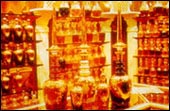 Bahrain gold is usually 21 carat and hallmark; it is available in an infinite
number of styles, including traditional Bedouin designs as well as the more
contemporary European jewelry. If you can't see what you want, then don't worry
pieces can also be made to order, although it is wise to confirm a price before
the craftsmen go to work.
Bahrain gold is usually 21 carat and hallmark; it is available in an infinite
number of styles, including traditional Bedouin designs as well as the more
contemporary European jewelry. If you can't see what you want, then don't worry
pieces can also be made to order, although it is wise to confirm a price before
the craftsmen go to work.
The Cloth Souq:
Materials of all textures, colors and origins are available here from silk to
cotton and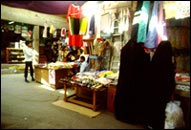 wool. If you have a sketch or an item to be copied, the many tailors
shops which are dotted throughout the soukh can make you a new suit or outfit-
at a fraction of the original price!
wool. If you have a sketch or an item to be copied, the many tailors
shops which are dotted throughout the soukh can make you a new suit or outfit-
at a fraction of the original price!
Siyadi House:
This is one of the most impressive examples of a 19th century built by the pearl-merchant Ahmed Bin Qassem Siyadi and has many fine features to look out for, including ornate ceilings, stained-glass windows, carved screens and a large safe set into the wall of a small, upper reception room.
Al-Khamis Mosque:
The twin minarets of this ancient mosque are easily identifiable as you drive
along the Sh.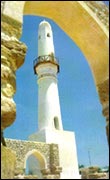 Salman Road. It's considered being one of the oldest relics of
Islam in the region, and the foundation are believed to have been laid as early
as 692AD. An inscription found on the site, however, suggests a foundation date
sometimes during the 11th Century. It has since been rebuilt twice in both 14th
& 15th centuries, when the minarets were constructed. The mosque has been
partially restored recently.
Salman Road. It's considered being one of the oldest relics of
Islam in the region, and the foundation are believed to have been laid as early
as 692AD. An inscription found on the site, however, suggests a foundation date
sometimes during the 11th Century. It has since been rebuilt twice in both 14th
& 15th centuries, when the minarets were constructed. The mosque has been
partially restored recently.
Bahrain Fort:
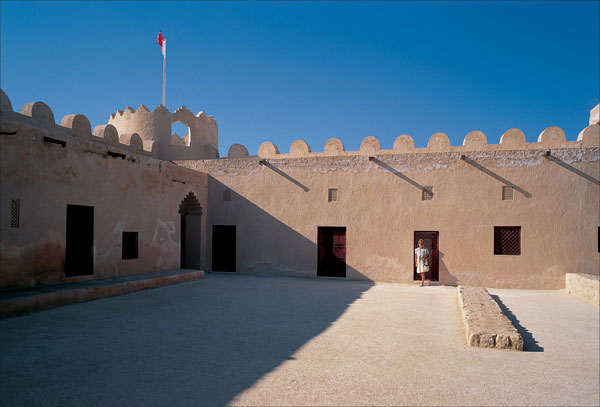
The first dwellings on the site are believed to have been constructed around
2800 BC, and have subsequently been overlaid by numerous fortified settlements.
The last was built in the early 16th century to defend Portugal's recent
acquisition of the islands-for this reason, it is also known locally as the
Portugueese Fort. Numerous excavations have uncovered a variety of relics from
the forts past.
Barbar Temple:
Excavations, which were begun in the 1950s and 1960s, have revealed three
stone-built temples dating from the second and third millennia BC. It is
believed that they were built as a place of worship for the God of Spring
Waters, Enki, and a sacred well within the complex strengthens this theory.
Museum of Pearl Diving:
The 'Museum of Pearl Diving' building is regarded as one of the most important
and historic buildings in Bahrain. Its importance derives from being the first
official center for the Bahrain Courts.
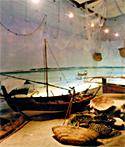
The Museum is under the authority of the Directorate of Archaeology and
Heritage, which is one of the major Directorates of the Ministry of Cabinet
Affairs and Information. The 'Museum of Pearl Diving' building is a source of
pride to Bahrain, for it contains the story of Bahrain, its governors, and its
people from the past till the present.
Bait Al Qur'an:
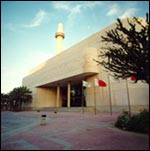
The House of the Qur'an was built to accommodate a comprehensive and valuable
collection of the Holy Qur'an and manuscripts, a concept which is unique in the
Arabian Gulf. All visitors are welcome, and the complex comprises a mosque, a
library, an auditorium, a school and museum consisting of five exhibition halls.
Arad Fort:
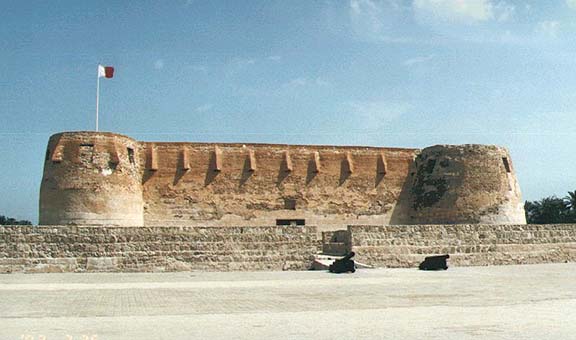
This 16th century fort of Arabic construction is probably one of the first
landmarks you will see upon arrival to Bahrain due to its proximity to the
airport. It has undergone extensive restoration, and is now illuminated at
night, presenting a magnificent sight. Little is known of the fort history, and
there is no firm evidence of the precise date of construction, but comprehensive
excavations have been undertaken in order to discover
Shaikh Isa's House:
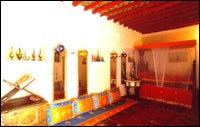
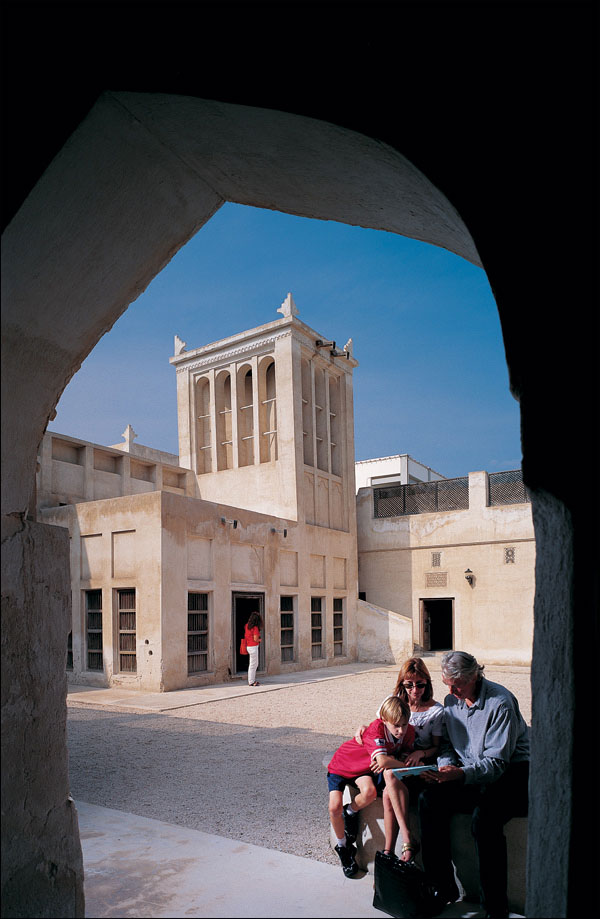
Shaikh Isa's house, in the old town of Muharraq, was once the home of the Amir`s
great-grandfather, Shaikh Isa Bin Ali Al khalifa . It provides a fine example of
local architecture, complete with wind tower, wall carving and lattice work, and
its representative of traditional 19th century life. One of the early forms of
" air conditions" was the wind tower, a traditional landmark of local
architecture. This would act as a funnel, catching the breeze and drawing it
down it down into the cavities below, as well as allowing the release of hot air
like a chimney.
Tree of Life:
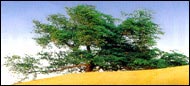
Standing alone in the desert about 1.2 miles (two kilometers) from the Jebel
Dukhan, this flourishing mystic tree provides welcome shade from the heat of the
day, although its source of water remains a mystery.
Diving:
With
water temperatures ranging from 34C in summer to 20C in winter, providing
comfortable diving conditions year round, up to 30 species of coral and in
excess of 200 species of fish can be found, in particular, on the northern
offshore reefs of Bahrain. 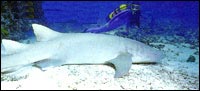 Here, divers, underwater photographers and
snorkellers can discover a myriad of Indo Pacific species including clown fish,
trigger fish, surgeon fish, turtles, rays, lion fish, grouper, snapper, crayfish
and even whale sharks; while tuna, mackerel, trevally and barracuda cruise above.
In addition to reef diving there are a number of wrecks around the island,
including ships, planes, tugs and barges that have something special to offer
the inveterate diver. Dugongs (sea cows) can also be seen feeding on the sea
grass in the southern waters of Bahrain during the cooler winter months. Scuba
and snorkelling education, equipment, experiences and excursions are available
to an international standard
through a PADI 5 Star Dive Centre located in Manama".
Here, divers, underwater photographers and
snorkellers can discover a myriad of Indo Pacific species including clown fish,
trigger fish, surgeon fish, turtles, rays, lion fish, grouper, snapper, crayfish
and even whale sharks; while tuna, mackerel, trevally and barracuda cruise above.
In addition to reef diving there are a number of wrecks around the island,
including ships, planes, tugs and barges that have something special to offer
the inveterate diver. Dugongs (sea cows) can also be seen feeding on the sea
grass in the southern waters of Bahrain during the cooler winter months. Scuba
and snorkelling education, equipment, experiences and excursions are available
to an international standard
through a PADI 5 Star Dive Centre located in Manama".
Oil Museum:
Situated near "Oil Well NO.1" the museum was inaugurated on the 2nd
June 1992 to commemorate the 60th anniversary of the discovery of oil in
Bahrain, the first country of the Middle East to do so, despite the pessimistic
pronouncement of a leading geologist that he would "drink every drop of oil
produced South of Basra". It houses some fascinating exhibits, including
drilling equipment, documents, old photographs and a working model of an oil
rig.
Riffa Golf Club:
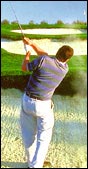
The Riffa Golf Club is being constructed to professional Golf Association
standards with the first seven holes on a dramatic Wadi terrain and remaining 11
holes lay out around and over four lakes. The nearly 63 hectares (155 acre) site
for the new golf course on undeveloped land has been carefully chosen for both
access and terrain. The course is par 72 and is 6.286m (6.875 yards) in length
with some 24 hectares (60 acres) of grass and will landscaped with palms and
shrubbery to give a tropical feeling in the desert terrain
Oil Well No.1:
As its name suggests, this is the first oil well in the Gulf.
"Spurted" on 16th October 1931, the well finally began to blow heads
of oil on the morning of 2nd June 1932, too much celebration on the part of
those involved in the project. It is situated below jebel Dukhan, the Mountain
of Smoke, which, at a height of 134 meters (450 feet), is the highest point of
the island. Its name comes from the misty haze, which frequently surrounds it on
a hot and humid day.