








|
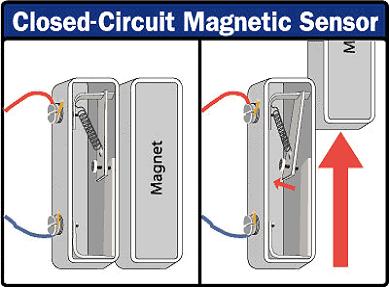
In theory, a burglar alarm is composed of two circuits: the switch circuit and the relay circuit. The switch circuit depends on a magnet. As shown in the picture, the closed door slides the magnet near the circuit, completing the circuit and sending current to the electromagnet of the relay that is also a component of the alarm system.
This switch triggers the relay circuit and when the switch is turned on, it completes the first part of the relay circuit. With the complete circuit, the current is able to pass through the electromagnet of the relay, opening the circuit of the alarm. When the magnet is moved, the circuit is no longer complete, so the electromagnet of the relay no longer attracts the bar away from the circuit, completing the circuit that involves the buzzer, or the light, and the alarm goes off.
When the electromagnet is charged, it is magnetic and will attract the spring on the other side of the blue wire (as shown in the diagram), which brings the blue wire down and completes the circuit to the alarm (in this case, the light bulb).
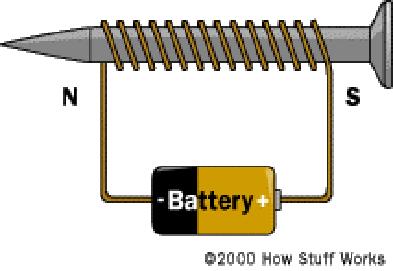
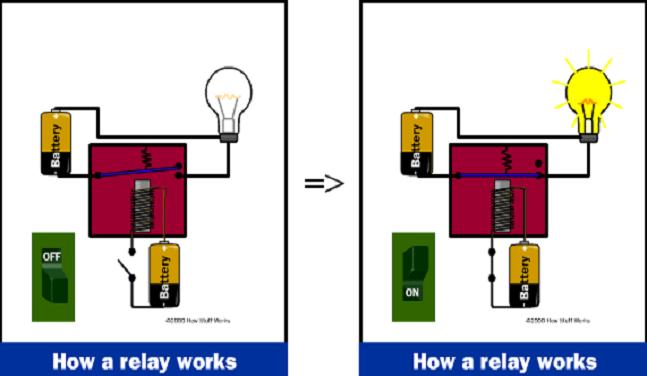 The effectiveness of the alarm depends on the strength of the electromagnet. An electromagnet is created by wrapping thin wire around a metal core; it acts as a temporary magnet. It works only as a magnet when there is current running through the wire. Although most electromagnets are formed by wrapping copper wire around an iron core, we can always wrap it around different materials. We will be testing with copper wire and cores of different material. If the electromagnet is strong enough, it will attract the spring and complete the circuit to the alarm (in the diagram, the light bulb). Since the strength of the electromagnet plays such a huge part in the effectiveness of the burglar alarm, we want to test the variables that can affect the strength of the electromagnet’s magnetic field; such as using different types of cores and wrapping different number of loops around the core.
|

