
|
|









|
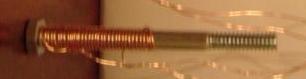
As we were testing the different electromagnets we created, we also came across another conclusion, other than just the fact that the bolts with smaller diameters had a stronger pull on the coil. When we held the electromagnets near the coil and pulled upwards on it, we also found that the zinc-steel bolts held onto the coil as we pulled it up more, meaning that the attraction was stronger. With the galvanized steel bolts of the same diameter, we found that we could only pull the wire so far before the connection between electromagnet and coil was lost. This distance was not as far as how far we could pull the wire using the zinc-steel bolts, so this is how we determined that the zinc-steel bolts worked better than the galvanized steel bolts.
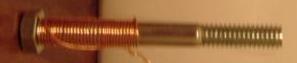
Our project enforced much of what we learned in class about electromagnets. The number of loops, area and material definitely affects the strength of electromagnets. Through our experiment, we decided that the Zinc-Steel bolt with a diameter of 1/4’ would be the best out of the eight choices we had. An electromagnet with this core will have the strongest magnetic field, thus, it will be work the best in attracting the spring and complete the alarm circuit and sent off the alarm. This is the best electromagnet to use for a homemade burglar alarm.
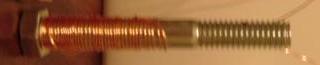
Since this electromagnet is still weaker than an iron core, we used an iron core to demonstrate to the class how our circuits and self-constructed burglar alarm works. While testing it out, there was definitely a stronger pull when using the smallest Zinc-Steel bolt as the core than when using the larger bolts. Also, the Zinc-Steel had a stronger pull than any of the Galvanized Metal cores. |
