
|
|









|
 We knew that the diameter and metal type should be the only variables, so we bought bolts of the same length, three inches. We took this extra precaution just in case a shorter bolt might give us false data because it might be easier and faster to rearrange the domains since they would be closer together. We also knew that we had to keep the number of coils the same on each bolt because increasing the number of coils on any of the bolts would give that particular bolt an advantage by increasing the magnitude of the magnetic field created by the electromagnet. So, we kept the number of coils on each bolt to forty. 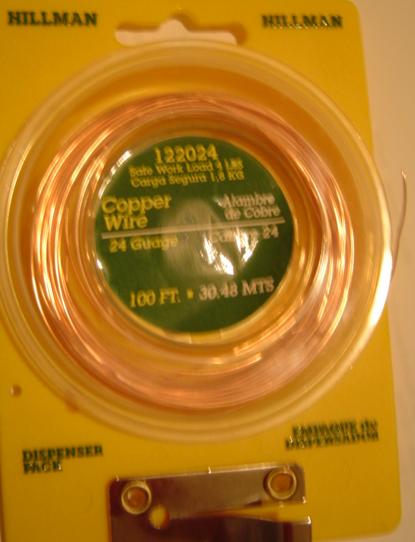 After buying our materials and constructing the various electromagnets, our next step was to actually test the magnetic fields of each individual electromagnet. We were a little unsure about how to do this, at first, so we tried using steel pins. However, we soon came to the conclusion that the steel pins were too long, as the numbers of pins each electromagnet picked up were very close, if not the same. So, instead, we used staples. One problem we had with the staples was that there would be some other substance on some of the staples, but again that problem is discussed more in the data and results section. The staples proved to be a better way of testing the magnetic field because they were smaller, and so the numbers varied more and gave us a better idea of how far reaching the magnetic fields of the different electromagnets were. So, we figured that the stronger the electromagnet, the more staples it could pick up. In terms of our burglar alarm, this meant that when the electromagnets were placed equal distance from the switch, the stronger magnet would be more effective in pulling the switch down and completing the circuit to light the bulb and alert you that something had in fact tripped the burglar alarm. 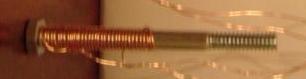 After all this testing of the number of staples that could be picked up, our next procedure was to build the alarm circuit itself. Now, the complete alarm system we found out about dealt with a switch that would complete the circuit of the electromagnet. This switch depended on a permanent magnet that would move when disturbed to create the same effect our electromagnet had on the circuit that lights the light bulb. However, due to the time restrictions placed on this project, we decided to build just the light bulb’s circuit. After all, we were mainly testing how to make the most effective electromagnet. By eliminating the first permanent magnet part of the system, we eliminated more room for mistakes as well as gave ourselves more time to do numerous tests on the strength of the magnetic field in order to obtain more accurate data. To create the switch, we had to find someway to attract one copper wire coming from the battery towards the electromagnet so that it would move towards the magnet when the current went through and created the magnetic field. The problem was that copper by itself is not magnetic. However, we solved this by string a coil of magnetic wire onto the copper wire, and so when the magnetic wire was attracted to the electromagnet, it would lift that copper wire from the battery high enough so that it connected with copper wire leading to the light bulb. This completed the circuit and lit the light bulb, showing that when the circuit for the electromagnet was completed, a magnetic field was created that attracted the wire of the second circuit to complete the unit and light the light bulb, also warning that the switch activating the electromagnet would have been activated. |
