
|
|









|
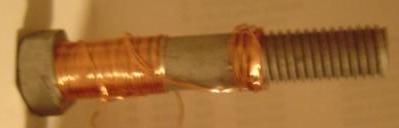
Actually building the circuit was another difficulty we had to deal with, but this also gave us more insight on how to build a better burglar alarm. At first we were a little worried because when we tried to connect the circuit with the copper wire we had bought, the light bulb would not light, even though we knew that copper was a good conductor of electricity and that the circuit was indeed complete, as the sample circuit was the simplest circuit we could build. We soon learned that this was because the wire was coated. This was good information in terms of how to build our better burglar alarm because if one were to actually build the alarm, they would have to be willing to put in the extra effort to sand the ends of the copper wire well. The sanding would have to be done well so that the connections completed would be effective. We found this out through some testing in which the circuit would be unreliable because the sanding was not done well enough and even though the wires were touching, the light would flicker on and off.
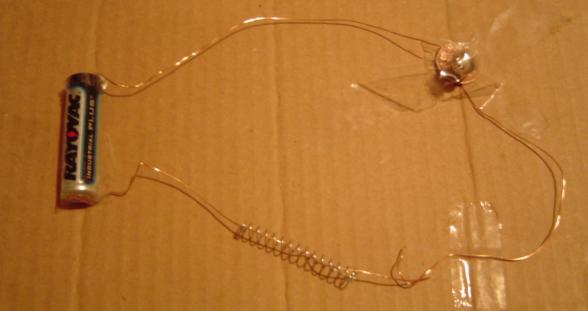
Another problem we encountered when attempting to build our burglar alarm was establishing a good connection between the light bulb and one part of the wire switch we were making. At first, we tried just taping the wire to the nipple of the light bulb, but it would often slip off. Then we realized that we could tape the wire to a penny and that the penny had a larger surface area, so it was easier to tape the light bulb onto the penny as well. We could have used a socket to screw the light bulb in and attach the wires easily, but we weren’t sure if we could use a socket from the classroom, so that was the plan that we came up with. |
