|
|
Menu |
|
|
Menu |

Today there are many types of cat litter and litter boxes to choose from. You should put enough litter ( two to four inches deep) in the box so that your cat can cover any waste sufficiently. Remember to clean the litter box at least twice a day. If you have more than one cat sharing the litter box, you may be required to clean it more frequently as this will reduce the odors and the bacteria in the box. Your cat will feel better stepping into a clean box and not want to relieve itself elsewhere such as that new rug you put in the livingroom or on your lovely bedspread.
Please read the following to decide which may best suite your cat and your house.
Antibacterial Litter - Cat feces contains bacteria. This litter stops the growth of odor causing bacteria.
Charcoal Litter - This type of litter works in the same way charcoal works in an aquarium filter. it absorbs and traps the odors. This eliminates almost of of the odors.
Clumping Litter - The latest sensation in cat litter. When the cat relieves itself, the urine forms hard clumps, so all you have to do is remove the clumps and the feces! With this litter, there is much less odor because you have removed the odor causing litter. Only the litter that you have scooped away needs to be replaced. Less litter is used and thrown away therefore making it less expensive. The softer texture and smaller granules is much easier on the paws. However, this litter can block your plumbing. Do not flush it down the toilet. Discard in a bag and put the bag in the garbage. I read a series of articles recently that this type of litter may be harmful to your pet. It is not recommended for young kitten also as the small granules may get lodged in their little noses. Cats will groom themselves and if any litter is stuck on their fur and they swallow enough of it, it may cause a blockage in the cat's digestive system. This may also pose a problem if you have a dog who sneaks into the litter box for a treat and eats this litter as well. A covered box with the opening facing the wall with just enough room for kitty to get in may be the answer to doggy sneaking in for a midnight snack! It may be a good idea to get in touch with your veterinarian about this type of litter.
Flushable Litter - This litter is biodegradable and can be flushed down the toilet. On the other hand, if the plumbing in your house is old, why risk it.
Lo Tracking Litter - Cats are less likely to track litter around the house.
Paper Litter - This litter is made with recycled paper compacted into a pellet like shape, is dust free and it looks and feels like clay litter. it is pretty absorbent. If by chance you decide to have your cat declawed, the veterinarian will recommend that your cat use this litter for about one to two weeks after the surgery or until the stitches have healed. Regular clay litter or clumping litter may get stuck in the stitches on your cat's paws and cause infection. It sure beats shredding up newspaper which is messy and not absorbent at all. The box needs to be emptied and washed almost after every use. The cat may not like shred up newspaper and end up relieving itself elsewhere.
Scented Litter - A fragrance is added to cover up the odors from the litter box. It is supposed to make the living area smell more pleasant. Cats have very sensitive noses. Some may not like this litter because of the strong fragrance.
Unscented Litter - Instead of using fragrances to cover up the odors, charcoal may be one of the additives used to absorb the odors.
If you are not sure which to use, ask your veterinarian.
Litter boxes are a matter of choice and convenience. There are a few factors you may want to consider when choosing a litter box such as the age of your cat, the health of your cat, do you want to scoop or have an automated litter box do the scooping for you as well as the location of the litter box and how many cats you have may well determine what size of box you may require. Below are a few styles that are on the market.
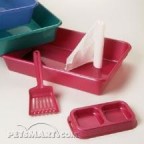 Regular Litter
Box - There are no
gadgets that come with this style of litter box. It is simply a plain
rectangular shape box usually made of plastic. It is cheap and it does the trick
if you do not want to spend too much money.
Regular Litter
Box - There are no
gadgets that come with this style of litter box. It is simply a plain
rectangular shape box usually made of plastic. It is cheap and it does the trick
if you do not want to spend too much money.
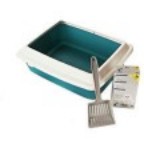 Regular Litter
Box with a Rim - Same as
above but comes a rim that fits around the edge. The rim helps to keep the
litter in the box when your cat scratches and digs and is good for holding a
plastic liner in place.
Regular Litter
Box with a Rim - Same as
above but comes a rim that fits around the edge. The rim helps to keep the
litter in the box when your cat scratches and digs and is good for holding a
plastic liner in place.
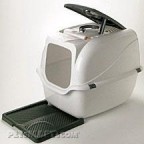 Hooded Litter Box
- These litter boxes are much deeper and the have a hood that goes over the top.
The hood provides your pet with privacy, controls odors because the hood had a
slot that accommodates a charcoal filter and the waste is not in full view. If
you have an older cat, especially one that has a difficult time to move, this
type may be a little difficult for your cat to enter because the bottom of the
entrance is about 6 inches if not more from the floor so they have to basically
climb in to relieve themselves rather than step over a three or four inch rim of
a regular litter box.
Hooded Litter Box
- These litter boxes are much deeper and the have a hood that goes over the top.
The hood provides your pet with privacy, controls odors because the hood had a
slot that accommodates a charcoal filter and the waste is not in full view. If
you have an older cat, especially one that has a difficult time to move, this
type may be a little difficult for your cat to enter because the bottom of the
entrance is about 6 inches if not more from the floor so they have to basically
climb in to relieve themselves rather than step over a three or four inch rim of
a regular litter box.
Liners for the Litter Box - These are usually made of plastic. The liners come in various sizes depending on the size of your litter box. You will need the litter box with a rim to help secure the liner. Some liners are more durable than others but if your cat has claws they could make a tear in the liner so that when you go to pick up the liner, all the litter pours through the tear. Cat urine is very strong and the odor will permeate the bottom of the box or will eat away at the bottom of the litter box eventually. Liners help to prolong the life of your litter box and make it easy for clean up as long as your cat does not have razor sharp claws.
All three litter boxes above will track litter, some less than the other but there will always be litter to sweep up around the box. It is inevitable. The cat goes into the box. The litter gets stuck between the cat's paws. The cat jumps out and whatever is in his paws will find its way to your floor around the litter box or even as far as your room!
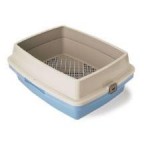 Lift and Sift
Litter Box - This
eliminates the need for a scooper. They are about the same size as a regular
litter box but have a built in sifter. You lift the sifter and whatever litter
is not soiled will fall back into the box. The litter that is soiled will stay
in the sifter and you simply pour it into a bag and dispose of the bag.
Lift and Sift
Litter Box - This
eliminates the need for a scooper. They are about the same size as a regular
litter box but have a built in sifter. You lift the sifter and whatever litter
is not soiled will fall back into the box. The litter that is soiled will stay
in the sifter and you simply pour it into a bag and dispose of the bag.
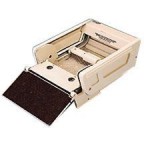 Automated Litter
Boxes - These are high
tech litter boxes. Just as the box above, this type eliminated the use of a
scoop. When the cat leaves the box, an automatic arm moves back and forth and
moves the soiled litter into a waste compartment. All you have to do is empty
and wash the waste compartment.
Automated Litter
Boxes - These are high
tech litter boxes. Just as the box above, this type eliminated the use of a
scoop. When the cat leaves the box, an automatic arm moves back and forth and
moves the soiled litter into a waste compartment. All you have to do is empty
and wash the waste compartment.