

Solar Halo May 2001












NOTE: Nothing is illegal on this page. While every care is taken in the compilation of these pages, I shall not be liable and shall be held harmless from any error of the calculation & information contained herein.
Copyright of BruAstronomy © 2000-2001
Created on 23rd Sept 2000
|
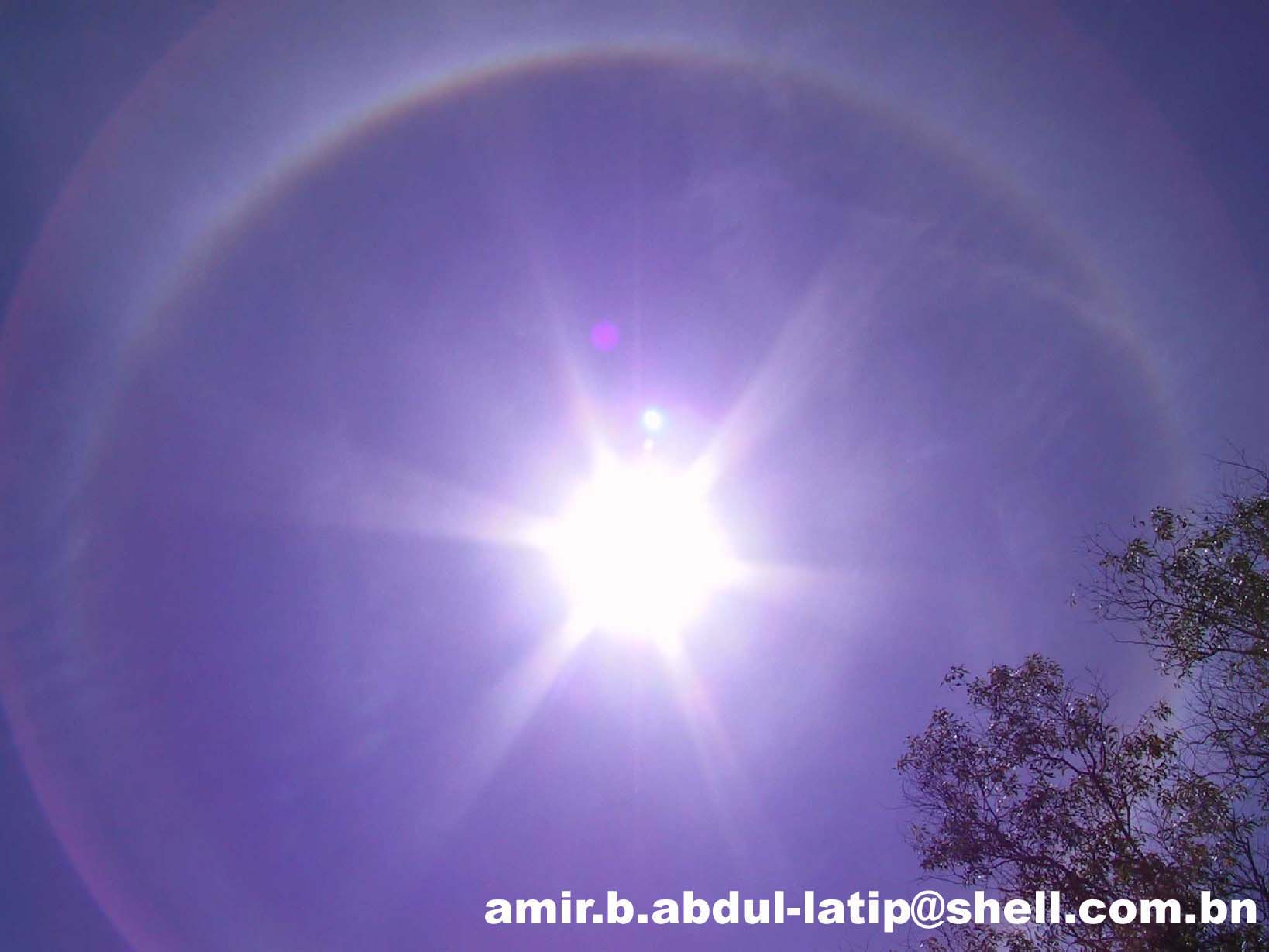
Description: A Solar halo
Explaination: A halo is a ring of light surrounding the Sun or moon. Most halos appear as bright white rings but in some instances, the dispersion of light as it passes through ice crystals can cause a halo to have some color. Halos form when light from the Sun or moon is refracted by columnar ice crystals associated with thin, high-level clouds (like cirrus or cirrostratus clouds). [More]
Photographed by: [email protected] Date: May 2001 Location: ??, Brunei Darussalam
Remarks: Courtesy and copyrighted of [email protected] |
|
MESSAGE FROM THE PHOTOGRAPHER From: <[email protected]> Assalamualaikum, Solar halo through cirrus(E. Linacre and B. Geerts) A halo is a ring of light surrounding the Sun or moon. Most halos appear as bright white rings but in some instances, the dispersion of light as it passes through ice crystals can cause a halo to have some color. Halos form when light from the Sun or moon is refracted by columnar ice crystals associated with thin, high-level clouds (like cirrus or cirrostratus clouds).
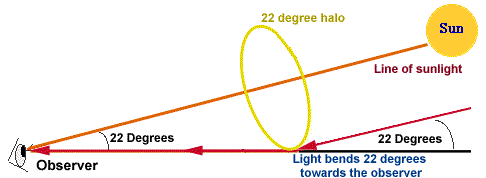
Fig 1. Sun ray geometry for the 22° halo. The horizontal line shown can, in reality, be in any direction. A 22° (degrees) halo is a ring of light 22° from the Sun (or moon), i.e. a hand’s breadth at arm’s length (Fig 1). It is not the only, but the most common type of halo observed. Solar rays undergo two refractions as they pass through an ice crystal and the amount of bending that occurs depends upon the ice crystal's diameter. A 22° halo is due to columnar ice crystals with diameters less than 20 micrometres (Fig 2).
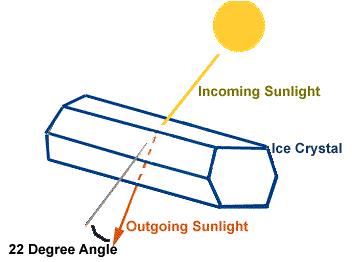
Fig 2. Columnar ice crystals refract light at 22°. A 22° halo develops when light enters one side of a columnar ice crystal and exits through another side. The light is refracted when it enters the ice crystal and once again when it leaves the ice crystal. The two refractions bend the light by 22° from its original direction, producing a ring of light observed at 22° from the sun or moon.
|