
















NOTE: Nothing is illegal on this page. While every care is taken in the compilation of these pages, I shall not be liable and shall be held harmless from any error of the calculation & information contained herein.
Copyright of BruAstronomy © 2000-2001
Created on 23rd Sept 2000

|
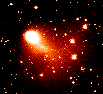
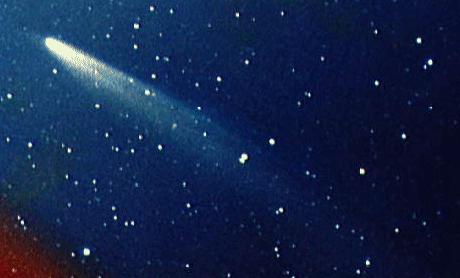
Comets are sometimes called dirty snowballs or "icy mudballs". They are a mixture of ices (both water and frozen gases) and dust that for some reason didn't get incorporated into planets when the solar system was formed. This makes them very interesting as samples of the early history of the solar system.
|
|
|
When they are near the Sun and active, comets have several distinct parts:
|
|
| Viewing the comet | |
 Many comets are first discovered by
amateur astronomers. Since comets are brightest when near the Sun, they are
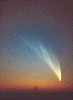
usually visible only at sunrise or sunset. Many comets are first discovered by
amateur astronomers. Since comets are brightest when near the Sun, they are
usually visible only at sunrise or sunset. |
|