
 |
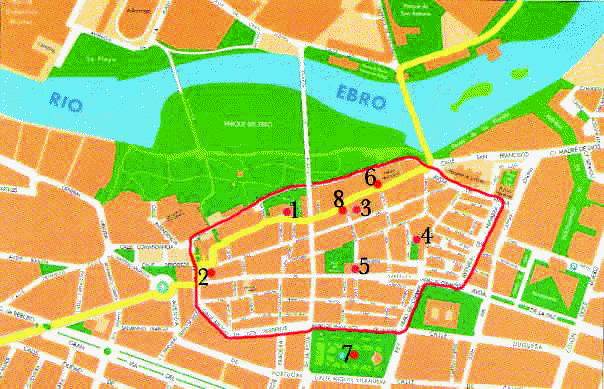
1. Church
of Santiago
2. Revellin 5. Cathedral |
|

 Way towards Santiago de
Compostela
Way towards Santiago de
Compostela
The old center of Logroño is limited by the streets: St. Gregorio and its parallel the streets Ruavieja and Mayor, that comprise of the primitive city-planning nucleus, to the north, Muro de la Mata to the south, Navarre avenue to the east and the Door of the Revellín to the west. In the center they are Portales street and Del Mercado square. It conserves narrow streets with medieval names like: Herrerías, Carnicerías, Ollerías and others.
|
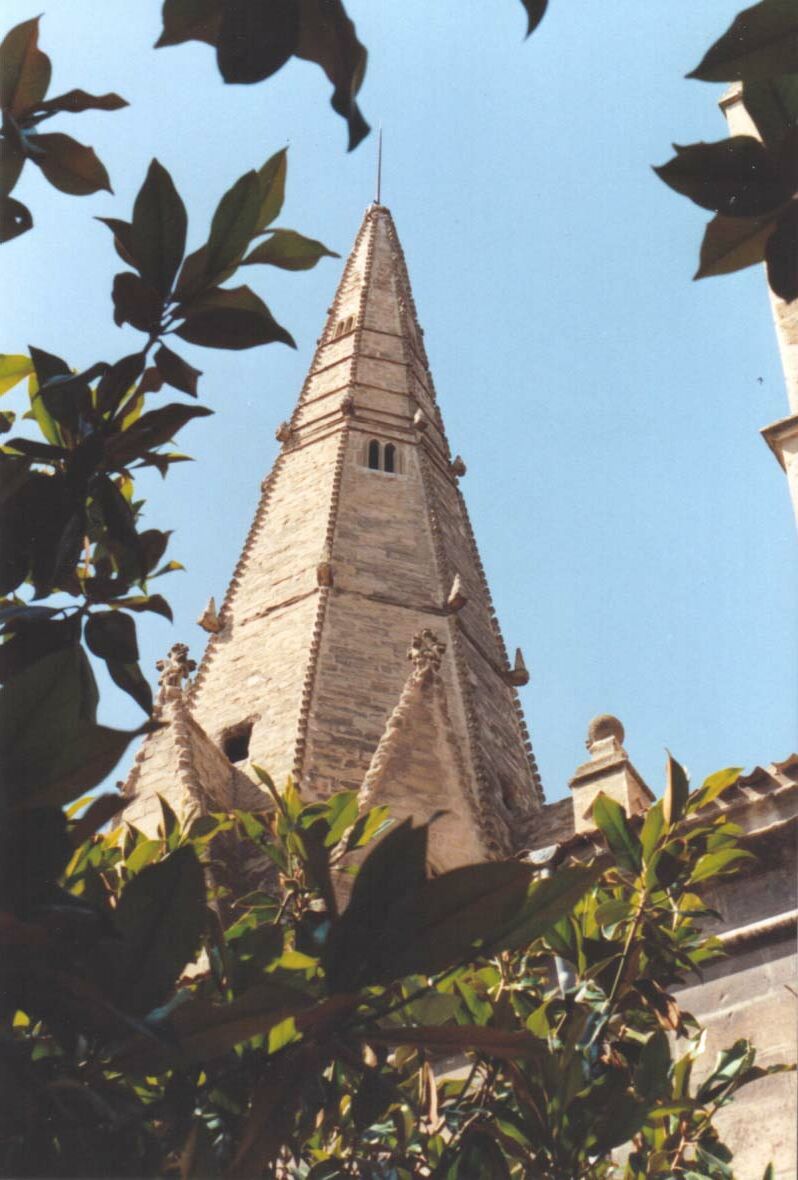 |
The shelter is located in the back part of the Imperial Church of Santa Maria of Palace, call thus in memory of the donation conducted by king AlfonsoVII to the canons of Santo Sepulcro, on whom the temple was based, later Carlos V granted the title to it of Imperial. It was founded on century 11th, reconstructed and extended in later centuries. Divided in three ships, it has leaned cloister. In its interior it emphasizes the greater Altarpiece, work of Arnao of Brussels and the statures of the Virgin of the Ebro, romanesque, of century 12th, and the Virgin of the Antigua, also we can see numerous imperial shields. In the outside it emphasizes its original piramidal tower, seated in a real crown, of romanesque-ogival pointed style. |
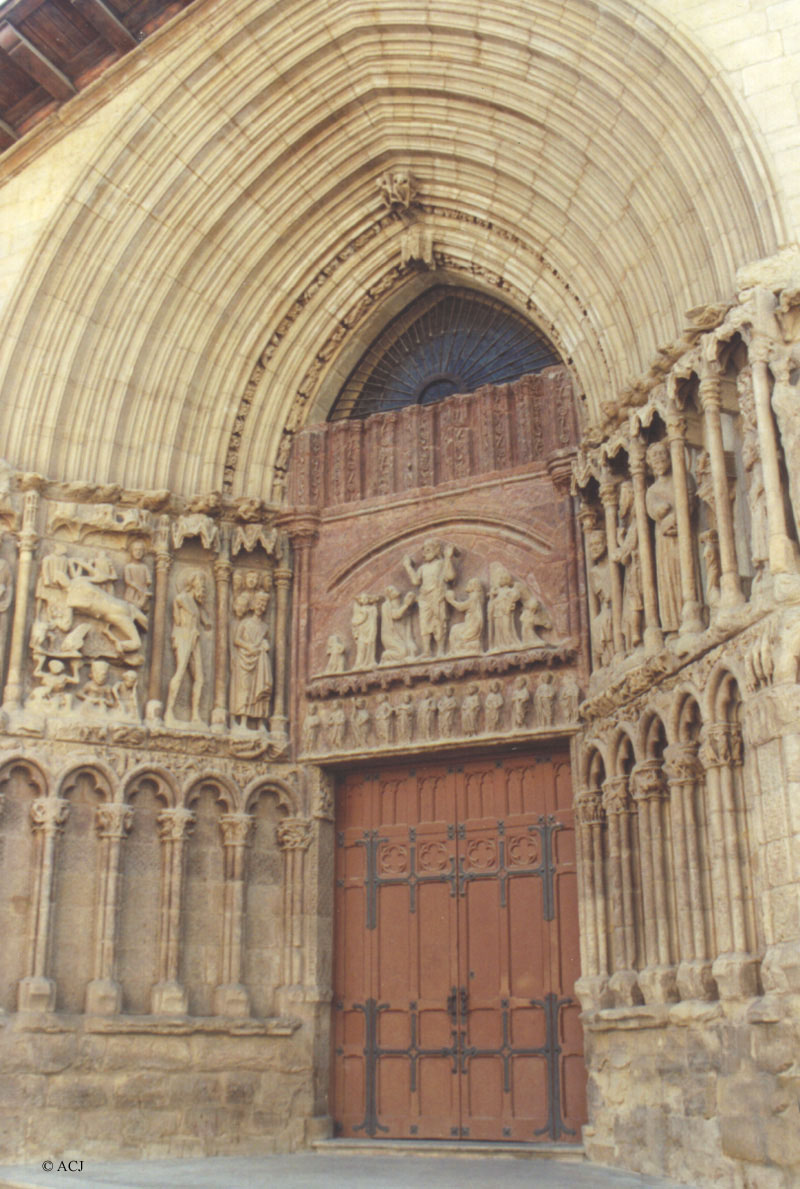 |
The church of San
Bartholomew dates from 12th century. Its interior is Romanesque
and the decoration of the churches of the Way. It emphasizes its
carefully wrought gothic cover. The tower has got mudéjar
influence.
It comprised of the primitive walls and separated the city of the Jewish district. |
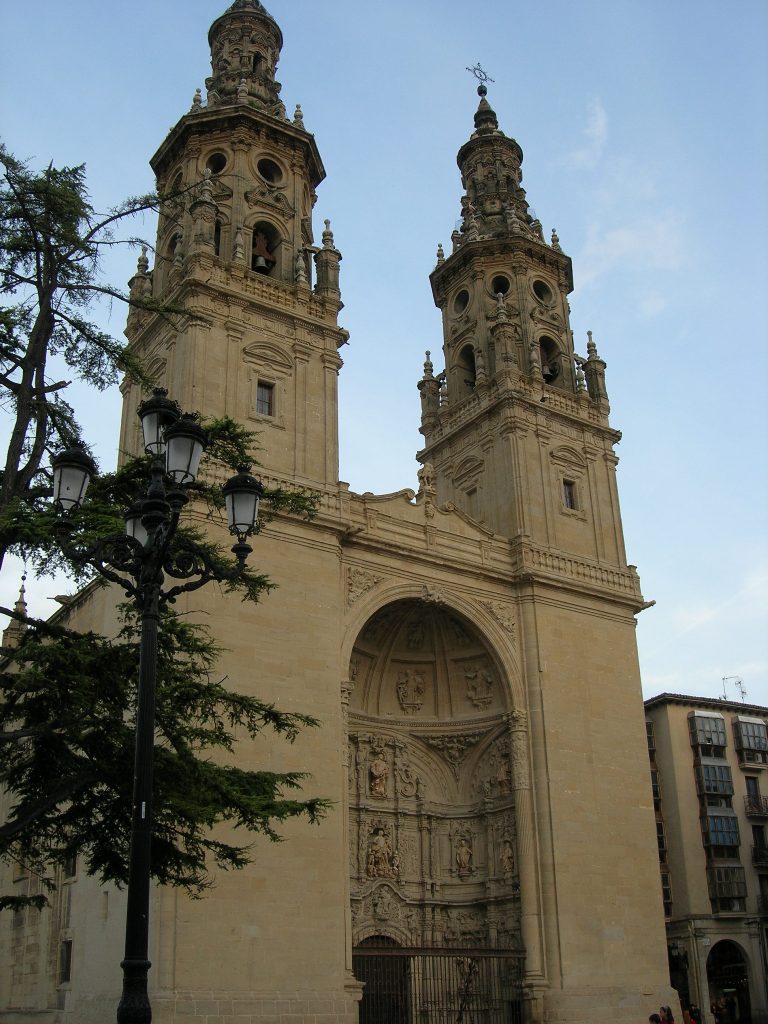 |
The center of the old
city is the street Portales that begins with the Palace of the
Chapiteles, of century 18th, close are the Concathedral of Saint
Mary of the Round one, called thus because it was constructed on a
chapel of octogonal form. It was begun to construct in century
15th and it was finished in the 18th. It has got three ships, of
equal height, separated by cylindrical columns. In the lateral
ones there are chapels closed by exceptional iron gates. Between
its works of art we can emphasize: a picture of the Crucifixion,
attributed to Miguel Angel, the tomb of General Espartero and his
wife, Santo Sepulcro, elaborated in sea turtle, silver and wood,
an Immaculate of Gregorio Fernandez and a great picture of
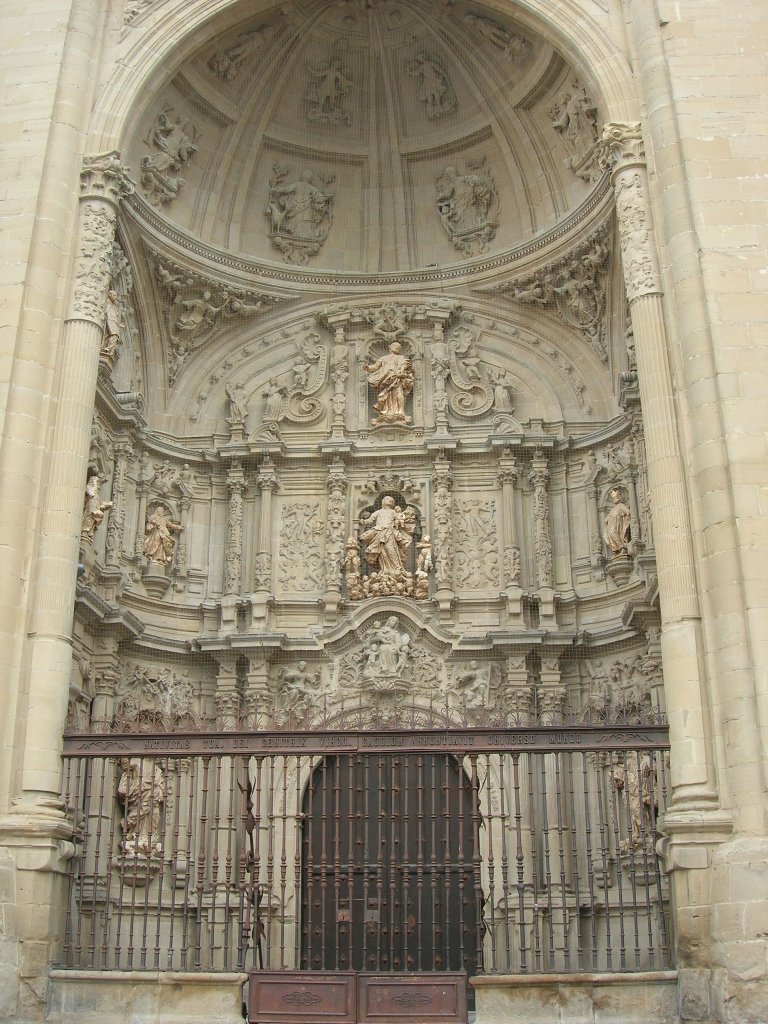
Rubens. In the outside, the main facade, is opened to Mercado square, is like an altarpiece. It has got two towers, "the twins", example of the Riojan baroque . |
 |
Continuing the stroll, by the same street, we arrived at the palace of Espartero, that at the present time lodges the Museum, close are the Library and the Parliament. The streets of San Juan, the Laurel, of Peso and others, parallel to the one of Portales, complete the layout of Old City. |
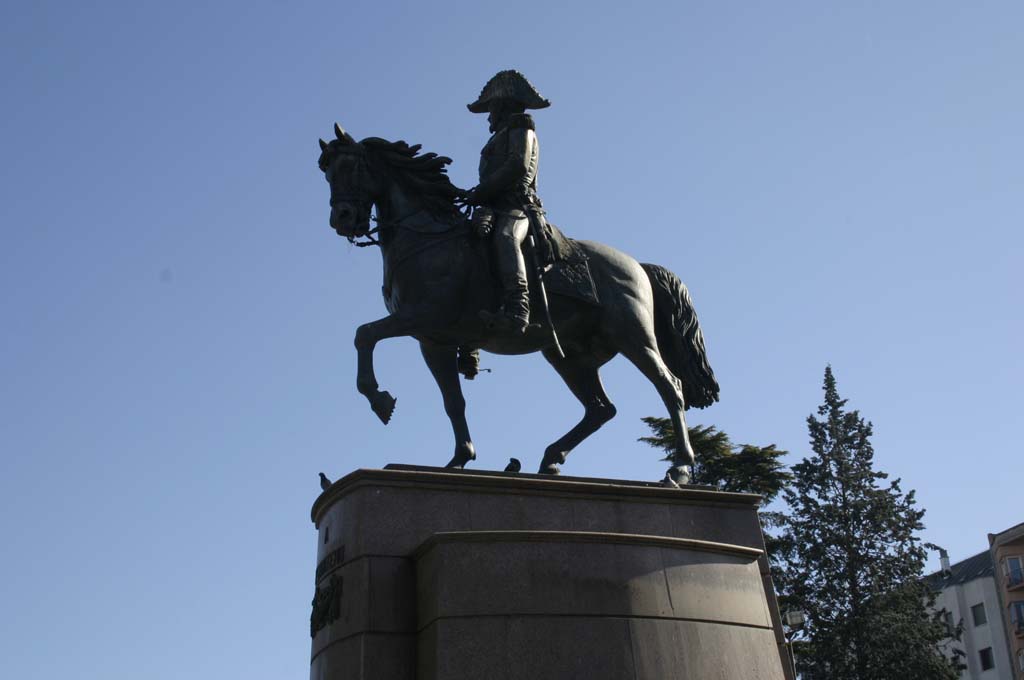 |
The Espolon square, with an ecuestre statue of general Espartero, nowadays center of the city, is the beginning of the modern city with wide streets and numerous parks. | 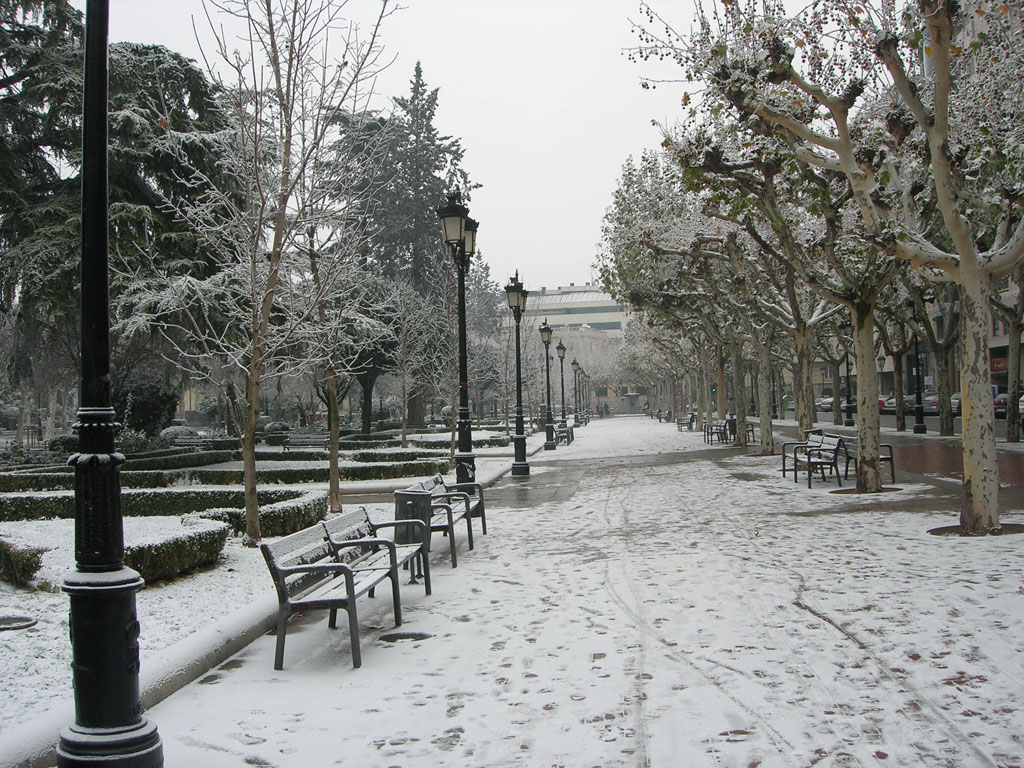 |

 |
 |