Prologueimina
Part I.
Prologueimina
Part I.
Many internet atheists think that the traditional arguments for the existance of God were all defeated centuries ago by Kant and that no one takes them seriously today. Since the 1960s, however, a whole new breed of intrepid philsophers called the "back to God movement" has brought arguments for God back on the scene. These new arguments are revitalized and present a whole new dynamic for atheists to deal with. Below I present two versions of the ontological argument, the cosmoloigical argument, and my own version of the design argument.The "back to God" movement has its roots in the work of the Theologian Karl Barth who realized that Anselm had some other versions of the ontological argument that are never talked about. Kant and Russell did not deal with these versions and they have been used to place "back to God philosophy" back before the academy as a serious consideration. This was thanks in large part to Norman Malcom who shocked the philosophical world in the 1960s by taking up Barth's observation and arguing seriously for the ontological argument. That a philosopher of Malchom's status would do so got a lot of people's attention. After Malcom another great philosopher of our day, Charles Hartshorne of the University of Texas also advanced his own ontological argument. What follows is several arguments based upon these notions.
Note: These arguments do not prove the "Christian God" in and of themselves. They argue for the existance of a creator who is necessary to the existance of the universe and all that is. But to demonstrate which particular religious tradition we should follow is another argument (see page on Gospel). Nor do they offer abosolute proof of a creator, but they do offer rational warrent for belief.
Moreover, one concept in particular is important to understand in order to understand these arguments. That is the idea that God is not just a big man on a throne. The great theologians of Chrsitian fatih, the Orthodox Chruch, and theologians such as Paul Tillich, John Mcquarry, believe, as Timothy Ware (The Orthodox Chruch , New York: Pelican, 1963) quoting St. John of Damascus says, "God does not belong to the class of 'existing' things; not that he has no existence but that he is above existing things, even abvoe existence itself..." McQuarry says that God is Being itself, while Tillich says God is "The ground of being." These are actually different concepts but similiar enough that I wont go into the distinction here. The important thing to remember is that God is not along side other beings in creation, is not a being at all, but is on the order of being itself. God is the overarching principle that defines and predicates the universe and in fact of being as a whole. If you consider what it was like before God created anything. There would be nothing else but God. God, therefore, would be the same as being because all being would be defined as God. The only being that ever came to be flowed out of the will and the energies of God, therefore, God is beyond the chain of cause and effect, God is on a par with being itself.
Some how atheists are always missing this. Several have attacked my website on boards saying "first of all he never defines God!" But I had up the description you see above which anyone can plainly see is a definition of God! So just so that you wont miss it:
*******This is my definition of God!!!!!!*******
God as ground of being. Being is an act in which the beings (that is existing things) participate. There are only two basic aspects of this act. Now they can be subdivided but if we consider them in their most basic form there are only two catigories into which they can fall (and no I'm not arguing that this proves God, but it is a good way to start thinking about him). Those four being: 1) Necessity; 2) contingency. And of each of these there are also two subdivisions. For necessity there is either arbitary or impossibility. An arbitrary necessity has no logical reason for being, an impossibility is logically inchoherent and cannot exist and cannot come to exist.Examples: Arbitrary necessity as I said in my post a 1962 Rambler as the ultimate origin of the universe. Impossibility, squre cirlces.
In the contengcy category there is eixting contengency and non-existing. the former; everthing we see in the world; the latter; purple dolphins, pink unicorns, intellectual Repbublicans (Ho ho wait a minute!).
Here is a little chart that illustrates the point about being.
[some fo these categories could be subdivided; but these four represent the basic options. These are the primary categories in thinking about being and any others flow out of subdividng these]
| Necessity: That which must always exist, cannot fail to exist and cannot cease to exist. | Contingency: That which owes its existence to some higher cause. |
| Necessary being: That which eixsts logically or as a brute fact and is necessary | Contingent Existence: That which actually exists and is contingent such as everything in the universe around us. |
| Impossibility: That which of necessity cannot exist due to logical contradiction, such as squre circles | Contingint Non-Existence: That which does not exist but if it did would still be contingent, such as pink Unicorns, purple Dolphins, ect. |
By definition God cannot be contingent. I know Skeptics always balk at this and say it's arbitary. But it is not. It is ultimately very logical. It is simpley based upon the fact that a logical necessity cannot fail to exist and cannot come into being if it does not exit. It must be eternal. Therefore, if God is not necessary he can only be impossible. If he is not logically necessary he can only be arbitrarily necessary (in which case he wouldnt' exist either). So this is not to say that God has to exist by defintion becuase he could be impossible. But he cannot be contingent or he would not be God.I think the reason this is so hard for most athesits is becasue they are used to thinking of God as a personality figure, like "the God of the Bible." So they don't think of God as a category of being. They think of a guy, a man on a throne, so it seems like a trick. We seem to be saying that the guy known as "God" (like some guys are known as Irving or Delmore) must have to exist by definition. But we are not saying that at all. We are merely saying that if some powerful being is contingent than it is not in the cateory of being reserved for God. So it's thatcategory i'm thinking of.
Now Christians are apt to be alarmed and think that I'm saying that God is a mere category, like something on a ledger sheet into which anything might go. I'm not saying that either. God is personal, is possessed of will and volition; in fact God is the "personal itself" (and for the same reason--he "invented" being personal) but since God is unique, he is both. The category reserved for God ontologically cannot be a null set. So there is a category of necessary being and that category is filled with a universal mind, but he is not "a guy." He is not another person with just another opinion not even a very very powreful "guy." God is something the likes of which we have no example, other than the thing itself. So our talk of God must be analogical, but, that's another issue.
God is not impossible because the concept is not contradictory, or incoherent. It does not fall apart it is not a priori unworkable as is squre cirlce. But here you must be itching to stop me on the premise that i have yet to really define God.
I can only give a cursory discription. But God is a uiversal mind which exists on the level of being itself or as the ground of being and is the coincidence of opposties, that which nothing greater than can be concieved. All of those philosphical slogans are almost titles by now. Each one has a meaning and I'll get into that latter.
The upshot is that since the ultimate cause must be etenral it must exist beyond space/time and thus beyond any ceration. So that being the case it is the ground of being. Think of it in time for a moment. I know there is no time before the BB but since it's hard to think of timelessness, just assume infinite time for a moment. If there were infinite time, God would exist before anything else ever exits. That means that the one and only being in existence was God. Being is present and manifest in the beings. That means that if being is an act than the things that participate in that act that partake of it as it were are the manifestations of the abstraction that is the act itself. The act of being cannot exist seperately from the things that do the acting. Just as the act of striking exists in concept but there can be no concrete manifestation of striking without someone to actually strike something. So with being, there can only be a manifestation of the act of being if there are beings to do the acting.
Now in our univrerse of hypothetical infinite time God is the only being, the only manifestation of that act, in a very real sense God is being itself. Because not only is he the only actual manifestation of being, but the only source thorugh wich things can come to be. God is the dispenser of the act of being. Not only that, but anything that actually comes to be must first be concieved by God, so God is also the only manifestation of potential. Or that is the one responsible for all potential being. So God is in a real sense being itself, or the ground upon which being rests.
Now that is a logial necessity and not an arbitrary one. Why? Because we know that something has to be. There must be some eternal source (this in demonstrated in the arguement) or at least we must think of it that way. If we are to think of a coherent universe with meaingful cause and effect which can be studied we must think of it in this way. Since something now is something must always have been. Being has to be.
Since being is a necessity the one actual etnernal being who brings to fruition all potentiality of being must be the ground of being and must therefore be a logically necessary ground of being. Unlike the '62 Rambler which has no business causing a universe in which it will be manufactered in a Detroiot Billions of years after it caused its own existence, the ground of being is a perfectly logical thing to consider as the origin of all being. Because it is the very essence of the thing of being itself, the ground upon which being rests, the one and only first concrete manifestatino of being present and manifest.
[Two good sources to read on this topic: Paul Tillich, Systematic Theology, And John McQuarrey, Principles of Christian Theology]
Chart explainging terms: These are some of the predicates used of God which explain my view.
| Ground of Being | The thing that does the primordial acting in the act of being |
| Coincidence of opposities | All oppositions are resolved in the infinity of God. |
| That which Nothing Greater than can be concieved | God is unsurpassable in all attributes and areas, including his existence. |
| Universal Mind | Contianing will and volition,not personality per say, but the personal itself, the basic structure of consciusenss in the universe; not "a mind" but contines all qualities of mind |
| Being Itself | God is not the act of being but exists on the same order as being removed from the level of things in the universe ontologically. |
_______________________________________________________perhaps just a quick word needs to be said about the nature of these terms. All of them have to be "streached" beyond the normal capaity of language to understand what is being said. Nevertheless, in general, here is a bit more on these terms:
ground of being and Being Itself: are not the same thing, but they are very similar and so I use them interchangeably here.Here I am not saying that God is identical to the mere fact that something exists, or even to the act of existing. I am saying that God exists on the level of being itself, abvoe the existence of any particualr thing, above the level of mere contingency (which is why he doesn't need a casue and its not illogical. He is removed from the Realm in which things need causes, he is removed from the realm of things.
Coincidence of opposites: All opposites are resolved in infinity. If you had an infinite circle traveling along it would seem like moving along a stairght line. The disctinction between stairght and curvelinerity are resolved in infinity. This might lead some to think that God includes both good and evil, but it does not. I believe as did St. Augustine that evil is merely the absense of the good. So evil is not an original thing and it is not a posative thing. It can only be resolved in God's infinity by being vanquished. This concept was the Brain child of Nicholas of Cuza, a Chrsian St. and Renaissance philsopher and one of the major mathematicians of that era. This notion greatly influenced Martin Luther's notion of God. See Tillich's History of Chrstian Thought.
Universal Mind: One might be led to think that this means God is a big buy. But it does not. It means that God has will and volition. But he does not have a personality as we know it, does not have personality hangup (personality is largely the genetic endowment in response to cultural constructs--neither of which affect God). Some sketpics on boards have tried to argue that God could not think in eternity because outside time there wuold be no ordered sequence of activity such as the mind requires for reason, but God does not think, he knows.
So my view of God is rather like some abstract repository which is capable of housing all the absract qualities of consciusenss, awreness, will, volition, love, being, necessity, and so on. And yet I definately see God as much more than that. I do not see God as a repository at all but as "HE who is" which is derived from the sacred name (I AM) and refurs to his eternality and supreme existentiality.
That which noting greater than can be conscieved: God is the supremely existential God. That is really the essence of it in a nustsehll, God is an existential God. He's not "A Being" but is being itself, he's not "a force" but has force like qualities, he 's not a mind but ha contains all the qualities of the mind. Well one could write volumes on this, and forturnately some have. I suggest God And The Philsopsophers by Eteinne Gilson.
I. Cosmological ArgumentIII. Argument from Religous Instinct
IV. Argument from Religious a priori
V. Argument from Consistency of Experience
VII. Argument from Consciousness
XI. Non Modal version Hartshorne's argument from Perfection
XII. Argument from the Ground of Being
XIII. Argument from Necessary Being
XIV. Plantinga's Possible Worlds
XV. Argument form Temporal Begining
XVII. Argument from Rational Substance
XVIII. Another Garrett Argument on Logical Necessity
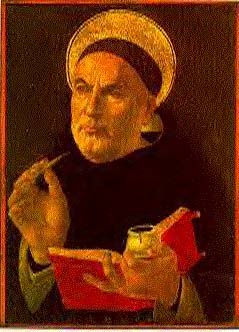
St. Thomas Aquinas