IV
IV
X. Argument from Transcendetal Signifyer.
This argument is not intended to be a "logical" proof the the kind that, if it is sound and valid must be given rational agreement by all. Somewhat like the argument from experience it is an "existential proof" meaning it plays off of what it means to the invdividual in explaining the nature of being human.
1) TS is the logos which gives rationale to the universe2) It is equivolant to all metaphysical first principles
3) All organizational schemes of the universe lead to TS
4) The alternative to TS is the deterioration of meaning to the abyss of nihilism through deconstruction
5) Even deconstruction leads to TS
6) There is a conception of God capable of taking in all the differing views of the organizationational scheme. (Coincidence of opposites)
7) Therefore, God is a priori Trancendental Signifyer as reflected in the Coincidence of oppossites.
A. Transcendental Signifyer is the ultimate metaphysical principle which makes sense of the universe.
The transcendental Signifyer (TS) is the mark gives meaning to all the marks that make sense of the world; the zeit geist, the urmind, the overself, the object of ultiamte concern, the omega point, the Atmon, the "one," the Logos, all the major top ideas which bestow meaning upon the wrold. People have always advanced such notions. (The word "G-O-D" is the Ts, the thing thos letters refurr to is the "transcendental signifyed")
1) All people have some notion the "big idea" which makes sense of everything else.William James, Gilford lectures:
"Plato gave so brilliant and impressive a defense of this common human feeling, that the doctrine of the reality of abstract objects has been known as the platonic theory of ideas ever since. Abstract Beauty, for example, is for Plato a perfectly definite individual being, of which the intellect is aware as of something additional to all the perishing beauties of the earth. "The true order of going," he says, in the often quoted passage in his 'Banquet,' "is to use the beauties of earth as steps along which one mounts upwards for the sake of that other Beauty, going from one to two, and from two to all fair forms, and from fair forms to fair actions, and from fair actions to fair notions, until from fair notions he arrives at the notion of absolute Beauty, and at last knows what the essence of Beauty is." 2 In our last lecture we had a glimpse of the way in which a platonizing writer like Emerson may treat the abstract divineness of things, the moral structure of the universe, as a fact worthy of worship. In those various churches without a God which to-day are spreading through the world under the name of ethical societies, we have a similar worship of the abstract divine, the moral law believed in as an ultimate object."2) All Metaphysical Constructs include a TS
Metaphysics is not merely realms unseen, but the organization of reality under a single organizing principle (this definition comes form one reading of Heidegger). All systems and groupings of the world verge on the metaphysical. Derrida and Heidegger say that it is impossible tto do without metaphysics since even language itself is metaphysical. Everything ponts to the Transcendental Signifyer. ( see Heidegger, Parenadise, and Introduction to Metaphysics, and Derrida, Margins of Philosophy and almost any Derrida book)."'Science' in many minds is genuinely taking the place of a religion. Where this is so, the scientist treats the 'Laws of Nature' as objective facts to be revered. ..."3) Science has TS
William James--Gilford lectures:
Science is very Metaphysical. It assumes that the whole of relaity and be organized and studied under one central principle, that of naturalism.
B. Attempts to Deconstruct TS lead to abyss of Meaninglessness, and back to TS.
1) Derrida's DectonstructionThe French Post-structuralist Jaque Derrida seeks to explicate the end of Metaphysics which is the final project of Western philosphy. His tecnique of deconstruction aims at undermining any logos or first principle that would give ratinality to the universe by unseating the privilages of reason which undergird all such projects. Even logic itself is undermined.
"Are we obeying the principle of reason when we ask what grounds this principle which is itself a principle of grounding? We are not--which does not mean that we are disobeying it either. Are we dealing here with a circle or with an abyss? The circle would consist in seeking to account for reason by reason, to reason to the principle of reason, appealing to the principle to make it speak of itself at the very point where, according to Heidegger, the prinicple of reason says nothing about reason itself. The abyss, the hole, the abgrund, the empty gorge would be the impossibility for a principle of grounding to ground itself...Are we to use reason to account for the principle of reason? Is the reason for reason rational?
Derrida in Criticism and Culture, Robert Con Davis and Ronald Schlefflier, Longman 1991, 20.
2) Into the abyss and back out to TSMany cirtics of Deconstruction have noted that if we take this principle seriously we would wind up unable to speak or think, even langauge requires an organizing principle which orders the world of our thought and speech (of course the basic thrust of Postmodern thought understands us to be trapped in, as Jameson said, "the prison house of language" unable to get at the real things of the world and their understanding because all we can really ever think thorugh is language). But in opening this abyss Derrida creates a safe bridge over it as well, although that is not his intention. He uses the principle of difference (which he spells as "differance" to indicate that meaning is both differing and diffurring) but difference becomes the organizing principle of a Derridian universe. IT not only explains how meaning is derrived from signifyers, not only does it tear down the mening of all hierachies, but it actually builds new ones because it becomes the foundation of value in valuing difference.
"The constant danger of deconstuction is that it falls into the same kinds of hierarchies that it tries to expose. Derrida himself is quite aware of this danger--and his response--which is really a rhetorical response...is to multipy the names under which deconstruction traffics..."
--Con Davis, 178-179
C. unavoidable nature of TS indicates God is a priori
Either way, wheather we try building a reductionist notion of the universe or wheather we tear down the heirarchies of reason that implies a TS, we can never escape the TS. This inescapable nature of the transcendental signifyer points to the a priori nature of the God concept. That reality is ordered by a single prcinciple which gives meaning and rationality to all other principles is inescapable, but humanitie's multifourious attempts to understand that prinicple, and the frightening conclusion that the principle leads to a creator God is the logic inferense. All of the many signs which have been used to underatand this uber-sign imply an intelligent ordering rationality which makes sense of the universe, and therefore, logically must have created it in the first place.
But wait, how can God be any sort of a pori principle ordering the world when all the views of logos differ so apparently form one another? There is one concept of God capable of taking up all of these into itself and making sense of the whole:
1) Coincidence of OppossitesNicholas of Cuza's concept that God's infinity is a universal set subsuming all finite sets of oppossites. (See Westminster Dictinary of Christian Theology)
"The universe of Nicholas of Cusa is an expression or a development, though of course necessarily imperfect and inadequate, of God--imperfect and inadequate because it displays in the realm of multiplicity what in God is present in an indisaluable and intmate unity (complicatio) a unity which embraces not only the different but even the oppossite, qualities or determinations of being. In its turn every single thing in the universe represents it--the Universe-- and thus also God in its own particular manner; each in a manner different from that of all others, by contracting the wealth of the universe in accordence with its own unique individuality."
--Alexandre Koyre' From Closed World to The Infinite Universe, Baltimore: Johns Hoppkins University press, 1957, 8-9.
Cuza's vision of a universe taken up metaphyiscally in God in an undifferentiated unity is grounded in the paradoxical nature of geomoetry.
One example Cuza gives is of the dicotomy between straightness and curvelinarity. But if one was dealing with an infintie circle, from every point along the circle it would appear that the circle was a stairght line. Or another example; large and samll are opposites in a finite perspective, but in dealing with the infinitely large circle and the infinitely small one the center loses its special qualitie, both are at the same time both nowhere and everywhere, and thus equally meaningful and meaningless.This may not seem like a particularly Christian notion of God, but Paul Tillich remarks that Martin Luther embracced it," one of the most profound conceptions of God ever developed." Paul Tillich, A History of Christian Thought.
2) God as Being itselfAs being itself God is above the level (metaphysiclly) of existing things in the universe and constitues all the potentiality and all actuality. This the nature of God is to order and to bring to concreseance potentialities. The signifyer 'G-o-d' universally signifies and therefore takes up into itself all concepts and principles of rationality.
Not only do we seek it, we cannot avoid it. The alternative is a meaingless universe, and more than that, a universe without coherence to reality. Of course we have the rules of logic, and we have science to tell us facts, but those move toward the TS becasue they are both predicated upon organizing reality under a logos, a rationale.3) All people seek TS, therefore, this reflects inate sense of God.
C. Objections
1) Deconstruction and PostmodernismThe climate of opinon today is that all metaphysical structures are merely constructed heirarchies of meaning and we can simpley deconstruct them by reverse the terms, bringing out the contradictory elements in a text, or unbracketting that which is silenced by the text. But the move of Derrida to the metpahysical level form the linguistic level is totally unwarrented.The deconstruction of metphysical heirarchies is nothing more than arbitrary. Moreover, Derrida simpley makes his own TS through the concept of "differance" (he even spells it with an "a" to show that it is more than mere "difference" but incudes differing and deffering meaning. Yet this principle comes to define the universe, to set all values, to paly the untimate arbitration; in effect it has become its own TS.__________________________________________
Note:
this does not contradict what is said in the religious experience argument about phenomenology. It might appear on the surface that it does since phenomenology would be the alternative to metaphysics. But Phenomenology can recognize a TS as long as it doens't force the phenomena into pre-selected categories but allows the phenomena to select its own categories.
___________________________________________
2) We merely imposse meaning upon a randum and cold universe.We imposse meaning upon the universe as part of the brians inate pattern making ability, which is an evolutionary deposit allowing us to determine what to eat in the world and to recognize danger, remember where the good mushrooms are ect.and as cultural deposit owing to our need for security in a cold universe.Answer: While this is going to be the commonplace assumption in the current climate of opinon, and while it is no doubt true in general, even the "objective" "proven" "advocate of human knowlege" science must be nothing more than the imposition of a pattern of meaning upon nature to make us feel better in a cold universe. Of course the skeptic will break down the dichotomy between metaphyiscial meaning and "objective fact" about the workings of the universe. But sicence no less than religion transforms itself into metaphysical organization in dictating its materialist assumptions about ultimate reality. While it is true that we imposse patterns and read in meaning this in no way proves that there is nothing "out there" and the fact that it seems to be a natural inclination of humanity to find it implies that there is an innate sense of it laid upon our being as a divine program, to find the mark that gives meaning to all other marks.
D. Choice
Probably this "argument" doesn't prove anything. There is no way to actually prove that there is meaning in the universe, a meaning to life, that we aren't just making patterns, but the organizing principle that makes sinse of the universe is unavoidable. We can either choose to deconstruct the meaning and assume there is nothing and fade into the abyss, or we can assume the meaning that we find in all things and embrace the a priori concept of God beause it is the logical answer to the problem of meaning.
_________________________________
Warning: Everything past this point will give you a headache. Please read in small doses.
____________________________
XI.A non-modal version of Hartshorne's ontological argument from perfectionThis section was written by a freind of mine screen named URBILD. He's a graduate student in theology.
The following argument is from Hartshorne's Man's vision of God and the Logic of Theism. Further discussion of the OA can be found in The Logic of Perfection and Anselm's Discovery.
A). Deduced from Divine PerfectionThe Ontological Argument is deduced from the divine perfection, i.e. the relation between the possibility and actuality of God. With finite ideas, the task of knowledge is to decide among three cases:B) God cannot be a mere possibility.(1) the type of thing conceived is impossible and hence non-existent;
(2) the type of thing is possible, but there is no actual example;
(3) the thing is possible and there is an example.
The OA holds that only (a) and (b) need to be considered since (b) is meaningless or nonsensical. If it can be shown that the idea of God is not nonsensical, then it follows that it has an actual object, since a "merely possible" God is inconceivable (p.299). Where impossibility and nonacualized possibility are both excluded, nothing remains but actuality (p.300).
C) Famous objection answered: Existence not Preidicate
The idea of God is the idea of a being everlasting in duration and independent in terms of his individual essence. In other words, God is the only conceivable object which must be unproduced. Gaunilo's objection that if a perfect being must exist, then a perfect island must exist is unfounded for clearly, an island is not in essence unproduced or self-sufficient (p.303).
Another objection to the OA is that existence is not a predicate, and hence cannot be implied by the predicate "perfection". But the mode of a thing's existence is included in every predicate. Contingent existence is implied by predicates describing finite beings. Necessary existence is a predicate that uniquely belongs to God. The necessary being is that individual in which existence implies not simply existence, but that there is no separation between possibility and actuality (p.306).(this was the objection of Kant and Bertrand Russell).D) Unique relation of God and existance
The OA argues from the unique relation between God and existence. By definition, God's relation to existence is unique. God is the only unsurpassed and unsurpassable being. To object to this idea is to object to the idea of God, not merely the affirmation that "There is a being corresponding to the idea" (p.310).Now, there is no good reason to object to the exceptional status of God's existence. What is it that gives us the aspect of identity by which we define existence as such? We may try to define existence as such through our own personal identity. But this definition would be solipsistic. Hence, there must be some further aspect of identity like ourselves in being concrete existent, but unlike ourselves in being able to constitute the all -embracing register of existence without finite li œ ` &0 œ[&endash;perfect all- Õá¿acing register of existence is what God is.
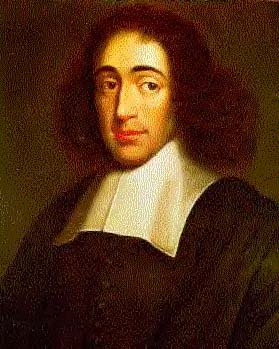
Developed his own version of the Argument form necessitySpinoza:
E. Anwer on Perfect Island/purple cow
An atheist friend of mine on the CARM baord likes to use a purple cow rather than an island bu it's the same argument. Guanilo argued against Anselm that through his argument anyone could prove anything; he could prove the eixstence of a perfect island. Usually the atheist will copy the same wording of the original arugment the theist has given but using the word "isalnd" or whatever reather than God.
But if this argument was sound it would have killed the OA long ago and yet it keeps coming back. Here is the answer of one philsopher as to why Guanilo's arugment fails:
Guanilo says,
"If a man should try to prove to me by such reasoning that this island truly exists, and that its existence should no longer be doubted, either I should believe that he was jesting, or I know not which I ought to regard as the greater fool: myself...; or him, if he should suppose that he had established with certainty the existence of the island" (72b).
Taking stock of Gaunilo's criticism, I want to make two points:
* First, Gaunilo's argumnet, even if true, doesn't really tell us where Anslem's argument goes Wrong. It doesn't really demonstrate that Anlem's argument doesnt' work.
* Second, this argument only works for contingent things. IT proves that you can't argue from a contengency to a necessity, but it doesn't prove the same of necessary things, that which cannot fail to exist and could not have been otherwise.
* Since the whole point of Anlem's arguement is that the unique nature of the case of God proves to be necessary being and is proven, thus the argument of Gaunilo doesn't even apply.
F.Hartshorne's Modal version
"q" for "( ]x)Px," there is a perfect being or perfection exists.
"N" for "it is necessary (logically true) that"
"~" for "it is not true that"
"v" for "or"
"p-->q" for "p strictly implies q" or "N~(p&~q)".
1. q-->Nq "Anselm's Principle:" perfection could not exist contingently
2. Nq v ~Nq Excluded Middle
3. ~Nq-->N~Nq Form of Becker's Postulate: modal status is always necessary
4. Nq v N~Nq Inference from (2,3)
5. N~Nq-->N~q Inference from (1): the necessary falsity of the consequent implies that of the antecedent (Modal form of modus tollens)
6. Nq v N~q Inference from (4,5)
7. ~N~q Intuitive postulate (or conclusion from other theistic
arguments): perfection is not impossible
8. Nq Inference from (6,7)
9. Nq-->q Modal axiom
10. q Inference from (8,9)
[from Baird's Handout]
(from Charles Hartshorne, The Logic of Perfection (LaSalle, Ill.: Open Court, 1962), pp. 50-51, using some of the modifications by C. Stephen Evans, in Philosophy of Religion (Downers Grove, IL: Inter-Varsity Press, 1985), p. 48.)
XII. Argument from the the Ground of Being
A. Defining terms and Categories of BeingContingency is dependence upon a higher source for causation. This need not be understood in terms of God and the world. Everything in the world is contingent upon something. We are contingent upon our parents, we would not exist if they were not around to produce us. The universe itself is contingent upon the chain of cause and effect.1) contingencyNecessity is the lack of dependence upon anything else. But this translates into eternality and secuarity. A necessary entity will always exist and cannot fail to exist, and must always have existed. There are two types of necessity:2) Necessity
Arbitrary necessity is that form of necessity for which there is no logical reason. An arbitrary necessity is a brute fact, it merely exists, there is no particular reason for its existence.a) Arbitrary NecessityA logical necessity, while uncaused, exists out of some logical explaination. If we found that the world was laid by giant turtle and the turle resting on the back of another turtle, and that one on still another, and it was turtles all the way down, in an unending string, that would be an arbitrary necessity. Why? Because its existence just is. But what would be an example of a logical necessity other than the Chrstian God? (That would be circuar to try and stipulate that God is the only example of a logical necessity). One example would be being itself (never mind that we already said God is being itself, this is not a cheap trick, just seperate the two for a minute) being in and of itself which is productive of beings would be a logical necessity. Why? Because it's motive force is to be. Anything that always exists and causes the universe would be necessary. The eternally existing singularity would be necessary. But it would be an arbitrary necessity since the dense matter inside it that actually produces the universe implies prior conditions for creation of matter and gravity for density. Thus the existence ex nihilo of dense matter without cause, if it existed is an arbitrary necesstiy.b) logical necessity
But if a "necessity" fails to exist (does not exist) than it is an impossibility. Why? Because it cannot come into being. A "necessity" which did not exist but then comes to be is nonsense and could not exist. Thus the dichotomy breaks along the lines of necessity or impossibility. All possibilities for existence can be boiled down into four catigories. There are more, since these can be subdivided, but essentially there are four, we cannot do without these four and describe the possibilities for existence.
Being is the thing itself, the act of being, the abstract notion. The beings are thing in being, the entities which exist which participate in the act of being. God is not among "the Beings" but is on the order of Being itself, since He is necessary being (by definition; necessary or impossible).3) We can also distinguish between being and the beings.
| Necessity: That which must always exist, cannot fail to exist and cannot cease to exist. | Contingency: That which owes its existence to some higher cause. |
| Logical / arbitrary Necessity: That which eixsts logically or as a brute fact and is necessary | Contingent Existence: That which actually exists and is contingent such as everything in the universe around us. |
| Impossibility: That which of necessity cannot exist due to logical contradiction, such as squre circles | Contingint Non-Existence: That which does not exist but if it did would still be contingent, such as pink Unicorns, purple Dolphins, ect. |
XIII. Arugment from necessary BeingArbitrary necessity is left over as the orphan step child. It can be included in the chart above as a part of necessity as oppossed to impossibility. But since it is illogical it cannot exist. Thus it really should be part of impossibility. It is my contention that an arbitrary necessity is an impossibility.______________________________________________
Arbitrary Necessity______________________________________________B. Being as Logical Necessity
Only one thing fits into the colum of Necessity, and that is the ground of being. Being has to be, otherwise we would not be here to argue about such things. Something exists now, and if so than something must have always existed. The only logical necessity that can be understood is being itself is necessary to the existence of the beings. Thus being has to be, it must always be, it cannot cease to be. Thus being is necessary.
1) Current existence implies continual eternal existence of some prior cause.
2) Total absolute nonexistence is impossible.
But what is the motive force of Being? If Being were nothing more than an arbitrary act of existing with no logical necessity than it would be an arbitrary necessity. Thus there must be a ground of Being which gives force to being in its production of the beings. The ground of Being we call God.
Now this is the crucial step. So far we have proven that these four categories are necessry and that something must be. But how do we fill the first category (necessity) with God?Premise: Arbitrary necessities are illogicalPemise: Being has to be
1) Either something exist or it does not
2) If it exists it could either fail to exist or it must exist of necessity
3) Therefore the four categories are necessary and logical (this gives us all four categoreis above--Necessity, contingency, must exist or can fail to exist or must not).
4) If something must always exist and cannot fail to exist in order for anything to exist at all, than being must always be.
5) Therefore, being is necessary.
[The reason being apart form the beigs would be indistinguishable is because being is "present and manifest in the beings." Being is just an act of existing. If being is serperated from the things which engage in the act it would not be anything, clealry impossilbe, just as striking requires a stricker. Therefore there must be something always existing which gives rise to the beings, something that connects themwith being.]6) Arbitrary necessities are impossible.7) Being apart from production of the beings would be inditinguishable form nothing at all.
8) Therefore, there must be a ground of being which acts as a motive force and brings the beings into concresence
9) Singularities and other such entities are arbitrary necessity, or contingencies, the ground of being must be a pure act of being which is productive of the beings.
10) It's productivity must be freely chosen, other wise it would not be a logical necessity.
[some may point out that this argument is very much like the previous. Certianly all versions of the OA turn on these four catigories and that makes them seem like the same argument. Indeed they are just differnt versions of the same argument, XI -XV. But the differnce in these two is that the previous argument turns on the notion that being has to be, this one turns on the notion that God cannot be impossible or merely possible.]
A. The logic of the argument:
1) God can be analytically concieved without contradiction2) Therefore God is not impossible
3) By defintion God cannot be contingent
4) Therefore God is either necessary or impossible
5) God is not impossilbe (from 2) therefore, God is necessary
6) Whatever is necessary by the force of Becker's modal theorum must necessarily exist
B. God is not impossible.
God is concievable in analytic terms without contradiction:
The universe without God is not concievable in analytical terms; it is dependent upon principles which are themselves contingent. Nothing can come from a possibility of total nothingness; the existenceo of singularities and density of matter depend upon empiracal observations and extrapolation form it. By definition these things are not analytical and do depend upon causes higher up the chain than their being (note that the skeptic at this point probably denies the validity of analytic proofs but to reverse the arguement must accept such proof).
Since the concept is coherent nad not contradictory and is derived from analytic terms, to reverse the argument the atheist must show that God is impossible since the burden of proof is now on the one arguing that a contingent state of affirs could produce a universe in which being has to be.
C. The logical possibility of God's nonexistence is impossible.
if God is Possible than God must be necessary since the only choices are that God be either necessary or impossible. Possibility of God ruels out ipossibility.
To say that a thing is logically possible is to say that it might have existed in the past or may exist in the future. But for God to exist he must always have existed; in the past, in the future, or all time. Given logical necessity the logical possibility of God 's non existance is impossible. Therefore, ontoloigcal necessity implies logical necessity. One implies the other and it is a rational move from one to the other.
D. Objections:
1) The assumption that we are merely loading the concept with terms that make it necessaryThis is really the same arguement one must make to reverse the argument of necessary being. While it is true that God as being itself is a pre-given postulate and is idependent of proof because it is part of the defintion of God, the realization that being has t be means that this must be the case.
2) The assumption that we are lending existence to a fictional being.This is merely an assumption. The necessary existence of God is implied in the possibility of God's existence and the realization that the the only alternative is impossibility. God is possible and thus necessary. Some have tried to argue that they are breaking up the four categories with a 5th not seen, that of "fictional" but that applies to the category 4 that of non-existing contingency.
3) Equivocating between types of necessity.The argument says that to say God is necessary as a postulate of defintion is speaking of ontological necessity, than to assert the actuality of it is moving from ontological to logical necessity.
Logical and Ontological necessity are related. The move from one to the other is warrented. To say that a thing is logically possible is to say that it might have existed in the past or may exist in the future. But for God to exist he must always have existed; in the past, in the future, or all time. Given logical necessity the logical possibility of God 's non existance is impossible. Therefore, ontoloigcal necessity implies logical necessity. One implies the other and it is a rational move from one to the other.
